untrustworthy environs

The current Handshake 302 exhibit, Baishizhou Superhero has just finished its opening weekend. We’ve had good press, and people interested in the topic have sent out weixin‘s and weibo‘s to their circles. In fact, the exhibit is fun, and once people come into the space, they clearly enjoy taking pictures of themselves and friends as one of the heroes (curatorial statement, here). And there’s the rub: getting people into the space.

In fact, mobilizing our neighbors to visit the space has been an ongoing project. Yesterday, during the exhibit’s open hours I observed to a visiting friend that for many of Handshake’s neighbors crossing the threshold from observing in the hallway to participating in the exhibition is a huge step taken only after several hallway engagements. In reply, he gave a class and generational analysis that avoided the easy (and prevalent) stereotypes of “Chinese culture” or “national ethos (国情)”, focusing instead on the social cost of trust.

He opened an analysis with a joke about an old woman who was sitting next to the road. A young man is talking on the phone and she overhears him say, “Dad, purchase me 500,000 yuan insurance.” Without waiting for anymore information, the old woman picks up her stool and moves away from the roadside. The (literal) punchline? Accident insurance apparently covers up to 500,000 rmb in compensation and is more than enough to settle cases in which urbanites hit and cripple rural workers, while an old lady wouldn’t get enough to cover her legal expenses and hospital recovery.

Background to the joke: Chinese tort law addresses the question of compensation for injuries sustained in a car accident in terms of a simple equation: average annual salary of place times twenty years. For those older than sixty, one year is removed for each year older than sixty but younger than 75 (so the compensation rate for a 63-year-old would be times 17). Compensation for all people over the age of 75 is times 5. For children not yet one year old, the compensation is also times 5. . There is a published list of average salaries by place (Shenzhen list). In other words, the average salary for a city worker in Shenzhen is 40,741 and for a rural worker is 10,542. So the mean compensation for car accidents falls between 800,000 and 200,000. There is a more detailed list that includes salaried workers, but clearly, for the majority of China’s rural population, they won’t get more than 500, 000 before legal fees.

My friend’s point was simple: the poor can’t afford unexpected encounters and so their first response is one of self-preservation. The old lady didn’t know if the guy on the phone had a car, she didn’t know if he was talking to his father, she didn’t know if he was amusing himself. All she could know was that if he did have a car, 500,000 and wanted to run her over, he probably could. I countered that this was an open door and most had seen me over the past few months. “But,” my friend added, “it’s a closed, private space. Why take a risk for a photograph?”

My friend added that younger peoplewere more open to conversational exchanges with strangers. He said the most reticent were generation 70, but generation 80 and 90 were increasingly open to proactively talking with strangers. And in fact, the few people who have come to the space through weibo and weixin have been in their early 20s, or members of generation 90. He suggested that we should move the photo stand-in to one of the public squares because (1) people really would enjoy it and (2) they’d feel safe to enjoy it in an open place where there were many, many people.

Good — if sobering — advise. It also reminds me that we have had our best turn out when we organized a fair like environment in the Baishizhou public plaza. Consequently, our next goal is to move Superhero to the Baishizhou Culture Square.

updates…

Yesterday, Baishizhou Superhero opened at Handshake 302. Impressions from the opening, below:

This slideshow requires JavaScript.

Also, the latest weixin meme: the next US Ambassador to China, Max Baucus is looking for a Chinese name. On offer: 没咳死-包咳死, or “Have not yet coughed to death, but coughing to death guaranteed”! — hee.

And an interview with moi at the Nanfang daily.

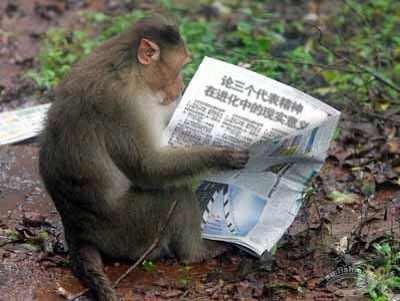
monkey see…

IMG_5155

The monkey is reading about the “three represents“, a direct dig at former General Party Secretary Jiang Zemin. And, if weixin memes are to be believed — if not totally, perhaps partially — then current General Party Secretary Xi Jinping is targeting neibu, or inner circle folks.

In fact, online Xi Jinping’s talks are repeatedly characterized as “strict (严厉)”. The adjective, of course, emphasizes the current administration’s explicit task to broaden reforms. In the aftermath of mixed messages, we’re still trying to figure out what that means. A larger political role for civil society and public debate? Or are we simply talking about a new purge? Excerpts of “strict” talking suggest the both/ and muddling of the current political landscape.

Of note? The ongoing use of classical CCP rhetoric to make veiled attacks on opponents. There’s a fight going on, but who’s the actual target? Also of note, The fact that the “Talk on the meeting about development work” took place in September, but the memes are still circulating. I received these memes yesterday.

A picture (for a sense of the Xi Jinping meme aesthetic), three excerpts and translation:

20139619571399354Today some people are using reform like a tiger skin, [frightening] the people so they don’t speak or make judgments. In my opinion, this is using reform for anti-reform purposes.

We’re not not reforming, we’re actually reforming, actually satisfying the people, pursuing a reform that will increase and further reforms. And what has been the status of reform these past years? Handcuffing productive capacities, perverted models of economic development, and serious environmental problems; we’re killing the goose [reform] that lays golden eggs.
The gap between the rich and poor is too wide. This is not only a problem of individual abilities, but also a result of unequal access to opportunity and power. All along we’ve been saying that we want to empower society, that we want to liberate productive capacity, that we want to realize sustainable development and a stable society, but we haven’t done anything because within the Party there are small mafias (的利益集团的黑手) who benefit too much from the current situation. Is a tiger willing to spit out the meat in its mouth? All that can be done is fight the tiger.

There are many such memes and, whatever the actuall status of Xi Jinping’s reform efforts, the memes resonate. What’s more, the memes are online, which means they have tacit support from the Center. Have we truly entered virtual political world of “monkey see, monkey reform”?

baishizhou superhero!

Baishizhou Superhero has been installed at Handshake 302. Come and see and play with the first urban village superhero photo stand-in!

superhero

Below, the curatorial statement for the installation.

Baishizhou Superhero

Superheroes navigate the debris of urban despair, haunting the rubbished alleyways and crumbling staircases that lead to cramped spaces at the end of unlit hallways. They appear as exaggerated silhouettes or bursts of neon light. They leap over tall buildings in a single bound and rescue the victims of unfettered greed and malignant desire. Most importantly, superheroes represent the fantasy of latent potential and unlimited transformation in these techno-modernized times; mild-mannered, nerdy and bureaucratically inclined Clark Kent steps into a telephone booth and strides out a decisively manly man, who rights systemic wrongs through physical prowess. Hooray!

In the installation Baishizhou Superhero, Liu Wei’s playful cartoon characters transform Handshake 302 into a magic telephone booth. Visitors step into the space and through the power of a photo stand in become one of seven possible urban village superheroes – Methane Man, Wonder Granny, Stir Fry Fly, the Amazing Beer Babe, Village Guardian, Super Dog, or Cat-a-go-go. Friends can then take pictures of each other as they model the most common social roles in any of Shenzhen’s urban villages.

At first glance, the installation seems a tacky party game until we remember that these social roles – deliveryman, child care provider, food hawker, beer waitress, and village fireman – are the vehicles through which migrant workers transform their lives. Each migrant worker undergoes the sometimes exhilarating and often bizarre transmogrification from ordinary peasant to urbanite. However, the Baishizhou Superheroes also sustain Shenzhen’s economic boomtimes. After all, these superheroes provide the services and social network that Shenzhen’s factory workers need to make themselves at home in the city.

At second glance, the insidious charm of the installation becomes even more apparent. There is no doubt that human beings have latent potential to transform ourselves and our lives. The Shenzhen Dream hinges on this fact and migrants come to the city in order to improve their material lives. Within the maelstrom of globalization, however, the latent potential of human beings to transform ourselves has been limited by the necessity to commodify ourselves. The super power of an unpaid grandmother, for example, is to create value by providing unpaid childcare so that both fathers and mothers can join the gendered labor force, as deliverymen or waitresses.

The “super power” of all Baishizhou migrants is, in fact, the power to sell their labor on an unregulated market for as long as their bodies hold out. A popular expression maintains that migrant workers “sell their youth”. As individuals, there are limits to the scale of transformation. When a deliveryman’s legs can no longer pump a bicycle or when a waitress’ breasts succumb to gravity, these workers are replaced by younger, more energetic migrants. And there’s the fantastic allure of the superhero myth – unlimited strength to endure and transcend physically exhausting and emotionally alienating jobs.

Participating Artists: Lei Shenzheng, Liu Wei, Lv Linxuan, Mary Ann O’Donnell, Yang Qian, Zhang Kaiqin, Zhang Yan, Zhou Tianlu

Hours: Weds 19:00-21:00; Sat & Sun 15:-17:00, or by appointment.
Access: Baishizhou Subway Station Exit A, walk north to Jiangnan Baihuo Supermarket, make left down alley, follow to Shangbaishi Block 2 Building 49 (above the flip flop store). Ring bell and come up.

handshake 302 is on the map!

We’ve been included on the Fringe Urbanism [2013 UABB*HK Exhibition] map by Chris Gee and his collaborators. To check out the edgy contexts of alternative urbanizations in the region click link below the map. Yeah!

renting, home ownership, and rights to the city

When roughly 100,000 people were evicted from Dachong, there was little if any public outrage.The migrants, recent college grads, and low-income families who lived in Dachong seemed inconvenienced by the evictions, but not outraged. My friends and colleagues also expressed dismay at the evictions, but not did not take to the streets in protest. Instead, the general response was one of resignation.

I have been pondering what to make of this lack of attachment to Dachong specifically, but the urbanized villages in general.

The SEZ prides itself on its openness to outsiders, boasting that arriving in the city makes one a Shenzhener. What then to make of the fact that the majority of migrants first live in the urbanized villages, yet don’t consider them homes worth fighting for? Is living in the village a kind of social limbo between neidi and Shenzhen? Is “arrival” contingent on property ownership rather than experience and tenure?

I finally realized that as an American, I have assumed that living — whether as a renter or a home owner — in a neighborhood is a process of inhabitation through which one accrues rights to the city. One of these rights would be compensation for eviction, presumably based on one’s length of residency. But living in a neighborhood would also grant one the right to shape the neighborhood through different associations and to promote neighborhood cultural events.

In contrast, it seems that in Shenzhen not only the majority of people living in the urbanized villages, but also intellectuals, officials, and real estate developers consider renting to be a temporary state; renters do not “naturally” or “inevitably” accrue any rights to the neighborhood and by extension to the city. Instead, only village members have rights to compensation, to organize village events, and shape neighborhood culture.

In this context, the political question becomes one of affordable housing, rather than renters’ rights. As I understand the political ethos, Shenzhen inhabitants believe that the government has the obligation to provide all Shenzhen residents the opportunity to buy a condo. For intellectuals, urban planners and even liberal real estate developers the mass evictions when an urbanized village is razed do not constitute a major scandal. Instead, they see the real source of social unrest to be the fact that even working their entire lives, most people will not be able to purchase a condo.

In short, the government has defaulted on its moral obligation to house the people. The replacement of urbanized villages with upscale housing estates just rubs salt in this very open wound.

2013 szhk biennale of urbanism/architecture, thoughts on

This year’s Biennale occupies two spaces, the The Value Factory (venue A) and The Border Warehouse (Venue B), which are connected by a shuttle bus. Metonyms for Shekou history, the two sites index the industrial zone’s early manufacturing and connections to Hong Kong.

Team Ole Bouman curated The Value Factory with an eye to making it a catalyst for urban change. They cleaned up and slightly modified six areas of original factory complex — the entrance, the machine shop, two silos, the warehouse and the grounds themselves. This clean-up allows the site to be repurposed for new kinds of production. The grounds have been transformed into a garden, for example, and the silos opened for viewing, while the machine shop houses exhibitions as well as spaces for creative encounter, such as workshops, performances, and lectures.

Team Li Xiangning/ Jeffery Johnson conceptualized the Warehouse as a space to reassert the importance of knowledge and research to urban design. The exhibition includes a vast catalogue of investigations into borders and intances of boundary crossing, including a timeline, case studies, videos, installations, and national and regional pavillions. The sponsor, China Merchants has also curated an exhibition of Shekou history, which is displayed in the warehouse.

China Merchants Shekou (which built the ferry terminal and float glass factory) sponsored the fifth edition of the Biennale as part of its Shekou Relaunch campaign, in turn an element of the larger project to rebrand Shenzhen as a creative industry hub. This underplayed, but vital fact predicates visitors’ experience of the Biennale as a cultural enterprise. Creative activity in the Factory produces the knowledge archived in the Warehouse, which in turn provides tools for new creative activity in the Factory… Consequently, although some exhibits critically engage the inequalities that comprise capitalist production, nevertheless the Biennale as a whole ultimately celebrates accumulation as the highest social value.

In this context, my perception of Pierre Bourdieu’s critical analysis of The Forms of Capital abruptly shifts. Instead of a blueprint for socialist intervention, I see a conceptual toolkit for transforming the SEZ into a nexus of cultural industry:

“[C]apital can present itself in three fundamental guises: as economic capital, which is immediately and directly convertible into money and may be institutionalized in the forms of property rights; as cultural capital, which is convertible, on certain conditions, into economic capital and may be institutionalized in the forms of educational qualifications; and as social capital, made up of social obligations (‘connections’), which is convertible, in certain conditions, into economic capital and may be institutionalized in the forms of a title of nobility.”

Thought du jour: I’m not sure if it is necessary the Biennale Borg as it is easily avoided, but I do wonder about my continued participation in these events. To redeploy the theme of this edition: just when do we cross the boundary between engagement and complicity? Or is it more the case that “boundary crossing” is simultaneously both a judgment call and an instance of social speculation?

To get to the Biennale, take the Shekou Subway to Shekou Ferry station and walk about 500 meters. To then move between the spaces, take the shuttle. Or, if in Nanshan, my favorite bus line, the 226 stops at both venues. Jump off at Shekou Ferry Terminal (to visit the Warehouse) or Glass Factory (玻璃厂 to visit the Value Factory). First impressions from The Value Factory in previous post. Impressions from The Border Warehouse, below.

This slideshow requires JavaScript.

2013 biennale opening impressions

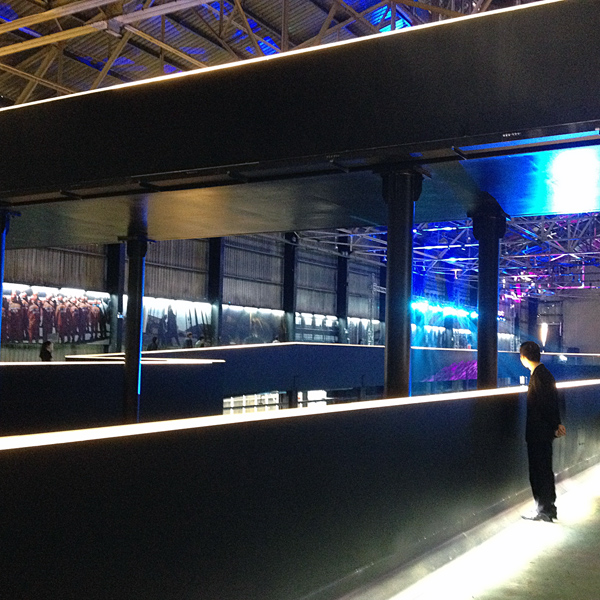
The biennale is up. Venue A, the old float glass factory has been cleaned up, but the space retains its high modern industrial charm. First impressions of the Machine Shop, below:

This slideshow requires JavaScript.

biennale update

For those interested in the 2013 edition of the biennale, here’s the website. Alas, many of the pictures are distorted, but upside? Fat Bird’s Urban Village Fetish / Baishizhou is featured today!

the view from here…

On the face of it, this text message jokes about China’s cultural diversity:

To Beijing, the rest of the country is grassroots; to Shanghai, the rest of the country is countryside; to Guangdong, the rest of the country is poor; to Henan the rest of the country is inconsiderate; from Shandong, the rest of the country is unfair; to Jiangsu, the rest of the country is underdeveloped; to Zhejiang, the rest of the country is waiting to be developed; to Shaanxi, the rest of the country has no culture; to Xinjiang, the rest of the country is overcrowded; to Tibet, the rest of the country lacks belief.

1、北京看全国都是基层;2、上海看全国都是乡下;3、广东看全国都是穷人;4、河南看全国都缺心眼;5、山东看全国都不仗义;6、江苏看全国都欠发达;7、浙江看全国都待开发;8、陕西看全国都没文化;9、新疆看全国都太拥挤;10、西 藏看全国都没信仰。

The message, however, also suggests the geography of unequal value that structures migration to and opportunity in Shenzhen, where a migrant’s background (背景) increasingly determines opportunity. What happens, then, when instead of joking about the explicit other (grassroots, countryside, poor…), we make explicit the implied value hierarchy? Arguably, we feel the sting of a punchline:

Power is located in Beijing; sophistication is located in Shanghai; economic opportunity is located in Guangdong; traditional courtesy is located in Henan; a sense of fairness is located in Shandong; fast development is located in Jiangsu; fast development is located in Zhejiang; traditional culture is located in Shaanxi; low density population is located in Xinjiang; and belief (buddhism) is located in Tibet.

Indeed, as a straightforward list of values, the organization of the joke reproduces China’s territorial hierarchy: Beijing, Shanghai, Guangzhou-Shenzhen (“Guangdong”), before turning to neidi (the rest of the country), where traditional values are located. In the context of the Beijing-Shanghai-Guangzhou-Shenzhen rivalry, what catches my attention is the mediating position of sophistication (“Shanghai”) between power and wealth (“Beijing” and “Guangdong”). It’s not enough to be rich, but one must also be sophisticated in order to gain a certain legitimacy. In contrast, naked power still works.

With respect to neidi, the ongoing marginalization of tradition, non-economic values, and religious belief within and against Beijing-Shanghai-Guangzhou-Shenzhen is obvious. Also of note — this marginalization is simultaneously a ruralization and a racialization of the country. We might also see these “lesser” neidi values as weapons of weak, which James C. Scott defined as those tactics available to peasants within and against urban States. The important Chinese supplement to that story is not the insight that strong States produce peasants. But rather that current patterns of modernization and development continuously reproduce “peasants” even when people no longer live agrarian lives.

Thought du jour: In Shenzhen, of course, migrants have different access to power, sophistication, and wealth. Not unexpectedly, relative access to these values determine scope and scale of a migrant’s success. However, the role of “sophistication” as mediating between “power” and “money” means that many of Shenzhen’s second generation (officials and wealthy) are pursuing educations and careers that will (in theory) position them to transcend Shenzhen’s fourth position and bootstrap into China’s higher eschalons.

So yes, the Shenzhen Dream remains remarkably “American”.