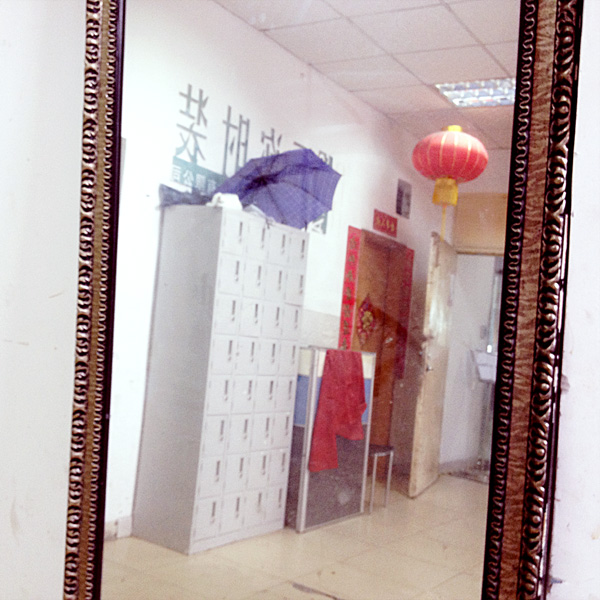
price list, shekou, early 1980s

IMG_3454A price list from the Shekou Industrial Zone Life Services Bureau, early 1980s.

Of note? Uniform prices throughout the industrial zone, although some prices were “approximate (左右)”. The reason? typhoons determined availability of food and goods. Also, prices are modified with the characters for renminbi (人民币) because at the time, Hong Kong dollars and Foreign Exchange Certificate (or waihui 外汇), a surrogate currency used by foreigners also circulated. Long ago and far away, one industrial zone, three currencies.

Not only the typeset makes this list seem like it came from another place and time. The prices seem so cheap its hard to remember that these prices were expensive relative to neidi, where monthly salaries still ranged between 20 to 50 rmb.

During the early 1980s, coming to the SEZ and/or Shekou Industrial Zone was considered hard, but nevertheless resulted in opportunities to earn more elsewhere. In fact, by the 1990s, Shenzhen and Shekou boasted a substantial wage (both white and blue-collar ) differential with the rest of the country. And today Shenzhen along with Beijing and Shanghai continues to have the highest lowest minimum wage in the country (see China Labour bulletin report).

Shenzhen’s economic success remains one of the key symbols of the success of post Mao reforms. It is no surprise, therefore that both Guangdong and Shenzhen have been central to Xi Jinping’s ongoing efforts to middle class-ify China. But. The extent to which rural China — both in the form of migrant workers and urban villages — has enabled Shenzhen’s success remains left out of these rags-to-riches scenarios.
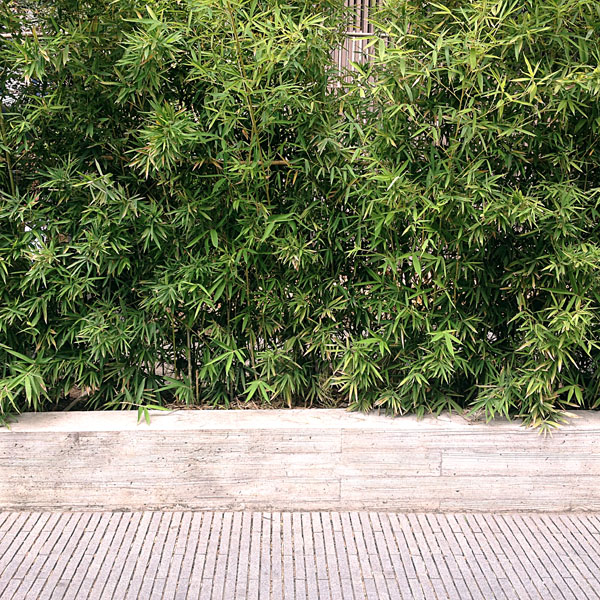
taihua and the emergence of a shen-zen. seriously.

I went to have tea at the Taihua Estates clubhouse in Bao’an. The estates were built in the late 1990s by Taihua Real Estate (泰华地产). But since its early success, the Taiwanese firm has re-envisioned the social role of real estate development — they are searching for designs that culturally and environmentally sustainable.

The clubhouse / office / kitchen is open to the outside and uses hanging fans rather than air-conditioning to cool the office space. Employees have lockers and laptops and they change workspaces as desired. Each day, a different department is responsible for preparing lunch for the entire team. There is a meditation room, a tea room, and as much spatial flexibility as possible. Moreover, the entire office and surrounding environment has been transformed through bamboo and water installations.

I find theirs a compelling vision. We introduced ourselves, meditated together, enjoyed two hours of tea and conversation, and then ate lunch. The space itself delights. Impressions, below.

This slideshow requires JavaScript.

contradictions within the party?

Happened upon a newspaper article that quoted Tianjin Party Secretary, Sun Chunlan (孙春兰)as saying,

We must thoroughly study and understand the spirit of General Party Secretary Xi Jiping’s important talks, and deeply realize that criticism and self-criticism are vital weapons for resolving contradictions within the Party (要深入学习领会习近平总书记重要讲话精神,深刻领会批评和自我批评是解决党内矛盾的有力量武器。。。)

Talk of reform and harmony has characterized post Mao political discourse in China, so when a major player such as the Tianjin Party Secretary starts speaking of contradictions within the Party inquiring minds want to know — just how entrenched are political differences between top leaders and, more practically, to what extent has the legal system become an important arena for these ongoing battles?

Of note, the public execution of Xia Junfeng and the equally public non-conviction of Bo Xilai. In the former, an ordinary citizen was executed for defending himself against two Shenyang urban managers (城管). In the later, the court found Bo Xilai guilty of illegally owning a French villa. By today’s standards if that was all he did he was a clean official (清官)!

But. These rulings had obvious and interrelated political messages. In the case of Xia Junfeng, the courts made it clear that they will support the urban management officers in any and all disputes with ordinary citizens. In the case of Bo Xilai, the courts made it clear that the high ranking leaders can engage in all sorts of criminal activities, including accessory to murder, so long as they hold the Party line.

In other words, the Xia Junfeng and Bo Xilai convictions expressed the same political logic — hold the Party line and you will be protected. Fail to hold the line and you may find yourself in a life or death battle to resolve those pesky contradictions within the Party. Those outside the Party must fend for themselves as best they can.

Happy National Day!

Journals: 50 years of Urban Studies – free articles!

Journals: 50 years of Urban Studies – free articles!.

land reclamation continues apace

The relentless occupation of the ocean continues. These images of Houhai Road (the former coastline) show the development that has engulfed Yuehaimen Village, subject of my last post. Clicking the houhai tag will bring up a decade of transformation.

This slideshow requires JavaScript.

yuehaimen village

When I first arrived at Shenzhen University, Yuehaimen was the urban village where I rented a conveniency apartment for 600 rmb a month. Located at the southeastern border of the SZU campus, there was an open gate between the village and the campus. However, by the time of SARS (2003) the gate was sealed off and students took to clambering over the wall between the village and campus in order to get to school. The university built dormitories at its southwestern border in Guimiao campus. That small, backdoor gate was the easiest to slip through during the SARS quarantine.

Piece by piece, urbanization near the SZU campus isolated Yuehaimen from the city. On its eastern border, Yuehaimen abuts the southern section of the Shenzhen Science and technology park. During construction of the park (from mid to late 1990s), another wall was built between the village and the white-collar work and residential area. The village’s southern border was the coastline that is now Houhai Road, and yes, a wall was built to separate the village from land reclamation, and has remained in place to cordon off ongoing construction of SZU’s southern campus.

These successive construction projects (SZU campus, Science and Technology Park, and reclamation of Houhai Bay) meant that Yuehaimen was an important home for construction workers, SZU students, and office staff. Having limited land resources, villagers built early and tall; these 6-8 story buildings are not prototypically “handshake” buildings, which emerged in the mid-1980s. Instead, Yuehaimen buildings resemble early 1990s work unit housing. More importantly, given land constraints and building styles, villagers did not own individual property, but units within jointly held buildings.

Yuehaimen is scheduled for razing by the end of the calendar year, or early next year. Most of the residents have been evacuated. What remains is an urban ghost village, where a few stragglers wait until the very last-minute before slipping into another urban enclave. In turn, Yangguang Real Estate developers promise to build another gated community on the footprint of Yuehaimen — this one shiny, modern, and meant to house Shenzhen’s technocratic managers and leaders.

Impressions, below.

This slideshow requires JavaScript.

handshake 302

CZC logosCZC特工队 is a group organized to engage Shenzhen’s urban villages through art, theater, and social media documentary projects. Our first project is called “Handshake 302”.

The concept behind Handshake 302 is simple: Baishizhou is our “artspace”, which has its office at Shangbaishi, second block, building 49, apartment 302, a 15 sq meter conveniency apartment in Shangbaishi.

We will use the actual apartment to commission and develop installations. Our first project is “Numbers” and will open on October 10. In addition, we work with visual artists, performing artists, and writers to develop projects that engage and extend Baishizhou. We will use the Baishizhou Culture Plaza (and outdoor stage) to develop performance pieces. On October 20, for example, Peter Moser will work with local street musicians to create a communnity concert. We also encourage artists and performers to create and install / perform works throughout Baishizhou. Fat Bird, for example, is currently developing a piece that uses the Tangtou rowhouses as their stage.

Handshake 302 has been accepted by the 2013 Shenzhen-Hong Kong Architecture Biennale as a collatoral venue, bringing Baishizhou into conversation with the main venues in Shekou.

Impressions of 302 and its immediate environment, below.

This slideshow requires JavaScript.

shekou industrial

Although the City’s relentless upgrades have transformed the lay of much Shekou land, nevertheless it is still possible to find corners shaped by early 80s dreams, technology, and capital. Yesterday, I walked to the 6-story roof of one of the buildings in an old Shekou Industrial Park along New Shekou Road.

This slideshow requires JavaScript.

moving on up…shenzhen identity and urban villages

Urban villages inform and shape popular understandings of Shenzhen, both domestically and abroad. Intellectuals, also here and elsewhere, have decried the decision to raze villages and put up new and improved postmodern housing estates, offices and shopping malls as it short-sighted and violently anti-working class. However, in Shenzhen, there has been no street level organizing as such to stop the razing; a decision is made, plans approved, people moved.

In this context, it is interesting to note the temporary nature of Shenzhen patterns of inhabitation. Even before settling in to their first dorm room or urban village share, migrants intend to move. This intention might be vague — I’ll move when I get a better job, or buy my house — but “moving on up” is one of the reasons people migrate to the city. Moreover, in practice, people move when they change jobs, they move when they get a raise, they move when they have a partner, they move when their parents come to live with them. They also move as investment strategies, from one home to the next. Indeed, as far as I can tell, people only seem to stop moving (for the time being), when their child is at a desirable school. If the school is undesirable, changing school district zones or moving to parts of the country where gaokao competition is less fierce.

In other words, inhabitation patterns seem to preclude the time necessary to grow attached to neighborhoods. The current fondness for urban villages seems overwhelming is often nostalgic (missing the challenge of first coming to Shenzhen) or political (we need housing for the working poor), but it is rarely the result of long-term living in a village. Many of the people I have interviewed who do live in a village want to leave. They want their own home (not a rental), or if they are a landlord who lives in a handshake, they want to live in a modern high-rise.

All this to say that the lack of grassroots resistance to razing urban villages in Shenzhen isn’t as counter-intuitive as it may seem from the outside. Those who want to keep the villages don’t actually live there, and those who live there are anticipating moving out. Indeed, I have come to believe that the social questions posed by urban villages have less to do with preserving these neighborhoods, as they do with making long-term inhabitation possible. If the villages were places that people actually wanted to live, raise their child, and retire, then there would be a very different political and economic response to the ongoing demolitions.

NOTE: Handshake buildings as a form of local real estate development were an artifact of the 1992 decision to transfer inner district village lands to the city. In the 1980s, villagers built free-standing homes for themselves, and some collective rental properties and dormitories. However, once the 1992 policy limited village land resources, villagers stopped building individual free-standing homes and built multi-story rental buildings. In the outer districts, where land remained under village control until 2004, villagers built neighborhoods of free-standing homes for themselves, and multi-story rental properties next door.

mooncake festival!

It’s the Mid-Autumn Festival. Depending on your historical inclinations, you’re either remembering ancient moon worship and sacrifice, recounting the story of moon goddess Chang’e, or going Tang-litterati and appreciating the moon. You may even know about the anti-Yuan uprising that Han nationalist, Liu Bowen organized by inserting the message “on 8.15 the uprising will start” in mooncake gifts. Apparently, the revolt was successful, and future first emperor of the Ming dynasty, Zhu Yuanzhang ordered his advisors and troops to celebrate by distributing and eating mooncakes with the common folk.

Historical inclinations, notwithstanding, the point of the Mid-Autumn Festival chez Shenzhen is giving mooncakes to family and friends. There are traditional double yolk lotus seed paste mooncakes, green tea vegan mooncakes, and fruit paste filled iced mooncakes. There are Cantonese style mooncakes and northern mooncakes, healthy mooncakes and fusion mooncakes. In fact, every major hotel, restaurant and chain, including Starbucks and Haagan Daaz sell their own mooncakes.

All this to say, mooncakes are big, big amazingly packaged business. One can buy individual cakes starting at 7 yuan a piece, or a box of four for 60-70 yuan. But in the big hotels, the packaging escalates. There are heavy cardboard boxes and embossed tins, and often the more expensive sets will include tea. At this level, prices for ordinary boxes of four start around 175 yuan and can go up to over 1,000 yuan. I’ve even seen (but not touched), mooncake sets priced over 2,000 yuan.

Once all the mooncakes have been distributed (and redistributed– the boxes circulate among family and friends until you receive the kind of mooncake you actually want to eat), just as the opening and enjoyment of mooncakes begin, the news media and weixin begin to alert us to mooncake ethics. Mooncakes are so overpriced relative to the cost of ingredients ( flour, lard, sugar, a bit of paste and maybe an egg or two), that by giving them to friends or eating them ourselves, we’re either participating in conspicuous levels of unseemly consumption or are in danger of eating “fake” mooncakes. Indeed, one of the most persistent mooncake rumors is that some company is selling last year’s mooncakes which have been beautifully packaged but have already gone bad.

Today, I’m preparing to go out and eat my share of mooncakes, with as much moderation as possible. Western blogs remind us that the average mooncake has 800-1,200 caleries. The Chinese press has been more explicit: one mooncake is the equivalent of eating three bowls of rice, and neither mooncakes nor rice are packed with nutrition. And yet. There they are, sticky sweet temptations in the middle of a table. And I succumb every year.

Happy, happy Mooncake Festival!