urban fetish / baishizhou

IMG_5353

Fat Bird premieres another play!

This Saturday and Sunday afternoon at the Value Factory, Fat Bird will perform Urban Fetish / Baishizhou. After the performance, I will lead a discussion about “Life, Labor and Desire” in and around the Shenzhen Dream. The show and discussion begin at 2:30 and will end between 4:30 and 5:00, depending on how lively the discussion gets.

Here’s the curatorial statement from Yang Qian (urban fetish baishizhou curatorial statement english):

Discussion Theater
URBAN FETISH / BAISHIZHOU
A Historic Interlude that did not, will not and cannot Exist

Sun up; work
Sundown; to rest
Dig well and drink of the water
Dig field; eat of the grain
Imperial power is? and to us what is it?

The fourth; the dimension of stillness.
And the power over wild beasts.

– Canto 47, Ezra Pound

The life that Ezra Pound described was once quite close, with memories only three generations away from the present.

However, today we live in a world where you are what you own. This is a material era, transforming fetishism into poetic theater.

At 2:30 p.m. on the fourth and fifth days of January 2014, during the Fifth Edition of the Shenzhen Hong Kong Bi-City Biennale of Urbanism/ Architecture, in Venue A, Fat Bird Theatre invites each member of the audience to travel to a future Baishizhou. As one of the lucky property owners, you will experience unimaginable luxury from your seat in the theatre. Indeed, this surreal, poetic experience will make your neighbors – homeowners in Portofino, Shenzhen’s most expensive real estate development – envious because their future has already been built. But you are about to create a future that can only belong to you. Compared to them, you are successful.

In the theater, you will see a community buried, and on its ruins a dreamlike city emerge, and you and others like you will own this new world. You will see a place where 140,000 migrant workers once lived. Like you, they came to realize the Shenzhen Dream: wearing designer clothing, luxury housing, and lazy shopping mall days. But you are the lucky one; they have been pushed aside. Compared to them, you are successful.

You own a car, but sometimes you walk the streets of Shenzhen, and when you do, you see the posters that read, “When you arrive, you are a Shenzhener”. But in this theater you are sure of one truth: “Arriving you live in an urban village, when you get out, you are a Shenzhener”. So your experience in theater will tell you – the urban village is not Shenzhen. Urban village residents are not Shenzheners. Compared to them, you are successful.

If this theatrical experience confirms your belief in objects, your desires, and your optimism about the future then you should have no doubts about what you do and will obtain.

The discussion theater Urban Fetish / Baishizhou is a symbolic exploration of architecture and its objects, urban forms and what it means to create an environment. It is a meditation on the meaning of the urban village, a historically specific artifact. It is part of a search to discover the meaning and problems of urbanization.

After the performance, Dr. Mary Ann O’Donnell will lead a discussion with the audience on the topic, “Life, Labor, and Desire”.

the winners of the mistress awards have been announced!

The results of the “National Awards for Mistresses (全国包二奶大奖赛)” spoof the time and money and presumably effort that some of China’s leaders have expended on accumulating mistresses. The results indicate that many have crossed that fine line between peforming masculine virility and paradoy, which in turn slides into corruption charges because no one actually believes these old men are achieving sexual satisfaction, let alone satisfying their young mistresses — the numbers are just too high. Indeed, the results seem more like baseball cards than gossip; we’re trading statistical representations of performance, rather than vicariously participating in the realization of desire (or actually enjoying a sunny afternoon game). I’m also wondering about how many of these leaders were simply pimping their way to business deals and higher political ranking because these statistics are invariably linked to corruption charges and convictions. Consequently, when available I’ve also linked the offenders’ names to English language reports about these cases.

Results of the National Mistress Awards

1. Quantity Award: Jiangsu Province Department of Construction, Xu Qiyao Director, Xu Qiyao (徐其耀) who has had 146 mistresses;

2. Quality Award: Chongqing Municipal Party Committee Department of Propaganda Director, Zhang Zonghai (张宗海)for having kept 17 beautiful co-eds in five star hotels;

3. Scholar’s Award: Hainan Province Textile Bureau Chief Li Qingshan (李庆善) for his collection of 95 sexual diaries and 236 illustrated guides;

4. Youth Award: Leshan Mayor Li Yushu (李玉书 Sichuan Province) for keeping 20 mistresses between the ages of 16 and twenty;

5. Management Award: Xuancheng Municipality Party Secretary Yang Feng (Anhui Province) for using his MBA to effectively manage 77 lovers;

6. Expense Award: Shajing Credit Union Manager Deng Baoju (邓宝驹 Bao’an District, Shenzhen), also known as the “5 mistress youth” for spending 18.4 million yuan over 800 days on mistresses, this averages to 23,000 perday or almost 1,000 per hour;

7. Solidarity Award: Zhouning County Head Lin Feilong (林龙飞 Fujian Province) for organizing a dinner for 22 mistresses and awarding a 300,000 prize for best mistress;

8. Harmony Award: Lingao Municipal Administration Chief Deng Shanhong (邓善红 Hainan Province) for having 6 children by 6 mistresses and a wife who says she doesn’t believe the gossip;

9. Effort Award: Hunnan Province Telecommunications Bureau Chief Zeng Guohua (曾国华) for guaranteeing that before he turns 60, he will have sex three times a week with each of his 5 mistresses.

a new year, a renovated seaworld

January 1, 2014. Shekou is preparing for the 30th anniversary of Deng’s 1984 visit to Shenzhen and Zhuhai, January 24-29. At the time, the tour was also an explicit celebration of Shekou, a different model of reforming and opening the Maoist apparatus. Images below are of renovations as of December 31, 2013. Yes, there is a light show. Yes, the transformers flash and when you ride the stationary bikes they blast a Beyond song that was popular in the mid-1980s. And yes, the Ming Wah is now in the water even as the coastline extends beyond Nuwa. Impressions of the upgrade, below:

This slideshow requires JavaScript.

is shenzhen history a good investment?

8322696_1200x1000_0

On December 28, 2013 Da Ken Art Center (大乾艺术中心) opened an exhibition on the Devout and Chaste Girls School (虔贞女校), which was built as part of the Basel Mission. The opening brought together a strange but uncannily representative demographic — young Shenzhen gallerists (Da Ken specializes in early photography), Dalang officials, Hakka Christians, aging villagers who went or taught at the school, activists in Shenzhen’s literacy movement, and representatives from the Basel Mission in Hong Kong. There were also a good number of public intellectuals who came out to show support ongoing efforts to re-member Shenzhen history, Christian, nationalist, and pedagogical.

After the opening, Yang Qian and I had coffee with Zhang Yibin (张一兵) and Li Jinkui (李津逵), two of Shenzhen’s more active public intellectuals. Their interventions, however, take very different, albeit supplementary forms. Zhang Yibin is interested in objects — blunt and silent, stubborn bits of matter and how they become meaningful through archaeological speculation and what might be glossed as “cultural capitalism”. Zhang Yibin was responsible for rediscovering the school, which had been closed in 1986 and making its historic importance known to the Dalang government. He has been involved in the reconstruction and preservation movement for over six years.

In contrast, Li Jinkui is relentlessly and charmingly verbal. An economist by training, Li Jinkui came of intellectual age in the 1980s, when “economic reform” was a code for “social liberalization”. For several years now, he has organized a salon at Yinhu, where intellectuals gather to debate issues that range from urbanization through phenomenology and economics to the historic meaning of Shenzhen and include pedagogy in all its permutations — the social role of education, the importance of raising the level of education throughout Shenzhen specifically and the country more generally, the history of education, and the need to reform the Chinese system of education. In fact, Li Jinkui gently moderated our after opening coffee talk, which focused on the historic production of cultural ecologies.

Zhang Yibin’s analysis of the current Shenzhen preservation movement hinged on a two-pronged analysis of (1) non-material culture and (2) 闲钱, which can be translated as spare money, disposable money, or leasured money. Zhang Yibin noted that most cultural history is non-material, composed of stories and impressions and feelings and suppositions, while less than 1% of the archaeological record is actually material. He then reminded us that although the shapes, textures and sizes of objects vary, there is no meaningful difference between them in terms of historic preservation. Instead, we distinguish between relics and garbage, because of the stories we tell and how much “disposable money” is at hand; the more disposable money, he emphasized forcefully, the more we invest in objects and their social transformation into relics. The way disposable money mediates the social transformation of objects into relics clearly frustrated Zhang Yibin, who has failed more often than he has succeeded to bring Shenzhen’s archaeological record into the public sphere. Instead of an intellectual pursuit that helped to enrich a society’s cultural ecology, he suggested, historic preservation has become yet another instance of collecting relics. As such, it hinges on the whims of leaders rather than on a consensus over what constitutes history and archaeological research.

The background for his frustration is the robust Shenzhen antiquities market and concomitant disinterest in the area’s history. In Shenzhen, there are two primary agents accumulating relics — individuals and state cultural institutions, such as the Dalang Street Office. As elsewhere in the world, wealthy Shenzhen individuals collect for personal reasons that range from desire and taste to economic investment. At the same time, municipal cultural institutions have shown little interest in the area’s past, preferring to showcase the Municipality’s role in modernizing Post Mao China. Moreover, attempts at historic preservation at Nantou Old Street, Dapeng Fortress and the Hakka compounds, for example, have not been embraced by the general public, which remains largely ignorant of Shenzhen’s modern and imperial history. Indeed, even the call to preserve old Hubei Village, an example of a wealthy late imperial and republican architecture (located immediately east of Dongmen) has slipped well under public radar.

This background also explains Li Jinkui’s support for the collaboration between the cultural bureau of Dalang Street Office, the Lankou Christian community, literacy activists and Da Ken. Li Jinkui advocates a broader and more ethical understanding of public culture. To achieve this, he sees an important place for non-material cultural — not simply story-telling, but rather and fundamentally, education. For Li Jinkui, one of the roles of government is to use its disposable money in order to curate the City’s historical understanding. Although he agreed that only stories and money allow humans to differentiate between relics and garbage, it did not follow that all garbage ought to be transformed into a relic because not all stories were worth telling; we define ourselves, he suggested, through these stories. Moreover, the choice of how to dispose of one’s money, especially at the level of government, is for Li Jinkui and like-minded intellectuals a question of public ethics and the concomitant creation of social value. In this sense, the Dalang Street Office decision to preserve a school as well as the history of extending education to girls was a story that should be commemorated with objects and disseminated in public forums, such as Da Ken. In turn, Christians and literacy advocates can use this history and its objects to shape an ethical and heterogeneuos public sphere.

The exhibit itself integrates photography, examples of Republican textbooks, blue shutters from the school, and a virtual model of the planned reconstruction. The curatorial statement comes from a Christian apology for girls’ education:

China favors boys over girls. It is a custom with a long history. Many say that a lack of education is a virtue in a woman. But they do not realize that God made men and women as one body. God did not only give souls to men, but also to women. There were men, and then women were created. However, there were women, and then boys and girls could be born. In front of God, men and women are equal. Men strongly love education. But women love education even more because they are the nation’s mothers and they carry a heavy responsibility for the country. The country is made of customs. The people can have high or low character. Their words can be true or false. Their morality can be complete or lacking. All of this is created by the country’s mothers. The responsibility that women carry is therefore extremely heavy. It is an important moral obligation, which must be at the front of all future efforts to create the best model of moral words and deeds. We must work until we succeed.

For the curious, Tengxun has uploaded 22 photographs from the exhibition, which documents the cultural geography of fin-de-siecle South China. There are young Hakka girls, Western missionaries and their families, as well as impressions of the already globalized rural landscape — traditional row houses, fields, and the new school, shimmering white beneath elegant hills. The show itself is up at Da Ken Art Center, located in the northern section of Ecological Park, OCT (just above the AUBE offices and row coffee shops and restaurants). Hours, 10:00-6:00. Unlike the online exhibit, the actual exhibition includes objects and a model of the restored school and church.

baishizhou update

We’ve known for a while that the Tangtou rowhouses had been condemned. In fact, for the second half of 2012 and a few months in 2013, CZC tried to rent a room for our art intervention, but could not because even though people still lived in the houses, there had been ongoing evictions. Instead, we ended up renting a handshake efficiency (302!)in Shangbaishi, near the Jiangnan Grocery Store.

Yesterday, I saw that they had actually begun the process of sealing off the alleys between buildings. But the eviction process is just that, a process and there are still signs of inhabitation. In addition, the well at the southern edge of the Tangtou row house plaza has been hidden behind a white screen. The screen, however, has created a semi-private area, where women seem more comfortable doing their laundry. In fact, I haven’t seen this many women working at the well in a while.

I also wandered south across Shennan Road into the actual Baishizhou, where the wall between the urbanized village and Window of the World dramatically announces mixed-use with post-modern characteristics. The Baishizhou side of the wall reads like a half-built and abandoned handshake building, while the WoW side models the Corcovado mountain range just outside Rio de Janeiro, where Christ the Redeemer blesses theme park visitors.

Impressions, below.

This slideshow requires JavaScript.

dishing on sino-american relations

There is a current blurb flitting through virtual space about a fictional meeting between Xi Jinping and Obama, who has just finished watching an episode of CCTV’s popular 舌尖上的中国后 (A Bite of China). A friend described this parody of bi-lateral mis/understanding as hilarious, another called it an example of literary talent, and yet another as nugget of cultural truth so Chinese it could not be translated!

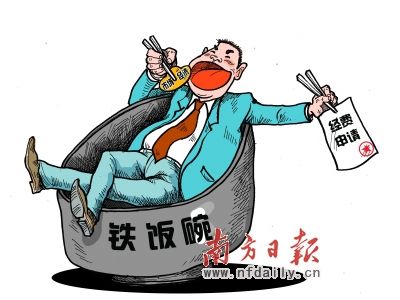
High praise for a political side dish. So, I decided to create a taste challenge for bi-lingual readers, adapting the piece from Chinese to English. Four political facts might enhance appreciation of the spoof: (1) Obama is just Obama, but Xi Jinping is always, “General Secretary”; (2) there is an important role for overseas Chinese figured by US Ambassador to China Gary Faye Locke (骆家辉); (3) subtitled episodes of A Bite of China can be viewed on Youtube, which remains off menu for those of us dining chez Cafe le Firewall, and; (4) General Party Secretary Xi never mentions the iron rice bowl (铁饭碗), an expression used to described the difficulty of removing officials from their posts. Also of note, the expressions emphasize the acting of eating, not food. Consequently, more colloquial English would use variously use “take” or “swallow” or “suck up” or “eat” to translate 吃 — and therein, perhaps, is an experiential entry into cultural differences structuring Sino-American misunderstanding.

After viewing “A Bite of China [literally China on the Tongue]”, Obama said to General Secretary Xi Jinping, “I’ve realized that although Chinese culture consists of extensive knowlege and profound scholarship, it is really an eating culture. Consider: a job is called a rice bowl, working is called living from hand to mouth (糊口); to be employed is called getting enough to eat (混饭), getting by in style is called eating with gusto (吃得开), and things that are liked are said to whet one’s appetite(吃香); to be taken care of is called eating from the little stove (吃小灶), to spend your savings is called eating your principle (吃老本) to take advantage of a woman is called eating tofu (吃豆腐); to depend on your parents is called gnawing on the old (啃老); a man who spends a woman’s money is said to eat soft rice (吃软饭); to overwork is to eat without digesting (吃不消), to take advantage of someone is to eat an advantage (吃亏), jealousy is called eating vinegar (吃醋); to dither is called to eat indesively (吃不准), to do substandard work is to eat dry rice (吃干饭), to take advantage of anyone is also to eat tofu (吃豆腐), to be taken advantage of is to have swallowed the disadvantage (吃了亏), to be afraid to speak up is called a mute eats coptis root (哑巴吃黄连). To have nothing better to do than make trouble for others is called overeating (吃饱撑), to make a decision is called Eight Wang eats the scales (王八吃秤砣), to ignore an order is not to eat soft or hard (软硬不吃), and to have reached one’s limits is called can’t swallow and slink off (吃不了兜着走).

General Secretary Xi interupted him and said, “We should speak about Sino-American relations. Are you talking about this because you’ve overeaten?”

Obama fainted at these words!

When Obama had recovered, General Secretary Xi earnestly said, “With respect to the importance of Sino-American relations, we will eat deeply and throughly, because we haven’t any principle to eat. The way of the world is that big fish eat little fish, but Cold War thinking is no longer appetizing, and cooperating for mutual benefit is the only way to eat with gusto. Only if China and the United States join hands will the benefits be eaten together. There are those who eat at our table and secretly help others; they eat from the rice bowl of harming Sino-American relations. We eat too much bitterness because they eat vinegar, making us eat with effort to establish a partnership. We have to learn from eating the moat (吃一堑长一智), and prevent them from eating from their bowls with their eyes on the pot. This will also let the world eat heart balls of reassurance. Mister President, are you still eating indesively about these matters? If not, I’d like to dine with you in this compound.”

Obama was speachless, and said after a pause, “It really is too deep to be predicted! Only the last idea could be expressed without the character for eating!”

Gary Faye Locke was standing nearby and couldn’t resist reminding Obama, “That’s because he was actually inviting you to eat!”

奥巴马看了《舌尖上的中国》,后对习近平总书记说:我发现中华文化博大精深,其实就是吃的文化。你看:岗位叫饭碗,谋生叫糊口;受雇叫混饭,混得好叫吃得开,受人欢迎叫吃香;受到照顾叫吃小灶,花积蓄叫吃老本;占女人便宜叫吃豆腐;靠长辈生活叫啃老;男人老是用女人的钱叫吃软饭;干活多了叫吃不消,受人伤害叫吃亏,男女嫉妒叫吃醋;犹豫不决叫吃不准,办事不力叫吃干饭, 占人便宜叫吃豆腐,被占便宜叫吃了亏,还不敢声张叫哑巴吃黄连。没事找事叫吃饱撑的,下定决心叫王八吃秤砣,不听劝告叫软硬不吃,收不了场叫吃不了兜着走。
习主席打断他说:我们应该讨论中美关系,你怎么尽说这些,是不是吃饱了撑的了?奥巴马一听,当即晕倒!
奥巴马醒来后,习主席语重心长地说:对中美关系的重要性,我们一定要吃深吃透,这方面我们没有老本可吃。世界的规则就是大鱼吃小鱼,但冷战思维已不吃香,合作共赢才吃得开。只要中美两强联手,一定赢者通吃。有些人吃里扒外,专吃破坏中美关系这碗饭,跟我们争风吃醋,让我们吃了不少苦头,建设战略伙伴关系更加吃力。我们一定要吃一堑长一智,不能再让他们吃着碗里看着锅里,也让全世界吃颗定心丸。总统先生,对这些你还有什么吃不准吗,如果没有,我很愿跟你在这个庄园里共进晚餐。
奥巴马目瞪口呆,半晌才说:果然深不可测!一席话只有最后一句没有吃字!骆家辉在旁忍不住提醒:总统先生,习主席最后这句话您听懂了吗,他是要您请他撮一顿!。。。

christmas in shenzhen

Yesterday on weixin, members of one of my livelier circles debated whether or not Christmas should be translated as “圣诞节 (shèng dàn jié )” or “耶诞节 (yē dàn jié )”. At stake in the debate is whether or not “Holy Birth Festival” — a literal translation of 圣诞节 — should refer to Jesus or to Confucius.

In Mandarin, 圣 (shèng) functions as both an adjective “holy” and also a noun “sage”. In contrast, 耶 (yē ) is a phonetic marker, appearing in Chinese expressions for Jesus (耶稣), Jehovah (耶和华), and the Book of Jeremiah (耶利米书). 耶 also appears in the transliterations of Yale, Jerusalem, the Church of Jesus Christ of Latter Day Saints, and Lamentations. Advocates for putting the “耶稣” back in the translation for “Christmas” had two culturally relevent points. (1) historically, Chinese have used the character 耶 to designate words and institutions from the Judeo-Christian tradition; and (2) the Chinese sage was and remains Confucius. Consequently, they believe that the expression “holy birth festival”, which also means “the Sage’s birth festival” should designate Confucius’ birthday, September 28. The Center may or may not agree with those in the cultural right, after all they recently decided to move Teacher’s Festival from September 10 to September 28 in order to honor China’s original teacher.

The 圣 or 耶 debate is a contemporary example of intellectuals attempting to rectify names (正名), a quintessentially Confucian endeavor. Confucius explained that when we clearly perceive reality we call things by their proper names. It followed that by misusing names, we muddy the perceptual waters and make it difficult for people to understand reality. Importantly, for Confucius, moral relations infused reality. Consequently, to rectify names was in fact an effort to bring the world into harmony through proscribed relations. For the Confucians there was a great deal at stake in the rectification of names — moral certainty, harmonious society and the proper administration of punishments, i.e good government. Nevertheless, the difficulty of rectifying names, even translated names and even when one holds the cultural linguistic high ground, is that language does in fact spin out of control because each of us lives and uses and experiences words and names in divergent contexts and for different purposes.

So what’s at stake in the contemporary 圣 / 耶 debates?

In Shenzhen, Christmas is an international holiday, celebrated by non-Christians. Lovers and friends exchange gifts and eat together. The shopping malls offer all sorts of discounts and there is a general sense of happy consumption without the angst of family reunions. In fact, a Shenzhen Christmas has a particular demographic — high school and college students, as well as young white-collar workers. They still go to school and must go to work, but they use the day to celebrate themselves and their non-familial relationships. In other words, Christmas and its commodification have been appropriated to celebrate young modernity.

In contrast, the older generation emphasized the winter solstice (冬至), which was marked this past Sunday with sweet rice ball soup and noodles. In the north, they ate dumplings. The solstice was not marked by the level of Christmas consumption. Certainly, the Santa Clauses, tinsel and trees, candles and presents had nothing to do with the actual gatherings that took place around family tables.

Thought du jour: At stake in the 圣 / 耶 debate may be the extent to which commodity and youth cultures overlap in these globalizing times. Indeed, the recognizable Christmas traditions — gifts and trees and cookies and candles — didn’t actually come from the early Church, which maybe why they have so happily adopted in Shenzhen.

untrustworthy environs

The current Handshake 302 exhibit, Baishizhou Superhero has just finished its opening weekend. We’ve had good press, and people interested in the topic have sent out weixin‘s and weibo‘s to their circles. In fact, the exhibit is fun, and once people come into the space, they clearly enjoy taking pictures of themselves and friends as one of the heroes (curatorial statement, here). And there’s the rub: getting people into the space.

In fact, mobilizing our neighbors to visit the space has been an ongoing project. Yesterday, during the exhibit’s open hours I observed to a visiting friend that for many of Handshake’s neighbors crossing the threshold from observing in the hallway to participating in the exhibition is a huge step taken only after several hallway engagements. In reply, he gave a class and generational analysis that avoided the easy (and prevalent) stereotypes of “Chinese culture” or “national ethos (国情)”, focusing instead on the social cost of trust.

He opened an analysis with a joke about an old woman who was sitting next to the road. A young man is talking on the phone and she overhears him say, “Dad, purchase me 500,000 yuan insurance.” Without waiting for anymore information, the old woman picks up her stool and moves away from the roadside. The (literal) punchline? Accident insurance apparently covers up to 500,000 rmb in compensation and is more than enough to settle cases in which urbanites hit and cripple rural workers, while an old lady wouldn’t get enough to cover her legal expenses and hospital recovery.

Background to the joke: Chinese tort law addresses the question of compensation for injuries sustained in a car accident in terms of a simple equation: average annual salary of place times twenty years. For those older than sixty, one year is removed for each year older than sixty but younger than 75 (so the compensation rate for a 63-year-old would be times 17). Compensation for all people over the age of 75 is times 5. For children not yet one year old, the compensation is also times 5. . There is a published list of average salaries by place (Shenzhen list). In other words, the average salary for a city worker in Shenzhen is 40,741 and for a rural worker is 10,542. So the mean compensation for car accidents falls between 800,000 and 200,000. There is a more detailed list that includes salaried workers, but clearly, for the majority of China’s rural population, they won’t get more than 500, 000 before legal fees.

My friend’s point was simple: the poor can’t afford unexpected encounters and so their first response is one of self-preservation. The old lady didn’t know if the guy on the phone had a car, she didn’t know if he was talking to his father, she didn’t know if he was amusing himself. All she could know was that if he did have a car, 500,000 and wanted to run her over, he probably could. I countered that this was an open door and most had seen me over the past few months. “But,” my friend added, “it’s a closed, private space. Why take a risk for a photograph?”

My friend added that younger peoplewere more open to conversational exchanges with strangers. He said the most reticent were generation 70, but generation 80 and 90 were increasingly open to proactively talking with strangers. And in fact, the few people who have come to the space through weibo and weixin have been in their early 20s, or members of generation 90. He suggested that we should move the photo stand-in to one of the public squares because (1) people really would enjoy it and (2) they’d feel safe to enjoy it in an open place where there were many, many people.

Good — if sobering — advise. It also reminds me that we have had our best turn out when we organized a fair like environment in the Baishizhou public plaza. Consequently, our next goal is to move Superhero to the Baishizhou Culture Square.

updates…

Yesterday, Baishizhou Superhero opened at Handshake 302. Impressions from the opening, below:

This slideshow requires JavaScript.

Also, the latest weixin meme: the next US Ambassador to China, Max Baucus is looking for a Chinese name. On offer: 没咳死-包咳死, or “Have not yet coughed to death, but coughing to death guaranteed”! — hee.

And an interview with moi at the Nanfang daily.

monkey see…

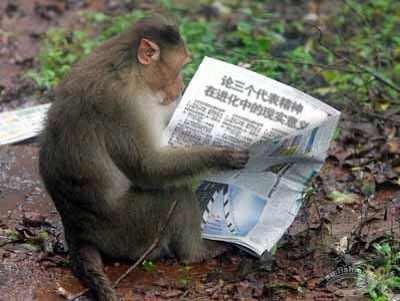
IMG_5155

The monkey is reading about the “three represents“, a direct dig at former General Party Secretary Jiang Zemin. And, if weixin memes are to be believed — if not totally, perhaps partially — then current General Party Secretary Xi Jinping is targeting neibu, or inner circle folks.

In fact, online Xi Jinping’s talks are repeatedly characterized as “strict (严厉)”. The adjective, of course, emphasizes the current administration’s explicit task to broaden reforms. In the aftermath of mixed messages, we’re still trying to figure out what that means. A larger political role for civil society and public debate? Or are we simply talking about a new purge? Excerpts of “strict” talking suggest the both/ and muddling of the current political landscape.

Of note? The ongoing use of classical CCP rhetoric to make veiled attacks on opponents. There’s a fight going on, but who’s the actual target? Also of note, The fact that the “Talk on the meeting about development work” took place in September, but the memes are still circulating. I received these memes yesterday.

A picture (for a sense of the Xi Jinping meme aesthetic), three excerpts and translation:

20139619571399354Today some people are using reform like a tiger skin, [frightening] the people so they don’t speak or make judgments. In my opinion, this is using reform for anti-reform purposes.

We’re not not reforming, we’re actually reforming, actually satisfying the people, pursuing a reform that will increase and further reforms. And what has been the status of reform these past years? Handcuffing productive capacities, perverted models of economic development, and serious environmental problems; we’re killing the goose [reform] that lays golden eggs.
The gap between the rich and poor is too wide. This is not only a problem of individual abilities, but also a result of unequal access to opportunity and power. All along we’ve been saying that we want to empower society, that we want to liberate productive capacity, that we want to realize sustainable development and a stable society, but we haven’t done anything because within the Party there are small mafias (的利益集团的黑手) who benefit too much from the current situation. Is a tiger willing to spit out the meat in its mouth? All that can be done is fight the tiger.

There are many such memes and, whatever the actuall status of Xi Jinping’s reform efforts, the memes resonate. What’s more, the memes are online, which means they have tacit support from the Center. Have we truly entered virtual political world of “monkey see, monkey reform”?