revising the classics, or confucius encounters neoliberalism

Shenzhen parents worry about education — it’s quality, content, methods, and test results. Indeed, I have yet to meet a parent unwilling to spend several hours discussing their child’s education, while activists raise social problems in terms of education.

I have recently received a revisinist version of the childhood classic, “Kong Rong Shares a Pear“. The rewrite is fun and illustrates one of the ways in which the United States (as a symbol) has been put to work in contemporary Chinese debates about the contradiction between a society that values an integrated whole at the expense of individual desire and a society that values individual desire at the expense of social integration.

Kong Rong Shares a Pear

For thousands of years, the moral tale of “Kong Rong Shares His Pear” has been told, becoming the standard for parents who want to teach their children manners. But how do American kids think about this story? Below is a transcript from a class of American students who are studying Chinese. The students range from 8-12 years old.

Teacher: When he was young, Kong Rong was an exceptionally bright student. When he was four, he could already recite many poems. He was polite and courteous. One day, his father’s friend brought a box of pears to the family. His father asked Kong Rong to share the pears with his brothers. Kong Rong took the smallest pear for himself, and the shared the pears based on age rank, giving the largest pear to the oldest, the second largest pear to the second oldest and so on. As he distributed the pears he said, ” I’m the youngest, so I should eat the smallest pear.” His proud father heard him and asked, “But you’re older than your baby brother. Why didn’t you give him the smallest pear?” Kong Rong said, “I am older than him, so I should give it to him.”

What do you think of this story?

Student: Why did the father’s friend give the Kong family pears?

Teacher: they were a gift.

Student: If it was a gift, then all the pears would be good. Why were there obviously big pears and small pears? Why weren’t they all the same size?

Teacher: Ahhh…

Student: Now, if there were big pears and little pears, why did the father put all that responsibility on a four year old’s shoulders? What would have happened if Kong Rong had made a mistake? Would the father have taken back the pears and distributed them correctly?

Teacher: Ahhh…

Student: Why did everyone have to eat a pear? Couldn’t alone leave the pears and let those who wanted a pear choose for themselves?

Teacher: That might have been unfair.

Student: But Kong Rong didn’t necessarily distribute the pears in a just manner. All the brothers had to accept whatever pear Kong Rong decided to give them. Their right to choose was violated. The brother who received the largest pear might have been the brother who hated pears.

Teacher: That’s correct. This story is based on the premise that everyone likes pears.

Student: Why did Kong Rong give pears to the oldest first? If he was going to use age rank, why not start with the youngest?

Teacher: He was being polite.

Student: But after he took the smallest for himself, he didn’t give anyone else a chance to be polite. Why didn’t he give anyone else a opportunity to share pears?

Teacher: So what do you think about Kong Rong?

Student: I don’t like him. What he did wasn’t fair to others, taking away their right to choose and their chance to be polite. Kong Rong isn’t sincere.

Teacher: Why?

Student: This matter is internally contradictory. What if Kong Rong didn’t like pears, so he chose the smallest for himself? Nevertheless, his behavior earned praise? This is hypocritical. On the other hand, if he really liked pears, he should have said so. Otherwise, giving the biggest pears away wouldn’t have made him happy. When we like something we should bravely say so.

I also didn’t like his father.

Teacher: Why not?

Student: He didn’t take responsibility and asked a four year old to do something he couldn’t do. Also, he had no standards, he praised Kong Rong for being polite, but we’ve already seen that Kong Rong was disinterested in sharing the pears.

Teacher: Ahh…

Student: This was a bad story. It encourages subjective standards and praises one for violating democratic rights. This kind of twisted logic story praises a child for developing unhealthy psychology.

Teacher: So what do you think Kong Rong should have done?

Student: Put the pears on the table and let people who wanted to eat pears take what they wanted.

Postscript: From the perspective of an American student, a Confucian classic becomes a tale of twisted psychological motivations. Where do you think the problem lies?

moral grey zones and economic liberalization

Mary Douglass reminded us that dirt was merely matter out-of-place, and correspondingly that the work of cultural categories was to keep human beings in line. Moreover, these lines are not neutral, but like dirt in the kitchen, have all sorts of practical and moral implications for the organization of human life. In turn, border zones comprise sites of categorical breakdown, where border crossing creativity is possible, and also illicit transgressions.

This morning, I stumbled across The Politics of Cross Border Crime, a book that documents prostitution, smuggling, and gambling along and within the borders of Greater China. According to author, Shiu Hing Lo, patterns of regional cross border crime have been changing. During the 1970s and 1980s, the main types of China-Hong Kong, China-Macau, China-Taiwan crime included illegal immigration, cross border robbery, airline highjacking, and drug trafficking. Since the turn of the millennium, however, crime has become more organized, with kidnapping, human trafficking, money laundering, and transborder triads strengthening their control over these activities.

Shenzhen has been trying to shed its frontier town reputation for shady deals and immoral excess. Nevertheless, the city’s internal borders (urbanized villages, older neighborhoods) and restructured borders with Hong Kong and East Asia provide ambiguous sites, where the unsavory might thrive. The most distressing reports of Shenzhen’s role in cross border crime entail forced prostitution of minors and virginal rape. According to Lo:

Cross-border prostitution is a serious problem in Greater China, where supply and demand are both out of control. On the supply side, many children are smuggled by mainland criminals from poor provinces to Shenzhen, where there were 1,000 child prostitutes in June 2006. On the demand side, many unscrupulous Hong Kong men demanded that prostitution dens provide young virgins for them…The main factors contributing to the grave problem of transborder prostitution in Greater China are a lack of strict enforcement for anticorruption campaigns targeted at Guangdong police, especially in Shenzhen’s infamous villages, and the HKSAR government’s failure to cooperate with the mainland government to severely penalize Hong Kong men who solicit mainland prostitutes, especially children.

Lo concludes that:

Unlike the official rhetoric that underscores the mutual benefits of economic integration, the reality is that economic liberalization along the PRC–Hong Kong–Macao boundaries has generated an increase in criminal activity in the region. As economic relations between Taiwan and mainland China have become closer since the presidential election of Ma Ying-jeou in March 2008, cross-border crime between the two places is destined to increase further.

This kind of report distresses me for two reasons. On the one hand, the prostitutionalization of Shenzhen has been an ongoing theme in reports about the city. Indeed, finding prostitutes, establishing their level of willingness, and complaining about their mercenary tendencies have been common metaphors to describe reform and opening and what it has meant for social mores in the SEZ. A similar rhetoric is used within Shenzhen to describe and undermine urban village neighborhoods. On the other hand, as Lo notes, prostitution and human trafficking have increased because Shenzhen and urbanized villages do offer more spaces for unregulated commerce, which may be either an opportunity or a risk for society. In this sense, there is need for increased vigilance to protect children and vulnerable residents from triad members and traveling businessmen who have more in common than we like to think.

Sigh.

all roads will lead you home

I’ve just joined the editorial collective of all roads will lead you home, an online gathering place for music, poetry, visual art, and conversation about the creative process. Please join us.

traveling impressions/ hong kong international airport

Marc Augé famously suggested that airports are non-places because they are too transient to have an identity. Other non-places include highways, hotel rooms, and waiting rooms. Augé used the idea of the non-place to describe the dislocations and standardizations that characterize super modernity.

Of note, our shopping mall cities, Shenzhen for example, offer few concrete (literally!) objects that have particular and recognizably distinct identities. At the MixC in Luohu and coastal City in Nanshan, for example, we see the same mix of chain stores, domestic and international arranged in a space that is more luxurious than the Rockaway mall of my teenage years, but in essence no different. The comparison, chez Shenzhen is with an imagined countryside and the urbanized villages. In other words, supermodern shopping malls are a place holder in the search for something better, but not interesting in and of themselves.

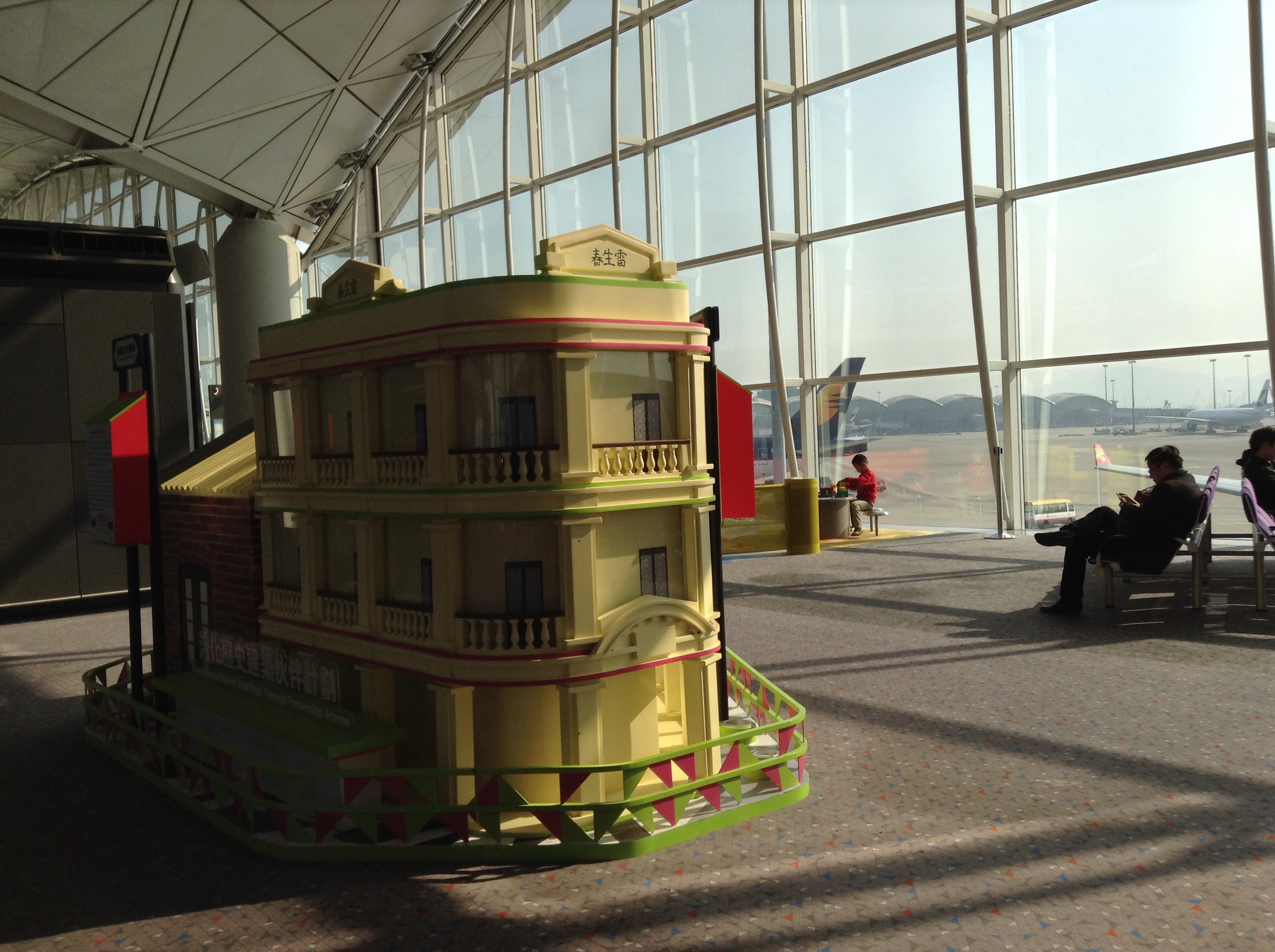
Today, I am in Hong Kong international airport and have noticed a few replicas of preserved buildings. Such is the anonymity of the super modern city that we even become nostalgic for colonial architecture — smaller and distinct from the airport, which dwarfs these toylike memories of a quaint accessible, familiar and endearing city that never was.

image

spring rush

Yesterday, the mass movement of Chinese literally known as “Spring Shipping (春运)”, but could also be translated as Spring Rush began and will continue until February 24. This year it is estimated that there will be 3.6 billion one way trips made during these 40 days. This is roughly one round trip per Chinese person. Some people will make more than two one way trips, and some will stay in place, but the figures indicate the scale of movement as people travel to be with family or to have fun.

Today, the city felt emptier and it will continue apace until the end of the first week, or after the 15 the day of the first month.

Party on!

venue a walkway

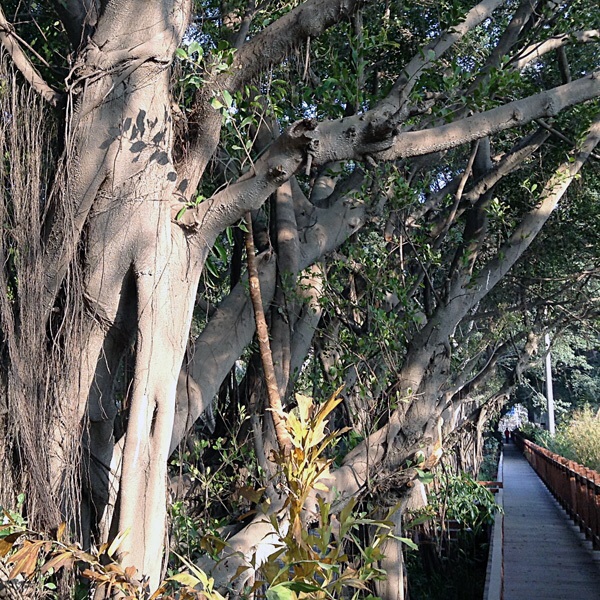
One of my favorite details at the Value Factory is the approach. Impressions below.

This slideshow requires JavaScript.

the shenzhen school uniform

Apparently the Shenzhen school uniform is the talk of the national under 18 virtual community.

All Shenzhen public students wear the same uniform, regardless of the school they attend. On buses and in the subway, students either wear the elementary uniform or the high school uniform so one doesn’t know what school they attend, only that they attend. In fact, the Shenzhen school uniform is so recognizable that in the press and online it stands for the city’s youth. Thus, for example, the scandal of the youthful parents and their baby photo (from a tv series that admits high school students are having sex) as well as the explicit sexualization of Shenzhen little sisters in their school uniforms and a website for student couples to upload pictures of Shenzhen school uniform lovers.

Elsewhere in China commonality is marked by joining Party youth organizations because schools have their own recognizable uniforms. Cui Jian famously used the Young Pioneer red handkerchief to blindfold himself and in doing so evoked the trauma of a generation. In Shenzhen, the ubiquitous school uniform has taken on a similar generalizing function to the red handkerchief. However, instead of evoking a national identity, the school uniform symbolizes an explicitly Shenzhen childhood and teenhood.

I first heard about the national significance of the Shenzhen school uniform at a biennale forum. We old folks onstage were discussing if there was a common Shenzhen culture or civic identity. A student in the audience said there was. He mentioned that young people in Shenzhen have ideas and dreams that are shared, and also that these dreams and ambitions are different from the rest of the country. He then underscored his point by citing the omnipresence of the Shenzhen uniform both online and at Chinese universities. It seems that Shenzhen students continue to wear the dark blue sweatpants even after they get to college. Part of the charm, it seems, is that the uniform really is so ugly one grows to love it.

Back in the day, there was active debate both within and outside Shenzhen over how a civic identity might be created. Fortunately for us moldy oldies, the young people of the city have done it despite us. A selection of Shenzhen school uniform pictures, including a link to the highly popular digital comic book, Days When I Wore A Shenzhen School Uniform.

This slideshow requires JavaScript.

thinking density, shenzhen population of, 2013

The day before yesterday I participated in a Biennale forum on high density living. I thought high density living referred to number of people living in so much space. Rumor has it, for example, that there are roughly 19.5 million people living in Shenzhen — a mere 4 million over the official unofficial population count (read generally accepted and quoted). Shenzhen has an official area of 1,952 square kilometers, which would make the SEZ’s estimated actual population density to be around 10,000 people per square kilometer. The population density of people with hukou would be significantly less dense, around 1,300 people per square kilometer, but no one believes that figure. On the recently updated Chinese Wikipedia the population density is given as being 5,201 per square kilometer.

Population density can be appropriated to give us a sense of forms of social inequality. Baishizhou, for example, is located in Shahe Street Office, which has an area of approximately 25 square kilometers. The estimated population is around 260,000, giving us an average population density of 10,400 people per square kilometer, which is close to the guesstimated municipal average above. However, when we account for Baishizhou, we see an interesting realignment.

Baishizhou occupies an area of .6 square kilometers (the rest of the area’s original holdings has already been annexed by the state). It has a guesstimated population of 140,000 people. This means that Baishizhou has a population density of 23,333 people per square kilometer, while the rest of Shahe, which includes Overseas Chinese Town and Mangrove Bay estates has a population density of 4,898 people per square kilometer. So Baishizhou has a population density which is over twice the municipal average and OCT and Mangrove Bay areas have a population density that is less than half the city average.

I was wrong in thinking that population density is the only way to operationalize unequal access to space. In archi-parlance (that’s a personal neologism for “how architects and urban planners talk about the world and stuff they’re building), there are two more definitions of density that they’re interested in measuring– floor area ratio (FAR) and dwelling unit density (DU). And if you’re wondering do they further abstract these descriptions of the built environment by using acronyms, the answer is a resounding yes! The density atlas provides an illustrated explanation of terms. Below, I try to work through what these terms might tell us about the spatialization of unequal access to space through and within Shenzhen’s urbanized villages.

FAR density refers to how much building occupies the space. And it’s three-dimensional. So floor area ratio means the total area on all floors of all buildings on a certain plot. Thus, a FAR of 2 would indicate that the total floor area of a building is two times the gross area of the plot on which it is constructed, as in a multi-story building. So, a FAR of 10 would be ten stories, if the base was consistent (as in a box). (And yes, I’m grappling to get my mind around this kind of abstraction so I think in simple terms, or word problems if you will.)

In order to calculate DU density, you posit so many square meters per person. A 100 square meter building with a FAR of 6 would have 600 square meters. If we then posit 20 square meters per person, our 600 square meter building could shelter 30 people. In other words, if we were to take standard person to space ratio used by many Shenzhen urban planners, then 30 people could comfortably live in one handshake building.

But clearly that’s a calculation for one, single purpose building. Once we start allocating space for functions, we need to make value judgments. How much space for business? For women’s restrooms in public spaces? For sleeping? In other words, to allocate spaces within the built environment we need to make decisions that will reveal and confirm our sense of what is the good life and how we will share that life and it’s material components. To return to our hypothetical 6-story handshake building, if we give the first floor to business and then build subdivide a floor into (3.5 X 6) 21 sq meter efficiencies (still above the magic 20), three on one side of the hallway and one on the other, we would get four rooms. However, if we further subdivide those rooms, we could get eight even smaller rooms (leaving space for hallway and stairs).

In practice, design is not that simple. But the numbers do begin to operationalize inequality in terms that resonate the ethical discourse modern education has equipped us with. For example, the layout of Handshake 302 shows a living space of (4.335 X 3.06) = 13.2651 square meters. There is a small cooking space and toilet which also allows for standing baths. Our neighbors live in similar sized rooms, and share the space and rent among two or three roommates. This suggests that the actual DU in a Baishizhou handshake efficiency can be as low as 4.4 square meters per person. At 850 per month, wear talking a rental cost of 64.1 yuan per meter.

In contrast, it costs 18,600 to rent a condo at neighboring Zhongxin Mangrove Bay, for example. The flat has four bedrooms, two living rooms, and three bathrooms that take up a total of 265 square meters, or slightly less than half a handshake building. It is a family home, so let’s guesstimate a pair of grandparents, a set of parents and one kid, totaling five people. Each of them enjoys 53 square meters of living space. Each square meter has a rental cost of approximately 70 yuan, which is not that much higher than Baishizhou.

Admittedly, one can tell many stories with statistics, but the square meter story of Baishizhou and its neighbors is one of gross inequality. Mangrove Bay residents can occupy anywhere from 15 to roughly 18 times the space of Baishizhou renters, and pay about 22 times the cost for that privilege. At this scale, one can begin to imagine what razing Baishizhou means in terms of affordable housing on the one hand and potential profit on the other. Point du jour, however, is that there is no “standard” square meter per person ratio, just expanding levels of inequality.

So, some stats du jour that should give us pause to reflect on the values we are constructing into the built environment.

Baishizhou music video!

For the curious, a folk song about Baishizhou.

The song is credited to 七弦花 and the lyrics make it clear — cheap housing make Baishizhou the station of choice for young migrants.

The song begins, take a walk with me through where I live. Crowded buildings stretch to the sky and we cannot see the sky. Girls smile like flowers and hold cigarettes in their hands. The kiosks keep expanding and money goes missing from a bowl.

And continues: you see adverts for housing everywhere, and it’s easy to get a room. Old stub and second hand stores and never ending bills. Moving trucks parked on the side of the road and business cards from moving companies.

The heavily accented voices of immigrants saying where they live in Baishizhou.

Smell of beer and charcoal briquettes are burning lives. And the smoke stings our eyes inside Baishizhou. Pop songs permeate the streets here in Baishizhou.

Images and sentiment reflect the mood of many young immigrants who want the shenzhen dream and live Baishizhou reality…

shenzhen administrative districts

Useful maps of Shenzhen administrative divisions online here. Includes municipal and district maps.