because not all villagers were created equal…

The stereotype of the second generation of Shenzhen villagers being “rich, lazy, mah johng playing, playboys (who might also do drugs)” is not only predicated on the idea that all of Shenzhen’s original inhabitants are rich, but also that their children have grown up aimless. However, Bao’an County’s original 300,000 residents and their children were not all created equal. What’s more, they increasingly find themselves belonging to antagonistic economic classes, while their children come of age grappling with problems that none of their parents imagined facing. Some second generation SZ farmers must look for wage labor in factories that (rumor has it) do not hire locals, preferring instead to hire migrant workers, even as other second generation SZ farmers are the first in their family to gone to college, and still others are, yes, struggling with too much wealth.

The inequality among locals has been created through reform era legislation and urban development projects, which have built upon and elaborated historical inequalities and traditional norms. In an earlier post, I charted the borders and corridors that have shaped economic possibility and subsequent patterns of urbanization in the SEZ, arguing that three borders have enabled urbanization in Shenzhen: the border with Hong Kong, the second line, and the city limits, which abut Dongguan in the northwest and Huizhou in the northeast. Two economic corridors have facilitated Shenzhen’s growth: the Guangshen highway corridor and the Kowloon-Canton Railway. The Guangshen highway corridor parallels the area’s riparian trade routes, which were the means of Han expansion from Guangzhou southwardly on the Pearl River and its tributaries. The KCR, of course, was the British attempt to preempt and redirect the PRD’s extensive trade network.

Not unexpectedly, proximity to a border or corridor has been a condition of reform era riches. Villages near the nexus of these borders and corridors have had disproportional opportunities to build and manage industrial parks and real estate developments. The earliest villages to get rich, for example, were all located along the Shenzhen-Hong Kong border at corridor checkpoints — Shekou (Fishing 1 and Wanxia) and Luohu (Hubei), first, but then Huanggang (Huanggang, Shuiwei, Xiasha, and Shangsha). However, guanwai villages retained land rights a full 12 years longer than did guannei villagers, with the result that largest and wealthiest village joint stock companies are now primarily located along the Pearl River Delta (Shajing and Huaide) and KCR corridors (Nanling near Buji). Consequently, many villages have remained “stuck” in between these two different modes of production, neither farming nor investing in manufacturing, let alone transitioning to the new creative economy. Areas of relative poverty include many Longgang District Villages as well as villages in Gongming and Guangming.

However, proximity to the borders and corridors has not in itself created the conditions for villages to transition from lives based on rural production to lives based on urban industrial manufacturing. In addition to the construction of infrastructure, differences in Mao-era administrative designation have also shaped current inequalities among villagers. First, successful villages have operated as collectives, rather than relying on individual efforts. These villages not only inherited Maoist organization, including management experience, but also inherited common ancestry. Thus, single surname (一姓) villages, which have renovated ancestral halls and promoted traditional rituals have generally been more organized than random surname (杂姓) villages, which were created during the Maoist era for production purposes. Second, successful villages have had traditional land rights, which were extensive. Indeed, most traditional villages have made their fortune through land deals. In contrast, fishing villages (渔村) and overseas Chinese villages (桥村) had foundation rights (宅地), but not land development rights. This meant individual villagers could build private homes, but that villages could not collectively invest in industrial parks or real estate developments. Moreover, villages did not benefit from compensation deals between developers and nearby traditional villages. Third, as recent events in Wanfeng demonstrate, some village heads have been less corrupt than others, while the success of Huaide, Nanling, Huanggang, and Xiasha Villages has been directly attributed to the foresight of the incumbent leader.

It is an open secret that legislation has been the source of Shenzhen’s competitive advantage, both for outside investors and for indigenous Bao’an villagers. What’s more, this legislation did provide the framework for many local villages and individual villagers to become rich. Indeed, when Deng Xiaoping died in February 1997, Shenzhen villagers openly wept and brought funeral wreathes to the statue at Lianhua Park and his Shennan Road billboard. Nevertheless, the emergence of class differences within and between villages directs our attention to the ways in which Shenzhen has displaced Bao’an as “the local”. Within this new locale, hometown status no longer provides a viable identity because locals have been segregated into urban classes that have disrupted traditional rural relations, even as they learn to navigate a hometown that is no longer theirs, assimilate the mores and customs of urbanites, and speak standard Mandarin, rather than local Cantonese or Hakka dialect. And in this new world ordering, poor Baoan locals embody a poignant form of global tragedy.
渔一村:of old men and the landfilled sea

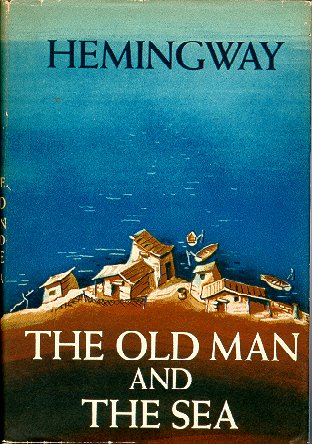
Yesterday’s bloggy romance with the sea continues and although I have shifted my gaze from Cuba to Shekou, it is worth mentioning that the writers’ emphasis on masculine conquest continues; today, in episode 8 of The Transformation of Shenzhen Villages (沧海桑田:深圳村庄三十年), Chen Hong tells the story of Fishing Village 1 (渔一村), Shekou. Again, the story begins in a village, but this is also where similarities between the two narratives end. Hemingway figured human life through the isolated figure of an old man navigating the Caribbean on a rickety skiff and superstition. In contrast, Chen Hong figures humanity through the construction of ports, trading ventures and the world-making connections that they enable, suggesting that the opportunity to launch one’s skiff is itself a political decision which once made determines the fate of villagers. For those who remember the 1988 television documentary, River Elegy (河殇) which linked China’s decline and ultimate humiliation to the Ming decision to ban maritime activity, a not-so-subtle critique of Maoist isolation, Chen Hong’s passion for the sea and the [free trade] world it symbolizes is self-evident.

Episode 8 opens by juxtaposing images of Ming and Qing trade centered on Guangzhou with pictures of the construction of Shekou, reminding viewers that Zheng He (郑和) set forth from or loaded supplies at Chiwan Port at least five times. Lest the viewer forget the consequences of isolation, the opening sequence ends with bleak, black and white footage of a backwater port, overgrown and clogged with weeds, small wooden boats berthed in stagnant waters. Boom! The first explosion opens the door to new world order, which is also, new village order.

Traditionally, the villagers of Fishing 1 weren’t actually villagers but individual fishing families who lived on boats, coming onshore to sell the day’s catch. Families came from all over the Pearl River Delta forming a community through their livelihood, rather than through ancestry or even a common version of Cantonese. However, in 1959, the political decision was made to organize them as a brigade (生产大队). They were 90 households with a total population of 450 people and settled as four small production teams (小队) in Nantou, Gushu, Neilingding Island, and Shekou. The Fishing Brigade worked to modernize the fleet and in 1978 during a meeting on scientific production, Hua Guofeng actually gave the brigade a first place award. Indeed, at the beginning of Reform, the Brigade had 69 ocean fishing vessels, 72 transport ships, and 18 oxygen boats that fished the South China Sea and Pearl River Delta bringing in fresh seafood for Cantonese dishes and by 1992, had accumulated enough capital to invest in modern industrial deep sea fishing vessels.

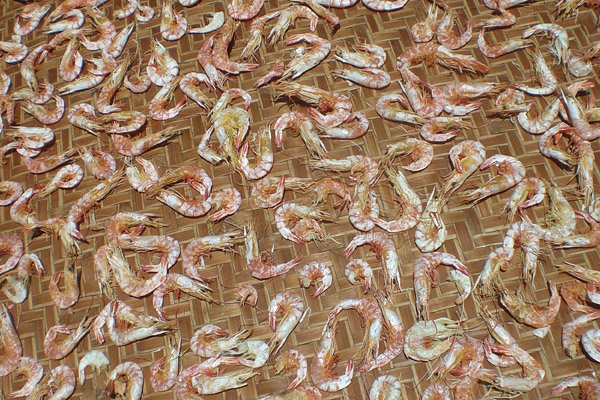
From 1978 through 1986, the Fishing Brigade lived the socialist dream, which was a traditional Chinese dream; the men fished, going as far away as Guangxi, the women kept house, children went to school and had medicine, and all ate in a common canteen, where the work team provided delicious food, including squid and shrimp. The system was called the 8 provisions (八包). However, by the late 80s early 90s, the scale of urbanization and land reclamation meant that traditional fishing areas had been contaminated and fish breeding grounds buried, and it was impossible to continue living from the sea. Suddenly, the advantages of the sea declined as property values soared and Fishing 1 faced a contradiction that many other villages would eventually face — what to do when urbanization decimated the conditions of traditional livelihood?

Once the sea was gone, Fishing 1 had no way of making a living because it did not have any land, except for that which the government had given it for housing in 1959, including a section on Neidingling Island, which Fishing 1 decided to develop as a resort and in 1992 as part of the guannei rural urbanization movement, the Fishing Brigade became the Fishing 1 stock holding corporation. However, after Fishing 1 had already invested their accumulated capital and borrowed against the development, Shenzhen and Zhuhai began a court case over who actually owned the island. Traditionally, the Island belonged to Zhuhai. However, in 1955, the Center had assigned Neidingling to Baoan, but no one could actually prove whether or not the transfer had gone through until 2002, when a copy of 1955 decision was found. In 2009, the Guangdong Provincial government finally ruled in favor of Shenzhen’s claim to Neidingling Island. However, the case raged long enough to impoverish Fishing 1 as the joint stock corporation/ fishing brigade/ village could no longer fish and except for Neidingling had no other traditional land rights. Indeed, by 2009 when the case was settled, Fishing 1’s deep sea fishing rights had already been bought out by China Merchants, which in turn sold them to Wanxia, one of Shekou’s original land-based villages.

And so here’s the neoliberal twist in Chen Hong’s story of old men and their vanishing sea: Fishing 1 re-entered Shenzhen urban planning as part of the Together Rich Project (同富裕项目), and over the past decade restructured and invested elsewhere: an industrial park in guanwai Gongming and fish breeding farms in Zhanjiang, for example. In addition, the Municipality organized training for fishermen to learn new skills. Nevertheless, the members of Fishing 1 have not only been proletarianized over the past 30 years, but are still paying off one of the debts that fueled Shekou’s growth. After all, Fishing 1 had no rights to any of the coastal property developments that enriched both China Merchants and neighboring Wanxia Village. Instead, Episode 8 ends with exhortations — from the Municipality and from the filmmaker — for individual development and initiative, ironically and inexorably returning us to Hemingway’s sea, where old men struggle feed themselves because they have been isolated by .

For more on my obsession with Houhai Land reclamation, more entries, here. A wander through the earliest Shekou landmarks, including the Shekou and Neilingding fishing families settlements, below:

This slideshow requires JavaScript.

reading the old man and the sea (in shenzhen)

I am currently reading The Old Man and the Sea with two 16 year old Chinese high school sophomores. They are cousins. One is a “good” student, strong and sly in the self-protective way of students who know how to work the system, but do not reach the upper echelon of test results. The other is delicate and shy, a “top” student, who is being groomed to test into Beijing University, producing results (出成绩) for her school and family. The good student knows that unless she goes abroad, she will no doubt end up at Shenzhen University, no matter how much harder she works at school; fortunately, her parents can afford to send her anywhere and so she is not too sly, and her eagerness to model good student answers quickly gives way to assertive self-confidence. The top student already struggles with contradictory desires and ambitions. She yearns to study abroad, but her homeroom teacher has already begun pressuring her to stop studying for the TOEFL and to use her extra time more productively — taking practice gaokao tests or studying the junior year high school curriculum. What’s more, the child of divorce she knows that her mother can’t afford Chinese tuitions, let alone foreign and thus she must secure a scholarship  wherever she attends university.

We sit around a square table, tracking the relationship between the old man and the marlin. Santiago believes that his fish is out there, and his quest begins when he sights the purposeful circling of a man-of-war bird. His faith is rewarded and the contest engaged. As the fish pulls the man further out to sea, away from from the lights of Havana and known landmarks, the old man endures, charts his progress against the stars and his suffering, and the fish becomes more than a fish — first a friend, then a brother, more noble, but less intelligent, a brother who must be convinced that he is less than he who came to kill. It is a grand battle that does not end in glory, but the realization of hubris, “I shouldn’t have gone out so far, fish,” the old man says to the marlin’s corpse, which has been strapped to the skiff and is being inexorably eaten by sharks. When the old man finally drifts ashore, all that remains is an 18 foot skeleton and the certainty of death.

I chose The Old Man and the Sea because, well misgivings about Hemingway notwithstanding, he knew his craft. His language is deceptively simple. Any sentence taken out of context seems ordinary, common even, but together his words sculpt moral landscapes that make exquisitely salient the brute masculinity and ultimately tragic consequences of lives lived against nature.

“Americans aren’t very peace-loving,” the good student concludes.

“Did the old man have faith in luck or faith in the sea?” the top student asks.

Thus, yesterday’s lesson transformed from a discussion about human limits into a conversation about how being human is culturally defined and experienced. The old man is not their old man, his fish is not their fish, and the sea that relentlessly pulls us out of our depth, that tests our forbearance and ultimately claims our soul, that sea does not figure their dreams. It may be a generational difference. But perhaps not. Certainly the new US passport is replete with pictures of men taking on nature — cowboys and seamen ruggedly occupying the western plains and Pacific waves, respectively. And that’s the point: the girls read with me because the good student’s mother is a friend and she has entrusted her daughter to me (and yes those words were used “交给你”) for old-fashioned Chinese purpose: edification rather than simple instruction. The goal of our bi-weekly meetings is not to improve English test scores or practice oral English, but rather close reading of novels, essays and poetry, to help the teenagers learn to navigate literary nuance elsewhere, which it turns out is also learning to simultaneously recognize oneself and one’s Other despite and across epic difference, which isn’t quite what Hemingway had in mind when he figured Man through his engagement with the Fish, but nevertheless where yesterday’s lesson ended.

early edition vs weibo: who are you reading on the way to work?

Successful monopolies not only dominate an industry sector, but also provide enough diversity within their fiefdom to create the illusion of choice and competing views. Take, for example, the Shenzhen News Publishing Group, Ltd. (深圳报业集团发行有限公司), which was formed in 2002 through the merger of Shenzhen Special Zone News Group and the Shenzhen Commercial News Society. Today, the Group publishes ten newspapers and five journals, owns a book publishing house, and operates the city’s largest news website (深圳新闻网).

The Group has identified four primary news audiences. Shenzhen Daily (深圳日报) offers a Party-centric take on news of the city, country, and world and its audience is self-identified through their (actual or aspired) level of integration into the Municipal apparatus. Shenzhen Commercial News (深圳商报) provides daily reportage on the economy and investors, businessmen, and white collar workers constitute its intended audience. Shenzhen Nightly News (深圳晚报) is a comprehensive newspaper aimed at blue collar workers and ordinary people, who are interested in gossip, local happenings, and a concise reiteration of who’s in charge. Jing Bao (晶报) seems aimed at Generation 80, who are interested in hip takes on the news, more arts reportage, and have slightly “new social movement” impulses, including interests in environmentalism, social justice, and healthy yoga lifestyles.

What happens when new social media challenge that monopoly? Insight comes from how the Shenzhen News Publishing Group has targeted morning commuters on the Shenzhen subway.

During the Shenzhen morning commute, subway riders read Subway 8 a.m., read weibo, or space out; few actually talk to each other or watch the incessant advertising broadcasts on the LED screens (four to a car so that everyone can watch). Shenzhen News Publishing prints Subway 8 a.m. (地铁早8点) under its Shenzhen Metropolitan (深圳都市报) brand and distributes it to commuters on their way to work. The free newspaper unabashedly rehashes news in the most provocative ways, foregoing either analysis or background, reproducing in paper form the weibo experience. In yesterday’s edition, for example, the drought in Lijiang is covered in 91 characters, with a picture three times the size of the text area. Likewise, a 131 character report on Shenzhen’s heatwave was sensationalized with an over-saturated image of a human silhouette against an azure sky and white cloud. In a more explicit weibo reference, a story about a drunken subway rider who used a fire extinguisher to smash a window and then attacked the subway worker who tried to stop him included four surveillance coverage photos, a brief description of what had happened, and a report of weibo cries for human flesh. What’s more, Subway 8 a.m. does not include political news; this isn’t a newspaper, but a collection of sensationalist stories, sports coverage, and gossip.

The differences between Subway 8 a.m. and weibo are also instructive because they remind us that although the weibo and Subway 8 a.m. provide the same content, nevertheless the form of reporting is critical both to a reader’s experience and  (as yet) to capitalist experience, indicating why the Shenzhen Publishing Group has decided to publish a free gossip rag. On the one hand, from a reader’s perspective, Subway 8 a.m. comes in paper form with all the advantages thereof: bigger characters for easy reading, space for somewhat longer stories so that readers can choose between weibo-shorts and more detailed reports on why your child is always coughing or services for wishing neidi mothers, “Happy Mother’s Day!” Consequently, Subway 8 a.m. appeals to those of us who are tired of backlit spaces or enjoy the feel of newsprint or may even want to read an article that will occupy our imaginations for longer than it takes to ride from the Window of the World to the OCT station. On the other hand, from a business perspective, Subway 8 a.m. includes space for advertising. The early edition’s front page includes the masthead, one headline, and two half-page advertisements. Consequently, in between the front-page and the back-page gossip (“We no longer believe in love” was the title of the article on Zhang Yimou’s decision to sign with CCA and split with Zhang Weiping’s Beijing New Pictures (北京新画面影业公司) and yes it was a report on a weibo report!) are 22 pages filled with advertisements that look suspiciously like weibo stories — compelling pictures and seductive blurbs, such as: luxurious homes on the subway line.

Point du jour: the Shenzhen News Publishing Group has met the weibo challenge to its monopoly over local news (and sports and entertainment and society) coverage by becoming a print edition of weibo plus. Like weibo, Subway 8 a.m. is free-of-charge and content-lite, plus easy to read characters, plus slightly longer stories, and plus plus: advertising and info-stories.

the secret to happiness…

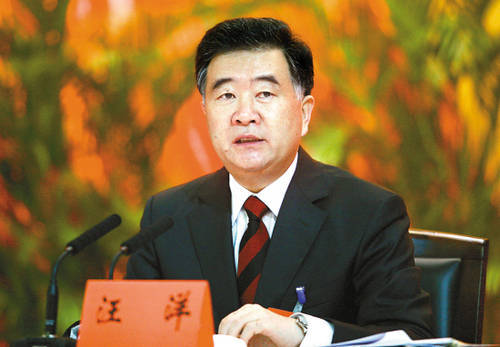
Yesterday, Guangdong Party Secretary Wang Yang (汪洋) addressed the 11th Guangdong Provincial Congress of Party Representatives, making five statements which have set him apart from other high-ranking leaders. Once a rival of Bo Xilai for a place in the 18th Naptional People’s Congress appointments, Wang Yang has also made his gesture to gain the support of the people. However, where Bo Xilai went poor populist, Wang Yang’s speech has me remembering the Province’s historic role in the 1911 Xinhai Revolution, when 100 years ago, with its links to overseas Chinese and relatively advanced economy, Guangdong was the cradle of China’s bourgeois revolution, in contrast to the rural uprising that Mao Zedong transformed into a socialist revolution. Wang Yang is a leader for China’s emergent and increasingly vocal middle class. And yes, many of them live in the Pearl River Delta.

Wang Yang’s Five Statements

1. The People are the agent that makes history, as well as the agent that constructs and enjoys Happy Guangdong. The people have the right to pursue happiness; it is the responsibility of the Party and the government to benefit the People. We must discard the mistaken idea that the People’s happiness is a result of the Party and government’s benevolence. (人民群众是创造历史的主体,也是建设和享有幸福广东的主体。追求幸福,是人民的权利;造福人民,是党和政府的责任。我们必须破除人民幸福是党和政府恩赐的错误认识.)

2. We need to discard unwritten rules and bad habits, creating a just, lively, and orderly social environment, where those who follow the rules don’t suffer, where talented people can take the lead, and can pursue and create their own happy life to the best of their ability. (破除潜规则陋习,创造公平公正、活力有序的社会环境,让守规矩的人不吃亏,让有本事的人有奔头,各尽所能地追求和创造自己的幸福生活.)

3. The greatest threat to the Party’s long-term political control is becoming too far from the masses. Our Party can only achieve eternal success to the extent that it comes from the People, is rooted in the People, and serves the People. (党长期执政的最大危险是脱离群众。只有始终坚持来自人民、植根人民、服务人民,我们党才能永远立于不败之地.)

4. We need the courage to use personal revolution to firmly destroy the interests that have turned their backs on socialist market economic reforms in order to resolve problems of government agents exceeding their function, absenting their function, and mistaking their function, making government into a provider of public goods and services. (我们要以自我革命的勇气,坚决打破背离社会主义市场经济改革方向的利益格局,解决政府职能越位、缺位、错位等问题,使政府真正成为公共产品和公共服务的提供者.)

5. Guangdong’s market society has already begun to change… If we take hold of this opportunity, we can breakthrough many difficulties and problems on the road ahead of us, smoothly entering the ranks of more modern areas; if we don’t take hold of this opportunity, we may be unable to escape “the middle income trap”, stagnating and retreating, and the advances we have already made could be lost.  (广东经济社会已经步入转型期……把握得好,我们就能破解前进道路上的各种困难和问题,顺利步入比较发达的现代化地区行列;把握得不好,我们就有可能跨不过‘中等收入陷阱’,出现停滞和倒退,已经取得的发展成果也有可能断送.)

launching

These past few days, rain has cleared Shenzhen skies and when the sun comes out, everything sparkles. Yesterday, I followed the rays to the Spring Cocoon, which has been opened for commercial use. The walk from Coastal City to the sports center was once landscaped to assert the SEZ’s green ambitions. However, the corridor is now under construction. In the east, another shopping mall and in the west, lest we have any doubts about the Municipality’s futuristic plans, China State Construction (中国建筑) has begun laying the foundations for the Aerospace Science and Technology Square. Impressions, below; past walk when the Cocoon was under construction, here.

This slideshow requires JavaScript.

as yet shenzhen has no capital h history…

The experience of walking Shenzhen is significantly different from visiting, Beijing or Shanghai, Xi’an or Guangzhou, where the meaning of the past has already been codified, renovated, and can be consumed on a nostalgic tour. In school we learn that Beijing’s history is Ming-Qing imperial, Shanghai’s history is East-West colonial hybrid, Xi’an’s history is ancient, while Guangzhou’s history is South China sea commerce and migration. We then go to the respective tourist destination to have our knowledge confirmed and perhaps enriched by and through an appropriate activity. We walk Beijing’s hutong and the Forbidden City, drink coffee or cocktails in a stylish restaurant in Shanghai’s shikumen and the Bund, admire Xi’an’s beilin and terracotta soldiers, and wander the small shops of Guangzhou’s West Gate. Indeed, each of these tourist destinations succeeds as such precisely because the site metonymically represents the respective city’s place in China’s “5,000 years” of civilization. We leave thinking we have a deeper understanding of where we have been. Maybe we do. Most likely we don’t. But there is something reassuring in having our stereotypes confirmed, and those stereotypes are what I mean by capital h history.

Now, there are historically significant sites in Shenzhen — Old NantouDapeng Fortress, the Chiwan Tianhou TempleDongmen, and Yumin Village. However, municipal efforts to promote Old Nantou and Dongmen, notwithstanding, none of these historical sites has captured the imagination of either residents or visitors. I suspect this is in part because each of these places represents a portion of Chinese history that is already preserved elsewhere. Old Nantou and the Chiwan Tianhou Temple, for example, represent ancient efforts to develop the Chinese salt trade and settle the Pearl River Delta, but there are finer examples of that era to be imagined and seen in Guangzhou, while ancient Chinese history is more elegantly preserved in Xi’an and Jiangnan. Even the Tianhou sea cult is more closely identified with Tianjin and Xiamen than it is with South China temples and shrines. Likewise, Dapeng Fortress is an outpost of Ming-Qing military imperialism, but of a failed variety, rather than successful garrisons to be explored throughout the north.

Dongmen and Yumin Village are perhaps more representative of Shenzhen’s importance as the epicenter of early reform. However, both are historically compromised. Although Dongmin is identified with so-called Shen Kong commerce, for example, there really are more upscale malls throughout both Shenzhen and Hong Kong where one might purchase global products. And what about Yumin Village? Deng Xiaoping visited Yumin Village in 1984, inspecting one of the three-story private homes that local villagers had just built. He declared that Shenzhen speed was a good thing and that the rest of the country should follow. The 1995 exhibition to commemorate the 15th anniversary of the establishment of the Shenzhen SEZ included an installation that reproduced the interior of one of those homes, which at the time, was more luxurious than the homes of urban cadres in Beijing and Shanghai. Here’s the rub: although Yumin Village has been integrated into the Shenzhen municipal apparatus as a Luohu neighborhood, nevertheless the actual buildings that Deng saw and even the home he inspected were razed over ten years ago. There is a history board there, but nothing from 1984 remains and Yumin Village continues to function as a border urban village, with low rents for migrants who work nearby, spas and massage parlors for visiting Hong Kong people, and places where villagers play mah jong and gather to drink tea and gossip.

The absence of an agreed upon master narrative means that walking Shenzhen allows individuals to judge what does and does not represent capital h history in the SEZ. Now Shenzhen does boast upscale skyscrapers that represent achievements within this process — Guomao, Diwang, and the Civic Center all come to mind and are worth a visit. Those wanting to see the “real” capital h historic Shenzhen, I suggest visiting either an industrial park or an urban village. Early 80s work unit housing in Luohu and Shekou are also great examples of how industrial urbanization transformed the area. Personally, however, I believe that if Shenzhen has a place in China’s 5,000 years narrative it is as an epicenter of rural urbanization, including transformation of the local environment, proletarianization of rural migrants to SEZ factories, and the forms of urbanization that returned workers have promoted or their remittances enabled. However, even after over 30 years of reforming and opening Baoan villages, the city is only just starting to come to terms with this legacy and most villages, even the most famous such as Baishizhou are scheduled to be razed. All this to say that as yet, the meaning of Shenzhen’s cultural and historical inheritance is still up for grabs because we are only just starting to come to terms with the urban legacy of Reform and Opening. This means that as yet the city has no capital h history and no corresponding historical sites that one can visit and say, “Yes, I’ve been to Shenzhen and I know where I’ve been.”

Walk anyway. The Shenzhen you experience will be only loosely tethered to stereotypes about China and you might make something else of it. Below, impressions of a recent walk in Fuyong.

This slideshow requires JavaScript.

the dragon king

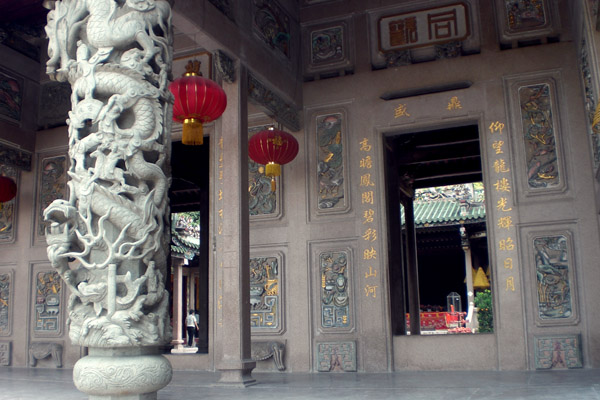
At the foot of Fenghuang Mountain, Fuyong, there is a small temple to the Dragon King. The Wens of Baishixia renovated the temple in 2003. Nearby, the outer row of factories in the Dragon King Temple Industrial Park have been given a faux traditional facade. Above, squatters inhabit small, concrete buildings at the foot of the stepped lychee orchard. Impressions.

This slideshow requires JavaScript.

怀疑: A Cross Cultural Parable

This and next weekend, the teachers of the Shenzhen University Department of Acting are performing a Chinese adaptation of Doubt: A Parable by John Patrick Shanley, or 怀疑 as it is translated. After the show, several friends approached me and asked me what I thought of the acting. I said that I had enjoyed the performance. They looked at me strangely and pressed, “No, really, what did you think?” Evidently, they didn’t like it so I asked what they thought. Answers included, “I keep hoping that they’ll make me get nervous with the anticipation of waiting to see the show.”

“And you don’t feel that way?”

Flat out, “No.”

Another mentioned that he thought the actors were doing the best they could. But. But?

“They just don’t get the story. I mean, I don’t feel it with them.”

“What about the story?” I started asking, “Is the question of Doubt/ 怀疑 important to you?”

A considering look and then, “The actors are supposed to make me care about the topic. That’s their job.”

As the title suggests, Doubt is a teaching story, figuring the incessant problematic of faith in rigidly dogmatic Sister Aloysius’s certainty that the personable Father Flynn sexually abused Donald Muller, the school’s first black student. The story is set in the Bronx, during the fall of 1964 and the historical background matters because the characters also function allegorically for larger social shifts and ruptures. In 1962, Vatican II opened, but would not close until 1965, when the Council famously challenged the relationship between the Catholic Church and the modern world, acknowledging that truth could exist outside the community and declaring that the mass could be given in vernacular languages instead of Latin. Sister Aloysius embodies these past certainties and the Church’s previously unquestioned authority in all things moral, which tended to be, well everything; she suspected children of harming themselves to play hooky and saw sexual abuse in slight gestures. In contrast, Father Flynn represents the newer, hipper face of the Church; he plays basketball, wants to sing secular Christmas carols, and likes his tea sweet, perhaps even, too sweet, hmm?

Similarly, even though Donald Muller never appears onstage, his shadowy presence signals that like the Catholic Church, New York society was also changing and nowhere more than the Bronx. In 1963, Robert Moses’ Cross Bronx Expressway was completed. The bridge displaced families and businesses, was a constant source of noise and air pollution, and catalyzed the decline of the South Bronx from a district of family neighborhoods and businesses to the poorest district in the United States, despite its proximity to Manhattan. In fact, the South Bronx erupted into American national consciousness in 1977, when during a baseball broadcast, Howard Cosell exclaimed, “Ladies and Gentlemen, the Bronx is burning!” Sister James and Mrs. Muller are left to deal with the spiritual and practical aftermath, respectively. Sister James agonizes over the meaning of faith when innocence has been shatter and Mrs. Muller begs to protect her child despite his “differences”. Donald is black and may or may not be “that way” — his father and former classmates regularly beat him because they suspect he is — although Stonewall was only five years in the future, 1969.

Contemporary history also shapes reception. In 2002, the Boston Globe broke the story of sexual abuse in the Boston Archdiocese. Shanley first staged Doubt and won the Pulitzer in 2005. Soon, productions had been mounted in Australia, Singapore, the Philippines, and New Zealand. Roman Polanski directed the play in Paris; it was also staged in Venezuela and London. In 2008, Meryl Streep and Philip Seymour Hoffmann performed the antagonists, Sister Aloysius and Father Flynn. Clearly, Shanley’s nuanced exploration of moral ambiguity resonated with English-speaking audiences precisely because it resonated at so many levels — historically, spiritually, and personally. Or as an older Catholic friend summed up his response to the play, “Of course he did it and yes, she’s a bitch. But still, none of that changes the truth…” And implicit in this statement, reverberating through our souls is the desire to believe, to have faith. And yet, we doubt. As Shanley elegantly described our situation, “For those so afflicted, only God knows their pain. Their secret. The secret of their alienating sorrow. And when such a person, as they must, howls to the sky, to God: ‘Help me!’ What if no answer comes?”

And therein lies our cross-cultural rub. For my Chinese friends there was no story except as conveyed by the actors. 怀疑 means doubt and suspect, and is often used to describe situations when someone may or may not be lying, as in, “I suspect she’s actually dating him,” or “I suspect he’s hiding something.” In the final scene, when Sister Aloysius cried, “我怀疑!” the audience seemed confused, unmoved by the Sister’s predicament. Maybe had cried, “无地自容” the audience may have understood that the foundation of her life had shifted, and she would never again act from life-affirming conviction. Perhaps not. Nevertheless, for those of us raised Irish-American Catholic, a profound chasm separates religious doubt from secular suspicions. We are taught, after all, to render unto Caesar, but in the last instance, when forced to choose, to vote our conscious, so to speak, we move within and against the heart’s fragile certainties; we yearn to be one with God and he is silent, but we must act as if he had answered our call. Thus, in the final scene, when doubt brings Sister Aloysius to despair, I understand. I am with her regardless of the quality of the acting. The acting was sufficient to move me because, as Stanley reminds us, “Doubt can be as powerful a bond and sustaining as certainty,” which I amend with the cross cultural caveat, “especially amongst former Catholics…”

The Value of Urban Villages

US American real estate developers chant, “location, location, location.” In Shenzhen, primary locations open for development are actually urban villages slated for old village renovation — redevelopments that involve the final transfer of village held property to the Municipality.

In a Jingbao article on the future of Nanshan District, Li Xiaogan, recently appointed Nanshan District Secretary, noted for example, “In constructing a global district and promoting urban renovation, Nanshan District will have several advantages over the next few years. First, the largest urban renovation project in Guangdong Province – Dachong Urban Village, with a total project area of 683,000 square meters; second, the urban renovation project for the five villages of Baishizhou in Shahe, which is currently being planned, also has an area of over 650,000 square meters, and is again one of the largest in the Province; third, located in the north of the District, the three Shuiyuan villages are within the water conservation and ecological conservation red lines, and are thus relatively backward, however, they are also now in the planning stage of development; forth, the old Xili Market, which we are planning to convert to an urban complex; fifth, the banks of the Shahe River, where we will take international bids to create an ecological cultural corridor, and; six, Nanshan Old City, which with everyone’s support we hope to return to its status as Shenzhen’s historical and cultural root, by resituating all residents and completely rebuilding.”

Recent impressions of Baishizhou, below:

This slideshow requires JavaScript.