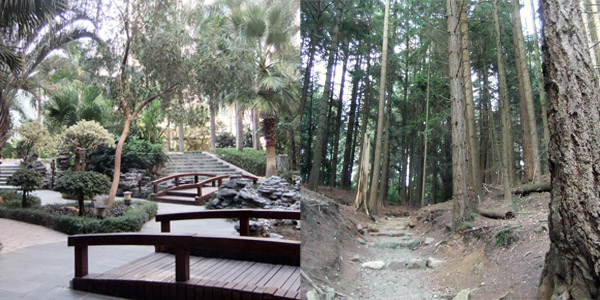
The Chinese word, 荒地 (huāng dì) translates into English both as “wasteland” and as “wilderness”. More specifically, huāng dì usually refers to “land that has not (yet) been converted into arable fields”. At first blush, this dictionary translation alarms me because, as an American, wilderness refers to (yes) untamed places where the infinite creativity of the universe might be experienced – primordial forests, huge swathes of desert, the looming vastness of an ocean voyage, no matter the size of my ship. Wilderness, for me, is not simply good, but sacred -beyond the human in some foundational way; it is where we go for enlightenment. In contrast, wasteland oozes, disgusts, evokes images of wasted land, industrialization gone array – dystopian visions of Gotham. So how is it that the dictionary definition of huāng dì is both wilderness and wasteland?
 Shenzhen Noted