dagongmei: gendered troubles in the city of dreams

Over at Made in China, Ivan Franceschini and Christian Sorace have co-edited Proletarian China: A Century of Chinese Labour, which traces the history of Chinese labor since 1898. Compiling events from the late Qing, Republican, and PRC eras, the book offers a diversity of voices and perspectives on the meaning and experience of work in China. Indeed, the brevity of each chapter allows for a comprehensive introduction into how political movements, economic restructuring and individual desires have constantly shaped and redirected the norms and forms having (or not) a job and the meaning of said job within and against a landscape of shifting national goals. Moreover, the scope of the volume allows for more refined comparison; for example, the unstable meaning of women’s labor, how technology has been mobilized inside factory walls, or even how the spatialization of labor has changed in the years from the rise of Shanghai to the socialist factories of Tianjin and then the emergence of assembly manufacturing in Shenzhen. I contributed a chapter on the moral geography of Shenzhen’s dagongmei 打工妹 during the early years of the Special Zone, mapping how the path to respectability was differently manifest in Shekou, Luohu and Bao’an.

An early and famous picture of Shenzhen dagongmei.

the gaokao cometh

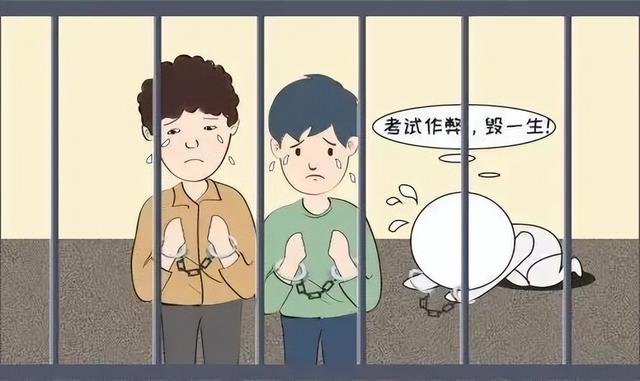
June 7-9, 51,200 senior three students are scheduled to sit the gaokao in 49 ordinary and 31 special test centers throughout Shenzhen. Years past, organizing the gaokao would have been given many more pixels on social media, but Covid. In fact, Gaokao cheating stories have long been some of my favorite urban myths. But this year. Covid. And ongoing prevention. (Although I heard a rumor that as of July medical insurance funds can no longer be tapped for mass testing, so it may end in July? Fingers crossed.) Thus, this year all the gaokao trauma drama I have to report is that we have been notified that phone signals will be blocked near testing stations to prevent cheating. Residents who have to report emergencies have been instructed to use landline phones or move out of range. There was also the odd article about how cheating on the gaokao is a criminal offense that carries severe (not quite explicit) penalties. But these scare tactics are just part and parcel of moral standards that hold teenagers accountable for minor mistakes, but allows powerful adults to make fortunes from unsavory business practices, such as a fraudulent Covid testing. Sigh.

从天命观看疫情:is talking about the mandate of heaven superstitious?

A speculative what if: what if the Covid had happened during the late Qing? Would there have been discussions about loosing the will of heaven? Would we be having more serious conversations about ecological responsibility? And would we maybe understand all this Covid testing and infrastructure as some kind of attempt to suppress the expression of heaven’s mandate?

I know, kind of conspiracy theory-esque. But. Also, kind of sci-fi in the speculative way of questions such as: “how does science and technology reshape political ecologies within and against historical cultures?” Indeed, the ongoing management of the pandemic after pandemic’s end has my mind following Sun Wukong into imaginative black holes that aren’t explicitly Euro-North American, but rather all about the mandate of heaven 天命.

Continue reading

formalizing boundaries within the city

One of the results of grid management (see Covid Among Us for details) has been the hardening of the city’s informal boundaries. However, this process has been ongoing for several decades in part via the imposition of a second traffic grid on top of the original traffic grid. In practice, this has meant re-purposing earlier, narrow roads as the internal roads of a cordoned off housing estates 小区 and laying a wider, more extensive network around the newly isolated gated community. In other words, what was initially planned as an open city, was incrementally partitioned and closed off even before grid management came online. In some sense, 2022 zero-Covid protocols merely accelerated a process that was already underway. Once you understand the logic of how the traffic grid was re-inscribed, its possible to see how boundaries were hardened through urban expansion.

Continue reading

gaslighting 101: shanghai hasn’t reopened because it was never locked down…

That’s what they’re going with? This is a popular gloss on the press conference that didn’t announce that the city had reopened. Instead, government spokespeople performed a master class in gas lighting.

The past two months are being presented as if neighborhood offices acted independently of the municipal government and Sun Chunlan 孙春兰 never came to take charge of the pandemic; and indeed, unlike in Wuhan and Hong Kong, Sun’s tenure in Shanghai was brief and remarkably not lauded. There is no official position on the not-lockdown, which reads like blaming the victim with Chinese characteristics. So to speak.

In response to the blatant buck-passing, testimonial videos about what happened during the lockdown have been posted. In addition, stories about how the Shanghai government has not taken responsibility for the recent lockdown are also circulating. The pleasure of these second category of stories is that they show an actual representative of the Party and government telling the truth. Below I’ve translated one of those stories that I’m calling, “Speechless 无语 in Shanghai.”

Continue reading

90s nostalgia

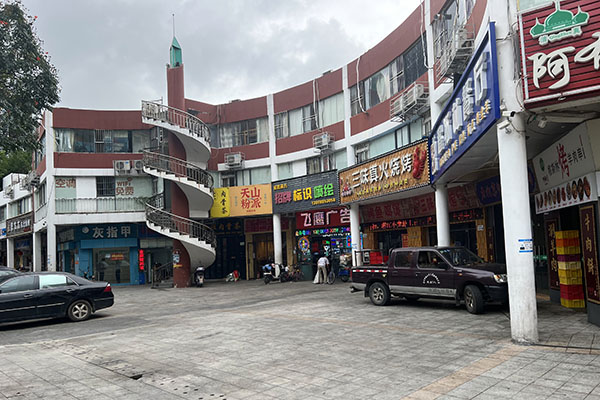
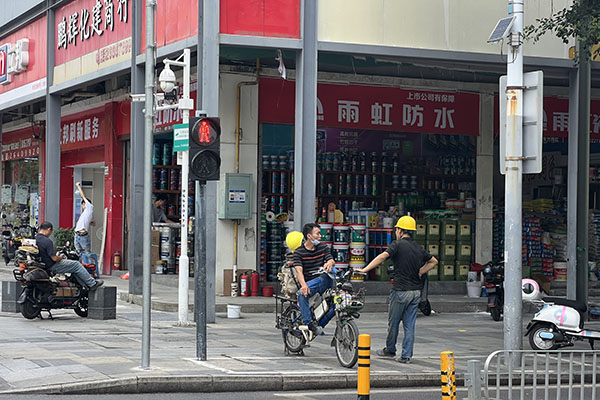
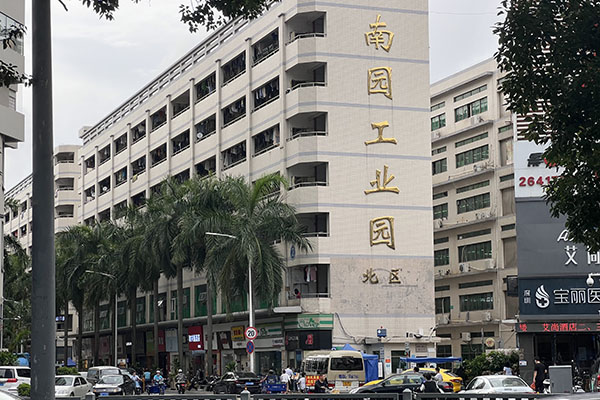
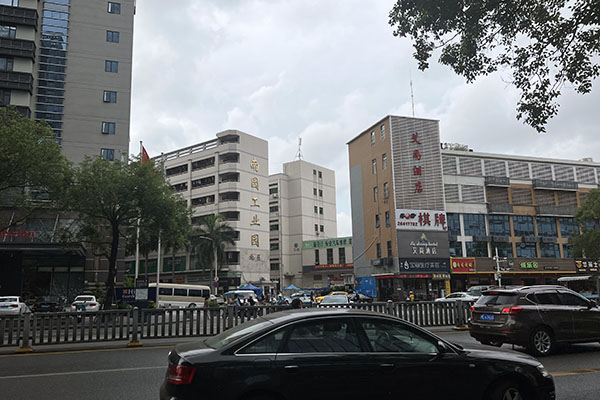
I walked Nanshan Road, from Daxin to the Shekou suburbs via one or two side roads. Below, impressions of “Old Nanshan,” which was built during the late 80s and early 90s, now appears highly nostalgic–the narrow roads, the shade trees, and mom and pop shops.

rumor has it… the government had a hell of a night on the town

It’s true, unlike the 2020 lockdown when the government subsidized the lockdown, during the 2022 lockdowns in Shanghai and elsewhere (Shenzhen, for example) the actual costs of game of germs are being passed on to ordinary citizens and entrepreneurs. Owners of cars that were parked in commercial lots, for example, are being held responsible for fees accrued during the lockdown, fees which be over 3,000 rmb. Indeed, one of the jokes currently circulating describes post-lockdown accounting for mass testing as a case of different government bureaus passing the buck:

[The government went out for a night on the town.] The medical insurance department believed that the finance bureau would pick up the tab, while the financial bureau assumed that the medical insurance department would foot the bill. The two sat down for dinner, ordering wine, dishes and escorts. They uncorked bottles of foreign spirits, sang karaoke, had massages and paid for sex. Indeed, they ordered everything on the menu. When it came time to settle the account, however, the finance bureau slipped out the door and the medical insurance department pretended to be drunk. And this is how the absurdity ended. 医保以为财政请客,财政以为医保请客,二人落座后加酒加菜要三陪,开洋酒、点歌、按摩、打炮......所有的项目都点了,拿出店家账单找人结账的时候,财政要遛,医保装醉,荒唐的一幕就这样结束了。

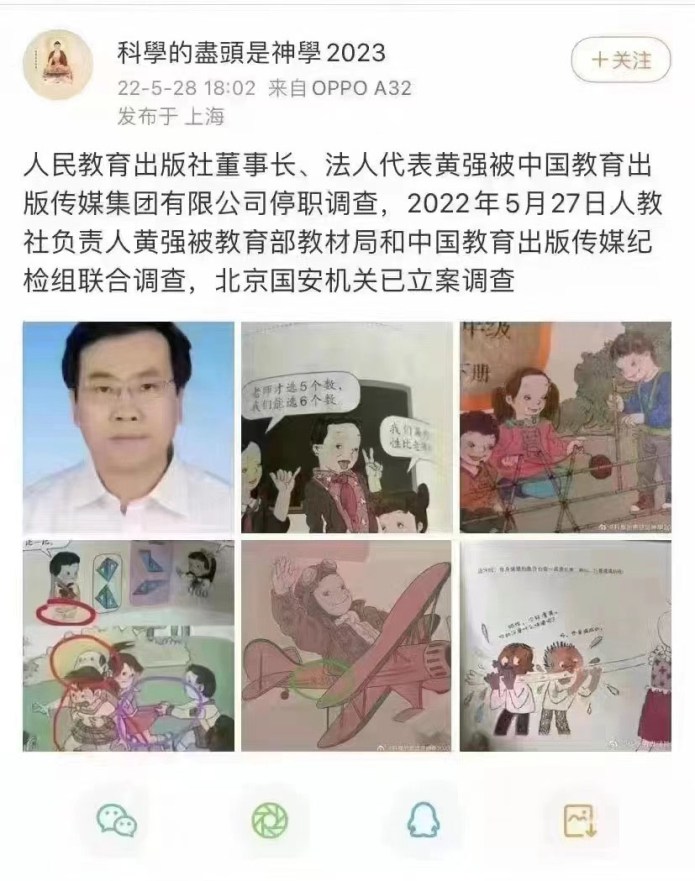
turmoil at the top? an update on the textbook illustration bruhaha

Turns out–after an investigation–that the People’s Education Press has been using the questionable photos (see previous post) for over ten tears??! There are three theories of why the escalation of complaints hinge on rumors of turmoil at the top.

  • The ideological direction of the country has shifted;
  • The purpose of the scandal is to redirect public attention from larger issues, and;
  • The fight to control the profits from the textbook monopoly has broken out into the open.

The conclusion? No matter what the primary reason for media focus on textbook illustrations might or might not be, the actual situation is most likely related to the 20th Party Congress in October this year.

the people’s education textbook incident

So, on Friday, May 27, the People’s Education Edition of forth grade textbooks set the internet ablaze. Seriously, despite everything else that was going on in the country–bank failures and Covid-crazy, rumors of upper level infighting and a tanking economy–the entire country was united in outrage over textbook illustrations. And frankly, the disgust is understandable. It’s as if some cynical artist whose work deconstructs authoritarian childhood was asked to draw the illustrations for books aimed at ten-year olds. There’s a whole level of critique going on that may not be accessible to children, even as their parents moan about aesthetic standards. “Ugly, ugly, ugly,” the crowd screams. And from where I sit that seems to be the point of the images. Just not the place? Or audience?

Continue reading

the animated pandemic: big whites on shenzhen social media

 “Big Whites (大白)” are the omnipresent and seemingly omnipotent figures of China’s 2022 lockdown, so named for their white full-body hazmat suits. Big Whites have been the Chinese government’s social interface for managing the Omicron outbreak. Big White teams consist of medical workers, police officers, community office representatives, and volunteers who come (as the government repeatedly emphasizes) from all walks of life. In their capacity as service providers, Big Whites conduct COVID tests, deliver food to residents in locked-down buildings, and coordinate other public services within a designated area. However, Big Whites are also the public face of COVID security. They conduct building sweeps for testing holdouts, they act as gatekeepers at locked-down estates and neighborhoods, and they patrol locked-down areas to ensure everyone else is in their homes. 

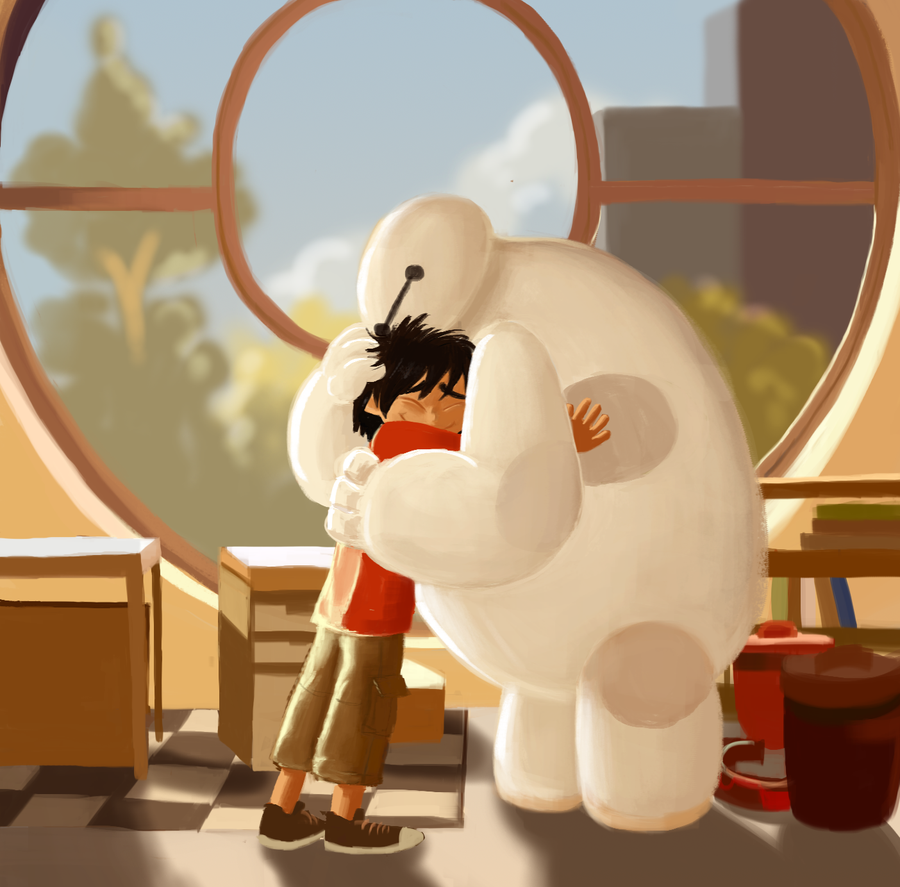
The moniker “Big White” has a double origin story. First, it derives from the gear that the management teams wear. In addition to being fully masked, hands are gloved and shoes are covered. There is a turquoise blue stripe which runs along suit seams and some Big Whites have personalized their suits with magic marker inscriptions. Second, “Big White” is also the Chinese translation for the plus-sized inflatable healthcare robot named Baymax, a character from the 2014 Disney film Big Hero 6. In the film, Baymax teams up with 14-year-old robotics prodigy Hiro Hamada to save their hometown San Fransokyo from an evil supervillain. Baymax and Hiro team-up with four other nerds to form a band of high-tech warriors against evil uses of technology especially biotech. 

In a 23 March post on the English language WeChat account, EyeShenzhen, author Li Dan explained the connection between pandemic work teams and an animated film: “Chinese netizens use it [Big White] as a nickname for frontliners who are fighting the COVID-19 pandemic because they wear white protective coveralls on the job, and they work selflessly to protect the safety of the public.”

This essay touches upon two interrelated issues in the social media representations of Big Whites in Shenzhen—the gender of caregiving and the role of animation in conceptualizing pandemic management.

Hiro and Baymax
Continue reading