移民与海: oh that shenzhen cultural industry

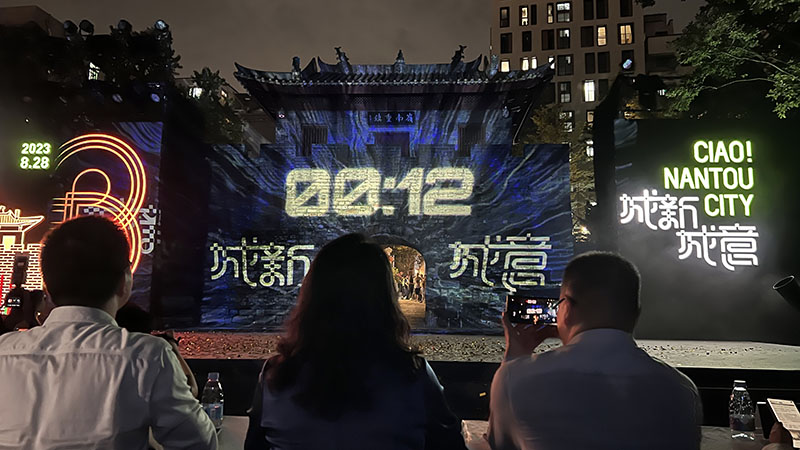
yesterday at 派意馆, the shenzhen sculpture institute (深圳市雕塑院) hosted the opening ceremony/press conference for its multi-cultural documentary “immigrants and sea (official translation of 移民与海). paiyiguan is an exhibition space located in the oct loft area, right near the art center. the documentary explores the question of (in word for word translation of the chinese) “coast cities immigrant culture way of life (滨海城市移民文化生态).” a string of descriptions that force grammatical impositions in english. safest translation, perhaps: the immigrant culture of coastal cities.

the entire project has three parts: a documentary film about cultural life in latin american coastal cities; a public culture project in shenzhen; and an exhibition in the shenzhen architecture biennial. the documentary recounts cultural moments in various south american countries and cities. in havana, the shenzhen photographer xiao quan (肖全) takes the audience on a tour of havana’s charms. “he passes through cuba’s big streets and small alleys, searching for and recording cuban smiles and happy faces, ceasely uncovering the native warmth of cuba’s powerful culture and integrative force.”

in chile, liang erping retraces the footsteps of pablo neruda, citizen of a country of only 15 million people that nevertheless produced a nobel laureate. in brazil, shenzheners are less interested in rio than they are in brazilia, itself a famed overnight city. our guide in brazilia is shenzhen television personality, hong hai. the documentary pays special attention to carnival. in buenos aires, a shenzhen designer han jiaying explores the richness of argentine tango, soccer, and architecture.

that brief sysnopsis helps define what the film makers mean by “culture”; it is not only high culture, but also culture as giving a city definitive international identity. what kind of culture would shenzhen’s immigrants have to create in order to attain similar recognition?

historical alleys like havana? the attempt to package the ming and qing dynasty county seat at nantou has not succeeded.

noble prize worthy literature? one of shenzhen’s most famous author is an ze, a woman who broke out of being a laboring daughter (打工妹) by exposing the gritty and sexualized underside of shenzhen’s development. unlike the protagonist in wei hui’s better known book, shanghai baby who attempts to realize herself through writing and sex, the protagonist’s of an ze’s (also banned) books use sex to get ahead. sex in shenzhen, the story goes, is not liberatory, but cohersed and mercenary.

municipal festivals like carnaval? at windows of the world themepark, shenzheners already participate in carnival, oktoberfest, and water festival. there is, however, no city wide festival, in part, because most native festivals are village based. indeed, going with a local festival would entail shenzhen’s urban elite recognizing the contributions of local villagers to urban culture, something that hasn’t happened as of yet.

architecture like in buenos aires and brazilia? this seems the most likely, and shenzheners continue their pursuit of architectural excellence. it is telling that this project is entering shenzhen’s public culture through the architectural biennial.

fat bird enters this picture in part three, the sculpture exhibition. the sculpture instute is the same organization that sponsored fat bird’s inclusion at the guanshanyue museum’s tenth anniversary celebration. they have also invited us to participate in the biennial. we are currently working on a project about remembering nanshan’s now banned oyster farming as our contribution to shenzhen’s coastal culture. in fact, remnant beaches (in yantian district) of oyster cultivation could become an important and unique marker of shenzhen cultural identity. the catch is that oyster farmers immigrated generations ago, and shenzhen’s cultural elite are interested in creating high culture out of their immigrant experience.

yang qian and i left the press conference with a purble paper bag stuffed with gifts: a neckless, advertising materials, and purple immigrant & sea shirts. unfortunately, my camera was uncharged, so i didn’t photograph the event. so i have included a picture of yang qian modelling the purple shirt. he is standing on the balcony of our houhai apartment. faintly visible in the background is the land reclamation project, which is perhaps shenzhen’s most concrete contribution to coastal ways of life.


the purple shirt, the balcony, the reclaimed coastline

南山村:villages, villages everywhere except in view


dangerous housing notice

several days ago, yang qian and i walked from nanshan to beitou village by way of xiangnan village. together, the three villages are strung along a narrow alley that was once the main road connecting nantou county seat to shekou. the villages have been surrounded on all sides and are invisible from the main roads.

i keep photographing these villages because they remain, for me, what makes shenzhen unique. it is the tension between cosmopolitan versions of modernity and village versions of modernity that drives shenzhen development. it is the form of ghettoization here.

so, images from that walk.

珠光村: transformations


wall separating village from new housing development

this morning i walked through zhuguang village in xili, one of nanshan’s subdistricts. the further one gets from downtown and the nantou peninsula, the larger the villages and the less centralized the planning. in zhuguang, village industry abuts traditional housing abuts new village housing circa 1985 and 1995 abuts new upper middle class housing development… a wall separates village remnants from the new housing, segregating white collar families from migrant workers. in places like zhuguang, the process of partitioning off the remnants of older villages from the rest of the city is just starting and so easier to see. downtown, in contrast, the few remnant villages are completely walled in, except for a few doors. in shenzhen, this is the form of emergent ghettos: walled off villages, hidden from view behind high-rise complexes and rows of tiled new village housing. sense of layout, here.

whiskers online

we have discovered the world of blip.tv and posted footage of “draw whiskers, add dragon”. visit and enjoy!

oyster update


oyster coastline, july 2007

on june 4, 2007, in time for the opening of the western corridor bridge, the nanshan district argricultural bureau announced that it had successfully completed the “shekou dongjiaotou coastal fishing and oyster farmers cleanup (蛇口东角头海域渔蚝排的清理工作)”. in a city that otherwise presents itself as having no history, the cleanup heralds the end of an era. oysters have been farmed in nanshan for roughly 1,000 years. along with the nanshan sweet pear and lychees, oysters formed the “nanshan three treasures (南山三宝)”.

when i first came to shenzhen university, there were oyster farmers working the old houhai coastline. i walked out of the campus and looked to the horizon, where the binhai expressway was under construction. as the houhai land reclamation area grew, the oyster farmers were pushed further and further west. in july 2003, i photographed remnants of that community at dongjiaotou and seaworld. of course, the seaworld community followed the coastline further and further out, remaking the land (photographed in january 2007). now the few remaining oyster farmers live on boats, unable to set up homes and processing centers on land. inland, remnants of the former oyster coastline still lay at the feet of upscale shekou. so, pictures, again.

the high school entrance exam: shenzhen

now that i understand the complexities of the high school entrance exam, i can share them with those of you who have been wondering: why is the shenzhen high school entrance exam (中考) considered more difficult and and more important than the college entrance exam (高考), which is itself notorious for the anxiety it generates in parental hearts?

more important because most of the shenzhen graduates who head to good colleges do so from one of 3 or 4 high schools. more difficult because the ratio of students to number of seats in the good high schools is higher than that of good students to college seats.

students are admitted to high school based on test scores. there are a total of 490 points on the exam. each high school has a minimum score, below which it will not accept students. for example, shenzhen high school (深中) does not accept students who get less than 444 points, shenzhen foreign languange school (外国语) requires 440, and the shenzhen experimental school sets the bar at 439 (实验); there are no exeptions, not bonus points for extracuricular activities. inded, one of the most common tragedies of the season is missing a school by one point.

here’s where it gets complex:

students do not simply take the test and get ranked. instead, they apply for admission to schools before they take the exam. moreover, they do so not knowing what the minimum score for a given school is. instead they have to take tests from those schools to get a sense of where they rank against a given population. this is important because students rank the schools they want to be admitted to and are considered for admission to the school in rounds of three schools.

for example, a student wants to go to the experimental school. in the first round of admissions, she puts down (in order of estimated ranking): first choice–sz experimental school; second choice–sz gaoji (423 points); third choice–honglin (roughly 390, but i’ll have to check). this means, she has to receive at least a 390 to have her application forwarded to one of the schools she listed. if she scored 389, for example, her application will not be forwarded to any school during the first round of admissions.

the first round is important for two reasons. first, it’s when students have the best chance of being accepted because seats have not yet been filled. once a school has filled all its seats, it stops accepting applications. not unexpectedly, the top schools usually fill their seats during the first round. this is why many good students will not risk putting down three top schools during the first round. instead, their first round, second choice school is often 30 to 40 points lower than their first round, first choice. this guarranties that they will get into a shenzhen high school.

second, during the first round, the rate of acceptance is 1 to 1.2. this means, 1.2 applications are sent for every seat. usually a top school will accept all students with scores over 450. however, those students who scored in the 440s range must compete for the remaining seats. in the few days before admissions lists are published, parents go through backdoor relationships in order to get their children into a top school. in this way, during the first round, a student scoring 441 may get in to the experimental school, while a 445 does not.

importantly, it is only in this borderline cases that extracurricular activities might make a difference on a student’s application. this is why many parents and students put off extracurricular activities until college.

here lies the difference between education for the person (素质教育) and education for the test (应试教育). for many parents and students, the arts and sports are beside the point. many parents and students have clear priorities: get into a good high school and college and then “indulge” in their interests. those students who do pursue total education do so knowing the risks. what’s more, they tend to be either well-off, carry foreign passports, or prodigiously talented.

the process repeats itself again, during the second round. this time first, second, and third choices are for much lower ranked schools. also, the the acceptance rate is 1 to 1.1, leaving even less space for manouevering at the lower score range. finally, during round three, schools have to accept every student who is sent to them.

the system also explains why success breed academic success. the top schools admit the best test takers (and admittedly some of the brightest kids) in the city, while the rest of the students are distributed according to test scores throughout other schools. a completely different level of education.
makes it very difficult for schools to turn around their reputations. more often than not, rankings become self-fulfilling profecies.

on june 17, 2007, 45,000 shenzhen middle 3 students finished the high school entrance exam.

results were announced on july 5, 2007.

art and sport high schools will announce special admissions on july 12-3, 2007. normal high schools announce first round admissions on july 14-15. second round admissions take place on july 17-18. the third round (part one for some of the provincial and professional schools) takes place on july 21-28. third round (part two for normal and vocational schools) finishes up on au 1, 2007.

historic houhai

July 1, 2007. ten year anniversary of the Handover of Hong Kong to Chinese sovereignty. Unlike ten years ago, when the city buzzed with anticipatory dreams of what two systems might mean for ordinary people, this year Shenzhen has been relatively unconcerned with commemorating the other of Deng Xiaoping’s two accomplishments. When an American friend asked a Shenzhen friend what they were doing for “July 1st,” my Shenzhen friend looked at both Yang Qian and me, trying to figure out what holiday it was.

May 1st is International Labor Day. June 1st is International Children’s Day. July 1st is the birthday of the Chinese Communist Party, although its an internal holiday, so nobody celebrates it. As we counted, everyone got into the “first” spirit. August 1st is the birthday of the People’s Liberation Army. September 1st is the first day of school. October 1st is National Day. November 1st is All Saint’s Day. December 1st? Nothing. January 1st is New Year’s Day. February 1st? Nothing, but February 2nd is Ground Hog’s Day, which might count in a more generous world. March 1st? Again nothing, but International Women’s Day falls exactly one week later on March 8th. April 1st is All Fool’s Day. We turned to our guest. July 1st?

Tenth Anniversary, she said.

Ahh. We knew that, but it hadn’t registrared. Clearly.

Not that Shenzhen hasn’t prepared a major engineering feat to commemorate the Handover. This morning at around 10 a.m., the Western Corridor Bridge (lit up)officially opened, as did the Shenzhen Bay Border Checkpoint. At 6 a.m,. this morning I made my cursory “in the spirit of documenting history” appearance at the site. I walked down the old Nanyou street. At the intersection between the road and the new Houhai Ocean Front Road, police had set themselves up to prevent cars from going in. Presumably, they were also keeping people off the sidewalk. However, about 10 steps away it was possible to walk through the park that had just been put in (also for the opening ceremony). Walking this way it was possible to go around the police and head toward the new Customs Checkpoint and get a closeup of the Bridge.


heading south the banners read: one country two systems, together build a harmonious society; one land, two checkpoints, achieve scientific development

I came back to the house and told Yang Qian that I felt for the police. Not because I think they should be barricading people away from the checkpoint. Not even because they had to stand in weather that alternated between excruciating sun and thunderstorms. But because they were called on to do a job they couldn’t actually do. Anyone who wanted to walk toward the checkpoint and look at the fuss could and did. There were just too many open spaces from which to access the site. All this reminded me of when I tried to get on the Houhai land reclamation site at Number 8 Industrial Street and ended up walking around to Number 7 Industrial Street. And the funny thing is, once on the site, nobody questioned my right to be there. Likewise, once wandering around the new coastline, noone stopped me. This perhaps an important point about cultural assupmptions about belonging. Difficult access, but once in/on a site noone bothers you. How different from the US, where its not enough to get past the guards, but you also have to remain out of sight. Different forms of regulation. Or assumptions about what regulating means.


heading north the banners read: one bridge connects north and south, shenzhen and hong kong add another connecting passage; enthusiastically celebrate the official opening of the shenzhen bay border checkpoint

Once at the new coastline, much about the topography that the land reclamation project has produced fell into to place for me and I could see a whole, where previously I had only seen partial edges. Those already obsolete pictures, took when looking out toward unbounded space have something immence about them. In contrast, from the perspective of the new coastline, the area still looks big, but now seems managable, within the scope of a retrospectively visible and relentlessly mastering plan. As if we knew what we were doing all along. Or somebody did. So, pictures of historic houhai and a sense of just how banal human effort can suddenly seem.

more whiskers


cast, again

last whiskers performance at guanshanyue, yesterday. it seems that some of the (rumor has it over one hundred) museum directors in shenzhen (for a national meeting also liked the show and we may be going on a museum tour! at any rate, we’re tentatively scheduled to go with the show to shijiazhuan (石家庄). perhaps even further. but in the meantime, pictures of the show and after show dinner.

oct loft: enculturing shenzhen


remaking industrial shenzhen: pedestrian street, oct loft

space by space, shenzhen is transforming its industrial self. at the same time that tianmian is remaking its factories into design studios, overseas chinese town (oct) is transforming its factories into a more explicitly bohemian art space. those factories that aren’t being transformed, are being razed to make way for upscale residential areas. gentrification in a generation, before anyone had time to grow up in an industrial city and miss anything about it.

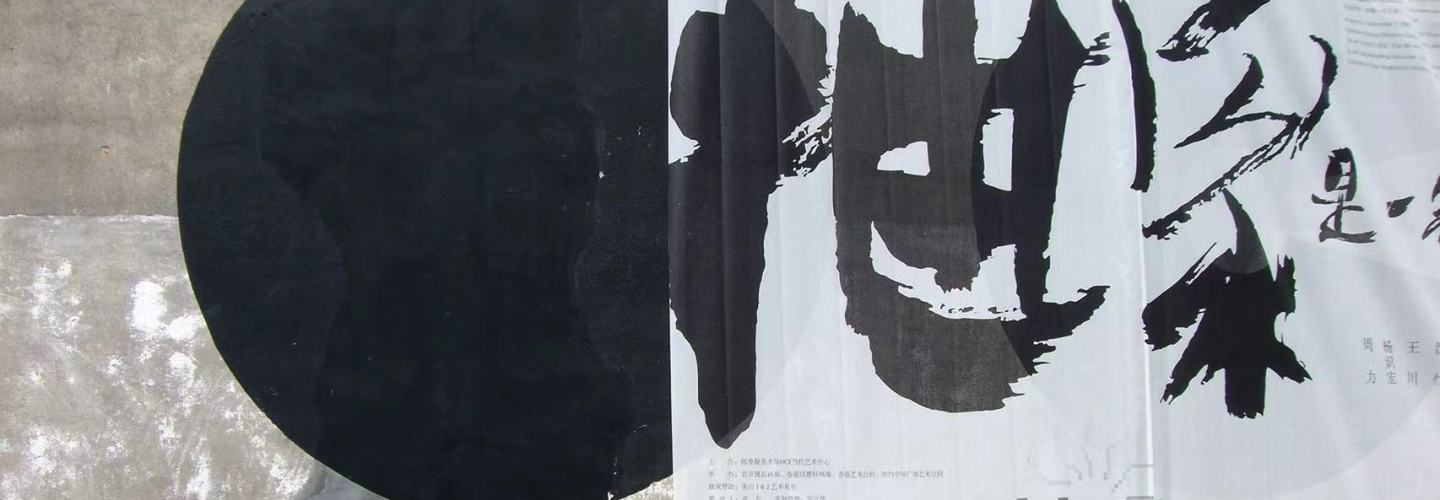
this weekend, i visited oct loft (one year anniversary web release here) this weekend. the area is still under construction, but tea houses, restaurants, studios, and the contemporary art center have opened. along with he xiangning museum of art, the art center is holdoing a month-long exhibit called “abstraction is an expression of freedom (抽象是一种关于自由的表达).” the exhibit will tour hong kong, beijing, and then new york. art center’s director huang zhuan provides an explanation of their inspiration, here. as at the open ink painting, there’s an urge to make china’s past contemporary.

two details struck me about the space. first, like tianmian, oct loft’s industrial facelift entails replacing cement walls with glass. so the structure of the buildings remain, but now its all shiny and exposed. lots of black as well. second, the quality of the exhibition suggests an anti-dafen village moment. indeed, when i met several of the young men involved in getting this project up and going, one was vehement about separating what he was doing from dafen. such are the debates over “professional” versus “commercial” art in shenzhen, itself a telling distinction.

take a walk through OCT loft and compare with transformations in tianmian.

开放的水墨:the open ink painting

whiskers cast, main entrance, guanshanyue museum of art

the guanshanyue museum of art was built ten years ago. at the time, it manifest shenzhen leaders’ understanding of state of the art, so to speak. it also incorporated the practical details of the state of construction. pink tiles, green glass, and limitted use of elevators define the space. this year, the museum is celebrating its anniversary with a series of exhibitions and events. draw whiskers, add dragon was commissioned as part of the celebration.

yesterday was the opening ceremony of the open ink painting invitational exhibition at the guanshanyue museum of art. in addition to organizing the regular media to come to the opening, exhibition organizers also invited art bloggers, who have uploaded introductions to and interviews with key participants, here and here. indeed, there’s more online about the exhibition than in the regular newspapers.

as with many shenzhen art events, there was a predictable tension between the cost of the show (an index of the importance that the municipal government now places on “art”) and attendence (an index of the importance that museum visitors place on “art”). this crude opposition highlights the urgency that organizers and participants expressed feeling about making ink painting relavent to contemporary audiences. contemporary audiences included:

westerners who take ink painting to be a sign of “chinese identity”;

chinese artists who believe that ink painting is a sign of “chinese identity”, but a sign which has been corrupted/transformed by the internalization of the western gaze. importantly, speakers included the organization of art exhibitions in their understanding of “western gaze” and stated that the guanshanyue exhibit was an important attempt for chinese artists to take the lead in defining the social and aesthetic meaning of contemporary ink painting;

young chinese who don’t know or care about ink painting. for these youths, participants seemed eager to strategize forms of aesthetic outreach. however, it’s worth noting that participants themselves (except for one artist, the dancers and actors) were all born in the late 40s, 50s and early 60s.

all of the participants agreed that it was necessary to investigate and explore and transform chinese tradition to make it relavent to contemporary audiences. during the opening discussion, much of the conversation circled around the themes of “ink painting spirit (水墨精神)” indeed, this is why organizer sun zhenhua (孙振华) invited shenzhen composer wen li (文莉) and fat bird to perform ink painting inspired dance and play, respectively.

the differences between wen li’s piece “江峡行 (river canyon walk)” and fat bird’s “draw whiskers, add dragon” suggest the possibilities and constraints on transforming ink painting spirit. wen li uses tradition as an asesthitic; she creates beautiful forms and sounds that suggest a refined sensibility and moments of private contemplation. fat bird described a world where the only way in which chinese tradition could survive was through advertising and tourism.

during the three-hour discussion, one of the fat bird actresses had sat quietly, playing a game on her cell phone. when i leaned over and asked if the disappearence of ink painting would make her feel less chinese, she laughed, said, “no,” and then went back to her game. the participants kept talking. images of the show, museum, and organizers.