revising the classics, or confucius encounters neoliberalism

Shenzhen parents worry about education — it’s quality, content, methods, and test results. Indeed, I have yet to meet a parent unwilling to spend several hours discussing their child’s education, while activists raise social problems in terms of education.

I have recently received a revisinist version of the childhood classic, “Kong Rong Shares a Pear“. The rewrite is fun and illustrates one of the ways in which the United States (as a symbol) has been put to work in contemporary Chinese debates about the contradiction between a society that values an integrated whole at the expense of individual desire and a society that values individual desire at the expense of social integration.

Kong Rong Shares a Pear

For thousands of years, the moral tale of “Kong Rong Shares His Pear” has been told, becoming the standard for parents who want to teach their children manners. But how do American kids think about this story? Below is a transcript from a class of American students who are studying Chinese. The students range from 8-12 years old.

Teacher: When he was young, Kong Rong was an exceptionally bright student. When he was four, he could already recite many poems. He was polite and courteous. One day, his father’s friend brought a box of pears to the family. His father asked Kong Rong to share the pears with his brothers. Kong Rong took the smallest pear for himself, and the shared the pears based on age rank, giving the largest pear to the oldest, the second largest pear to the second oldest and so on. As he distributed the pears he said, ” I’m the youngest, so I should eat the smallest pear.” His proud father heard him and asked, “But you’re older than your baby brother. Why didn’t you give him the smallest pear?” Kong Rong said, “I am older than him, so I should give it to him.”

What do you think of this story?

Student: Why did the father’s friend give the Kong family pears?

Teacher: they were a gift.

Student: If it was a gift, then all the pears would be good. Why were there obviously big pears and small pears? Why weren’t they all the same size?

Teacher: Ahhh…

Student: Now, if there were big pears and little pears, why did the father put all that responsibility on a four year old’s shoulders? What would have happened if Kong Rong had made a mistake? Would the father have taken back the pears and distributed them correctly?

Teacher: Ahhh…

Student: Why did everyone have to eat a pear? Couldn’t alone leave the pears and let those who wanted a pear choose for themselves?

Teacher: That might have been unfair.

Student: But Kong Rong didn’t necessarily distribute the pears in a just manner. All the brothers had to accept whatever pear Kong Rong decided to give them. Their right to choose was violated. The brother who received the largest pear might have been the brother who hated pears.

Teacher: That’s correct. This story is based on the premise that everyone likes pears.

Student: Why did Kong Rong give pears to the oldest first? If he was going to use age rank, why not start with the youngest?

Teacher: He was being polite.

Student: But after he took the smallest for himself, he didn’t give anyone else a chance to be polite. Why didn’t he give anyone else a opportunity to share pears?

Teacher: So what do you think about Kong Rong?

Student: I don’t like him. What he did wasn’t fair to others, taking away their right to choose and their chance to be polite. Kong Rong isn’t sincere.

Teacher: Why?

Student: This matter is internally contradictory. What if Kong Rong didn’t like pears, so he chose the smallest for himself? Nevertheless, his behavior earned praise? This is hypocritical. On the other hand, if he really liked pears, he should have said so. Otherwise, giving the biggest pears away wouldn’t have made him happy. When we like something we should bravely say so.

I also didn’t like his father.

Teacher: Why not?

Student: He didn’t take responsibility and asked a four year old to do something he couldn’t do. Also, he had no standards, he praised Kong Rong for being polite, but we’ve already seen that Kong Rong was disinterested in sharing the pears.

Teacher: Ahh…

Student: This was a bad story. It encourages subjective standards and praises one for violating democratic rights. This kind of twisted logic story praises a child for developing unhealthy psychology.

Teacher: So what do you think Kong Rong should have done?

Student: Put the pears on the table and let people who wanted to eat pears take what they wanted.

Postscript: From the perspective of an American student, a Confucian classic becomes a tale of twisted psychological motivations. Where do you think the problem lies?

moral grey zones and economic liberalization

Mary Douglass reminded us that dirt was merely matter out-of-place, and correspondingly that the work of cultural categories was to keep human beings in line. Moreover, these lines are not neutral, but like dirt in the kitchen, have all sorts of practical and moral implications for the organization of human life. In turn, border zones comprise sites of categorical breakdown, where border crossing creativity is possible, and also illicit transgressions.

This morning, I stumbled across The Politics of Cross Border Crime, a book that documents prostitution, smuggling, and gambling along and within the borders of Greater China. According to author, Shiu Hing Lo, patterns of regional cross border crime have been changing. During the 1970s and 1980s, the main types of China-Hong Kong, China-Macau, China-Taiwan crime included illegal immigration, cross border robbery, airline highjacking, and drug trafficking. Since the turn of the millennium, however, crime has become more organized, with kidnapping, human trafficking, money laundering, and transborder triads strengthening their control over these activities.

Shenzhen has been trying to shed its frontier town reputation for shady deals and immoral excess. Nevertheless, the city’s internal borders (urbanized villages, older neighborhoods) and restructured borders with Hong Kong and East Asia provide ambiguous sites, where the unsavory might thrive. The most distressing reports of Shenzhen’s role in cross border crime entail forced prostitution of minors and virginal rape. According to Lo:

Cross-border prostitution is a serious problem in Greater China, where supply and demand are both out of control. On the supply side, many children are smuggled by mainland criminals from poor provinces to Shenzhen, where there were 1,000 child prostitutes in June 2006. On the demand side, many unscrupulous Hong Kong men demanded that prostitution dens provide young virgins for them…The main factors contributing to the grave problem of transborder prostitution in Greater China are a lack of strict enforcement for anticorruption campaigns targeted at Guangdong police, especially in Shenzhen’s infamous villages, and the HKSAR government’s failure to cooperate with the mainland government to severely penalize Hong Kong men who solicit mainland prostitutes, especially children.

Lo concludes that:

Unlike the official rhetoric that underscores the mutual benefits of economic integration, the reality is that economic liberalization along the PRC–Hong Kong–Macao boundaries has generated an increase in criminal activity in the region. As economic relations between Taiwan and mainland China have become closer since the presidential election of Ma Ying-jeou in March 2008, cross-border crime between the two places is destined to increase further.

This kind of report distresses me for two reasons. On the one hand, the prostitutionalization of Shenzhen has been an ongoing theme in reports about the city. Indeed, finding prostitutes, establishing their level of willingness, and complaining about their mercenary tendencies have been common metaphors to describe reform and opening and what it has meant for social mores in the SEZ. A similar rhetoric is used within Shenzhen to describe and undermine urban village neighborhoods. On the other hand, as Lo notes, prostitution and human trafficking have increased because Shenzhen and urbanized villages do offer more spaces for unregulated commerce, which may be either an opportunity or a risk for society. In this sense, there is need for increased vigilance to protect children and vulnerable residents from triad members and traveling businessmen who have more in common than we like to think.

Sigh.

traveling impressions/ hong kong international airport

Marc Augé famously suggested that airports are non-places because they are too transient to have an identity. Other non-places include highways, hotel rooms, and waiting rooms. Augé used the idea of the non-place to describe the dislocations and standardizations that characterize super modernity.

Of note, our shopping mall cities, Shenzhen for example, offer few concrete (literally!) objects that have particular and recognizably distinct identities. At the MixC in Luohu and coastal City in Nanshan, for example, we see the same mix of chain stores, domestic and international arranged in a space that is more luxurious than the Rockaway mall of my teenage years, but in essence no different. The comparison, chez Shenzhen is with an imagined countryside and the urbanized villages. In other words, supermodern shopping malls are a place holder in the search for something better, but not interesting in and of themselves.

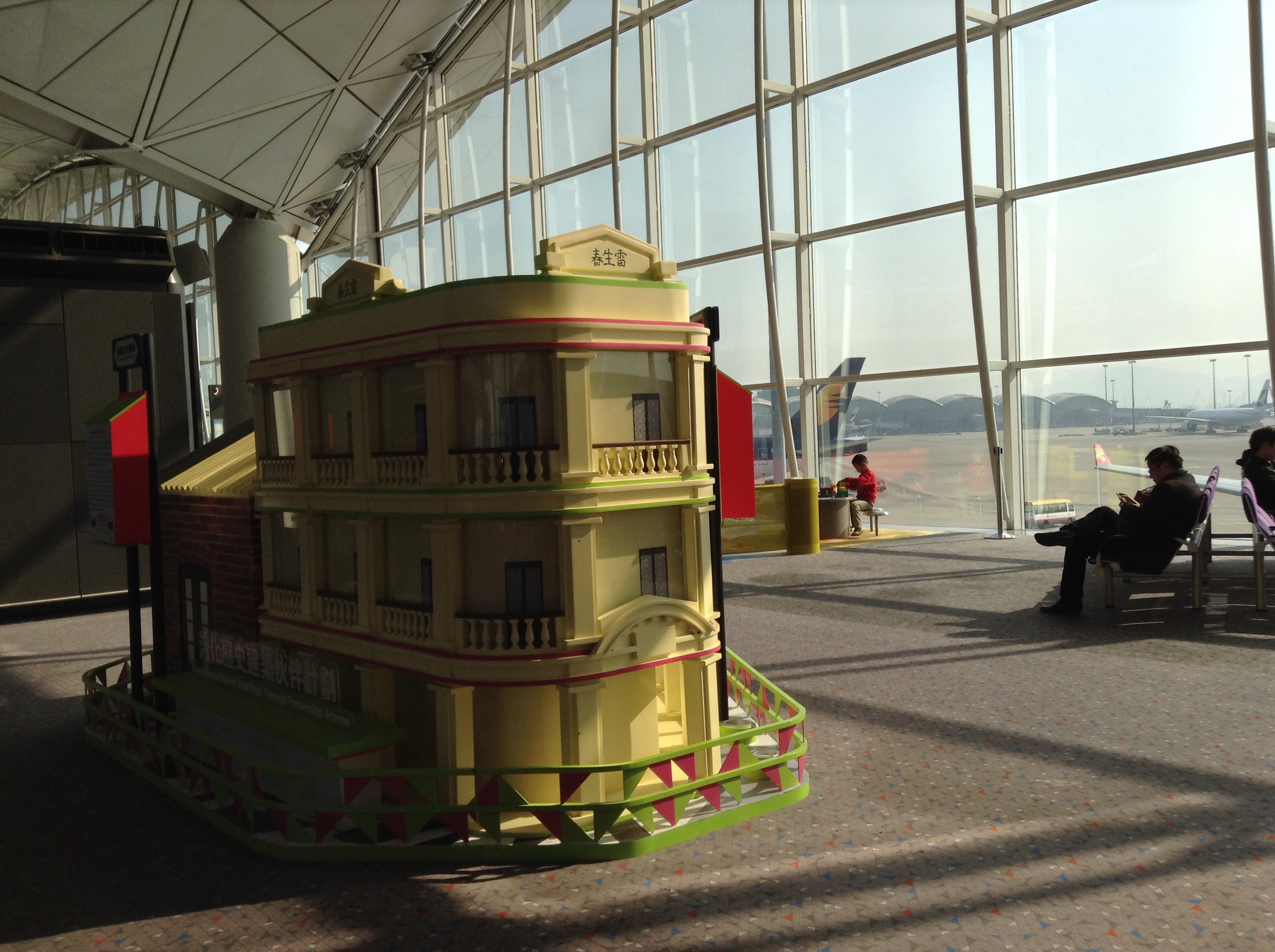
Today, I am in Hong Kong international airport and have noticed a few replicas of preserved buildings. Such is the anonymity of the super modern city that we even become nostalgic for colonial architecture — smaller and distinct from the airport, which dwarfs these toylike memories of a quaint accessible, familiar and endearing city that never was.

image

spring rush

Yesterday, the mass movement of Chinese literally known as “Spring Shipping (春运)”, but could also be translated as Spring Rush began and will continue until February 24. This year it is estimated that there will be 3.6 billion one way trips made during these 40 days. This is roughly one round trip per Chinese person. Some people will make more than two one way trips, and some will stay in place, but the figures indicate the scale of movement as people travel to be with family or to have fun.

Today, the city felt emptier and it will continue apace until the end of the first week, or after the 15 the day of the first month.

Party on!

coming home to the liberal arts

This past week my friend’s daughter has been visiting liberal arts colleges and I have been tagging along, surprised by my sense of homecoming; these are my people.

I have lived and worked in Shenzhen close to twenty years. I continue to engage in anthropological research about the city and participate as a public intellectual both in Shenzhen and outside, in conversations about Shenzhen and what it teaches us about rural urbanization in the post Cold War era. I work with Fat Bird to produce theater and have recently joined friends to form CZC Special Forces, a group working to make art and performance in and around Shenzhen’s urban villages. Over the years, I have taught English, served as an acting principal, and done the odd bit of college counseling in Shenzhen schools. In short, the city and its residents have been good to me, helping me to craft an interesting and meaningful life.

Indeed, I feel at home in Shenzhen. I live in a late 1980s Shekou housing development, where child play and aunties and grandmas dance the yang ge’er. I know the bus and subway systems intimately. I have favorite restaurants and parks and walks. I appreciate the vast diversity of the city’s migrants and have learned to recognize (some of) the distinctions that matter to Shenzheners — accents, flavoring, and personality, for example. I navigate cross-border encounters, and have friends in Hong Kong and Guangzhou. In all practical senses, Shenzhen is home.

And yet.

Just a week of wandering a few liberal arts campuses and I am reminded of those stateside who also enabled me to live this life. Parents who believed that education was for life rather than strictly the first line on a resume; Chinese teachers who gave me the skills, understanding, and confidence to persist despite linguistic and cultural obstacles; anthropology professors and authors who not only helped me learn to think and consider what it means to be human, but also to value this very human impulse to reflect on our shared condition and its causes, possibilities, and challenges. All this to say that this trip I am realizing just how deeply my values and goals were shaped and nourished by the liberal arts tradition. Yes! the heart sings. This tradition is worth cherishing, and growing, and exporting.

Yet, again.

I also know what it takes for a Shenzhen family to be able to afford this education. I know the decisions and savings and evasions — moral, intellectual, and social — that make it possible to leap from Shenzhen to a liberal arts college campus. So this college visiting has been unremittingly bittersweet. I keep saying to my friend, “See, it is possible to create this kind of learning environment and raise outstanding human beings.” And she rightly reminds me, “Shenzhen people are still worried about securing their children’s economic future.” I pause because she is not wrong. Not only Shenzhen parents find $US 50,000 a year to be a daunting obstacle. American parents. Moroccan parents. Indian parents. Parents everywhere do because we are exporting liberal arts educations. And they cost. A lot. And even more when your family doesn’t earn petro-dollars, but instead earns real estate yuan.

Thought du jour: We need to find ways to realize these values in other, more accessible forms. I continue to believe that our liberal arts colleges and pedagogical values constitute an important contribution to humanity. I am haunted, however, by their obvious and subtle complicities with globalized inequalities. I live this contradiction everyday in Shenzhen, where the liberal arts — or another form of morally tolerant pedagogy and values — are needed, but where as an American, I often find myself so firmly placed on the “haves” side of the line that dialogue is difficult. Indeed, in the end, I end up listening more than speaking because I’m still searching for common ground. And this ground must take into account economic inequality and political aspirations if we are to move forward, together.

chinatowns

Today, I’m wondering about how the prejudices that contemporary China exports overlap with historical prejudices in the West, especially when we talk about “Chinatowns” or “traditional” and “rural” China.  In other words, what to make of the fact that Westerners continue to like Chinatowns (and urban villages), while China’s rising elite does not?

Yesterday, I ate lunch with Shenzhen friends at Hakkasan, a hip international Chinese-inspired chain (with amazing desserts) and then walked Chinatown, San Francisco. Before we separated, my northern Mainland friends (who had enjoyed the food) warned me that Chinatown was “just like Chaozhou in the 1960s”. The implication was not only that Chinatown was backward, but also that there wasn’t anything there to see or enjoy. Instead, they were interested in buying a home in Mission Bay, which was new and modern and, in many ways, just like Shenzhen albeit, “not as convenient”.

The historic link between Chinatown, San Francisco and other Guangdong settlements is explicit. The Kaiping watchtowers, for example, were not only built with monetary remittances from Overseas Chinese in San Francisco, but also with materials, techniques, and blueprints that were sent back home. In fact, there is a Kaiping Hometown Association on Washingtown St (开平侨网). I enjoyed my walk. But then again, I also like Shenzhen urban villages. I also appreciate informal forms of urbanization across Guangzhou, which nourishes dense settlements and lively commerce.

The fact that my friends drew attention to the “backwardness” of Chinatown, SF echoed similar warnings about urban villages, Shenzhen. In fact, explicit contrast either to neidi or locally to the urban villages predicates the celebration of modern Shenzhen. The difference hinges on the glorification of the wealthy and their tasteful lifestyles in contradistinction to the working poor and their traditional lifestyles. Of course, in practice, “tradition” glosses low-tech practices that enable the working poor to “make do” with less than their share of the goods their labor produced.

These past few years, Shenzhen has also become increasingly well known in the foreign media. It is no longer just a symbol of the government’s decision to reform and open the Maoist system, but also an example of the success of that decision. Today, Chinese no longer disparage Shenzhen as being backward, nor do they exhort me to go elsewhere to see the real China. Instead, new immigrants say how wonderful Shenzhen is and second generation residents are proud to say they come from Shenzhen. Indeed, they now claim it is the “best city” in China, and note that it is more livable than Beijing, Shanghai, or Guangzhou.

On the one hand, my friends’ determination to distinguish themselves from the residents of Chinatown, San Francisco as well as the fact that they did so via Chaozhou should give pause. After all, within Guangdong, Chaozhou is considered one of the largest homelands for Overseas Chinese as well as one of the most “traditional”. On the other hand, Western racism enabled colonialism abroad and ghettoization at home. Guangdong immigrants appropriated elements of these twinned processes to create neighborhoods in their hometowns, new and old. Similarly, migrant workers to Shenzhen take advantage of reform and opening policies to create lives in adverse conditions.

Inspirations from Chinatown, San Francisco and culinary delights, below:

This slideshow requires JavaScript.

clarion alley

Sunshine + graffiti = joy. Thank you residents of Clarion Alley for reminding us what public art is and why we need it.

This slideshow requires JavaScript.


gentle reminder from the folks at tencent

Like many population questions in China, the actual population of We Chat users is guestimated but unconfirmed. According to its app page, We Chat boasts over 300 million users or the population of the United States and growing. In news reports, the population has been posted at 200 million users.

Throughout this trip to the US, I have maintained my links with Shenzhen friends via We Chat. This makes me one of a fast growing — what? — group? Community? Chinese speaking chatty Kathies? If it were a country, the We Chat app population would be the 6th most populous country in the world (population clock). The app would have 2/3 the population of the United States, 1/6 the population of India, and 1/7 the population of China. And here’s the rub: the We Chat population is mediated by one company in Shenzhen.

All this information came to a head because yesterday the We Chat Product Team at Tencent gently reminded me and over  that:

Recently, the message that “We Chat will charge its users” has circulated on weibo. This is malicious gossip. We ask everyone not to believe these rumors. The We Chat Product Team states that it will not charge users, more we are currently developing new functions, hoping that We Chat will be more user-friendly and more fun.

近期在微博上流传的“微信要对用户收费”,纯属有人恶意造谣,请大家不要相信谣言。微信产品团队表示,微信绝不会对用户收费,并称正在开发下一版本的新功能,希望可以让微信更好用,也更好玩。

The team sent the message to me via the We Chat app. I also receive news casts via We Chat. Each message includes a main article with a large image, and three small articles with a thumbnail. Headlines du moment are:

  1. A Bali Plane with 101 passengers sinks into the sea;
  2. Xi Jinping will see American Secretary of State, John Kerry, the Americans call the North Korean question the key issue;
  3. The husband of a Shanghai woman with Avian flu catches it, however its still not clear if people can transmit the disease to each other;
  4. Geng Yanbo was selected Mayor of Taiyuan City, Shandong, he was once known unofficially as “the Mayor who builds cities”.

Now We Chat has a smaller population than Microsoftlandia, which has boasted 750 million users worldwide. However, unlike Mircrosoft, We Chat as actual access to every user through their phones. Mine chimes and I know I have received a message. Moreover, this app is being used to feed me information and news. Thus, today, I’m wondering what it means that (a) I received this message while traveling in the States — indeed, these few weeks We Chat has my primary form of communication with Chinese friends, and (b) given the number of users, the message is itself news — in other words, We Chat has a “private” line to its 300 million users that sidesteps Government oversight.

rural urbanization, santa rosa, sonoma county

It’s true, I’ve learned to see other landscapes by way of Shenzhen. This morning, for example, I walked settlements in Santa Rosa, a small city in Sonoma County, CA. What did I discover? That the patterns of rural urbanization are everywhere apparent — the abrupt shift in landscape, an underlying yet blurred grid, and holdovers from that earlier time. Indeed, the signs that China and the United States really are the same country continue to beg the question: if it’s all about the money, when is enough, enough? Moreover, as in Shenzhen, ultimately the trees and the quality of their flourishing inform the city’s vitality. Impressions, below:

This slideshow requires JavaScript.

situated knowledge, strategic investments, and avian flu [again]

More evidence that China and the United States really are the same country; my husband wants to invest in the US, while my father wants to invest in China because [drum roll, please] both believe that the local economy may be alright for short-term investments, but long-term it would be best to have one’s money elsewhere. My Chinese husband sees stability in the US. My US American father sees potential in China’s emerging market; neither sees their country strong and vibrant and leading the international pack twenty years down the road. That said, when I noted that my husband wasn’t confident about keeping money in China, my father suggested that perhaps I should consider moving my money to India.

On the face of it, my father and my husband have different approaches to life. When playing cards, for example, my father tends to play the odds, while my husband tests his luck. When reading, my father enjoys detective novels, while my husband appreciates literary experimentation. When keeping fit, my father keeps a strict schedule, while my husband takes the occasional stroll after dinner. My father is a stock broker; my husband is a playwright. Here’s the thing, though. Both men are savvy, concerned and engaged citizens.  And this past week, both have looked out their respective windows (in small town North Carolina and boomtown Shenzhen) only to see chaos and insecurity.

In my parents’ hometown, I was warned about certain parts of town — in a suburb near Ft. Bragg, home to the Airborne and Special Operations Forces. So it seems, we’re not only flaying about with misguided visions of keeping peace through military means, but also in need of peace keeping at home.  Visiting friends in Georgia, I was informed that it was easy to order common rape drugs (GHB, rohypnol and ketamine) online, while teen alcohol abuse has become even more prevalent than it was when I could drive to the lake and party with high school friends. Indeed, I had a disturbing that was then moment just yesterday. I watched Julie Brown’s “Homecoming Queen’s Got a Gun” video. In 1984, when the song came out, I found it a funny parody; thirty years later it seems  both macabre and cruel to profit from the violence in our schools. My mother succinctly summed up the situation with the comment, “I’m happy to be an old hen because today’s chicks have it tough.”

Meanwhile, back in China, avian flu has reappeared in the unsettling wake of pig and bird die-offs. Xi Jinping and Li Keqiang have made such a fanfare of calling for prompt and effective response that the opposite has happened: many are worried precisely because they don’t trust the government. Indeed, navigating Chinese news reports seems almost like navigating around icebergs. There is a sense that the Center only ever shows “10%”of the danger. Consequently, when high-ranking leaders express concern, savvy netizens see flashing warning lights: Xi Jinping has asked vice premier Liu Yanzhong (刘延东) to take charge of this latest public health campaign戴旭 has weibo-ed that too much coverage will cause panic and help the US propaganda machine, and; my husband has warned me — take precautions when returning to China and, if necessary, delay your trip until we have more reliable information.

And at that moment, I realized just how similar US American and Chinese citizens have become in our belief that the insecurity is escalating. Moreover, trepidation has become common sense. In the States, we’re hunkering down because partying leads to rape and schools have become kill zones. In China, we’re hunkering down because eating causes illness and political privilege excuses murder. Sigh du jour: how safe can Indian investments be if they’re also writing off inequality, violence, and eco-cide as the cost of doing business?