meizhou: the violence of rural (re)construction

This is the first part of a six-part essay, Meizhou: The Violence of Rural (Re)construction. Rural construction (乡建) is currently one of the most important debates in Shenzhen specifically and China more generally. As China’s “first city without villages”, Shenzhen has an important place in this debate. In fact, Shenzhen is held up by social progressives, real estate developers, and Party officials alike as a model of what rural construction should be. More locally, civic groups are beginning to organize around this issue in order to promote more just visions of the city.

Friday, September 19, 2014, we made the five-hour bus trip from Shenzhen to Meizhou. We were an assorted group of scholars, architects, and journalists, but we had joined documentary film maker Deng Shijie in common cause–to visit the Meizhou suburbs in order to bear witness to the human suffering that has resulted from current development policies. Shijie and his allies are central to a small, but meaningful citizenship movement in Shenzhen. Many of Shenzhen’s second-generation have become active in what we in the United States would call social justice issues, but which in Shenzhen operate under the glosses of philanthropy (公益) or social renewal (社会创新).

We arrived well past midnight, but were greeted warmly by villagers who are trying to voice their demands. Some want to maintain their current homes, others want more equitable compensation, and all want the government to bring out a viable and legal relocation and compensation plan. And that, of course, is the crux of the matter. The government’s plan to construct a new city notwithstanding there has been no release of a relocation plan. Instead, villagers are being bought and when that fails forced out of their residences. Two of the nastier strategies of displacement are (1) using the police and/or local thugs to harass and beat villagers until they sign off and (2) razing homes and then transferring money to villager escrow accounts. If the villagers use the money, the action is interpreted as acceptance of the government’s terms. If however the villagers do not use the money, after a five-year period the money will be returned to the Ministry of Land. There are also reports of villagers having been detained at local police stations in order to compel village heads of household to sign property transfer agreements. (For an introduction to China’s duel system of land ownership by way of Shenzhen, please see “Laying Siege to the Villages“).

The crude background to this travesty is the Chinese state’s commitment to making urbanization central to economic development and (more importantly) a criteria for promotion within the Party and government. In 2011, Meizhou began planning a new city on the rural land that was traditionally held by villages. However, urbanization directives accelerated in March this year when China released its National New Type Urbanization Plan. Subsequently, in September 2013, the Meizhou government released the Meizhou Jiangnan New City Detailed Plan (梅州江南新城详细规划) for public debate. The official discussion period was from September 24 to October 20, 2013. The plan was made available in three sites: the Meizhou Government Building, the plaza of the Jianying Park, and the municipal urban planning. However, according to villagers, the City continued to raze homesteads during this time. Additionally, the City also targeted traditional Hakka compounds and ancestral Halls. Architect Ye Yikun (叶益坤) has been the leading voice of opposition to demolishing historic architecture.

Below are images from our trip to several villages in the Meizhou suburbs.

This slideshow requires JavaScript.

The other five entries in this series are:

Part II/ Meizhou: Hoodlum Government

Part III/ Meizhou: Living Genealogies

Part IV/ Meizhou: What Gets Preserved

Part V/ Meizhou: Lessons from Shenzhen

Meizhou VI/ Meizhou: Selected Translations

constructing the countryside: kaihua, zhejiang

On Sept 17, I joined members of the Shenzhen based NGO, 观筑 (ATU Architectural Development Communication Center) on a one-day five village tour of Kaihua County (开化县) in Zhejiang. Kaihua is relatively underdeveloped with respect to the economic powerhouses, Hangzhou, Wenzhou, and Ningbo, which are all located in Zhejiang. With respect to Shenzhen, Kaihua like much of rural Zhejiang has been a source of migrant labor. In addition, the Shenzhen Zhejiang Merchants Association is active, and Zhejiang people to be found across the class and professional spectrum of immigrants.

The purpose of the trip was to deepen a conversation between the Kaihua Government and ATU about how to better pursue what is know as 乡村建设 (construction of the countryside). Kaihua is developing leisure tourism for families and yuppies from nearby Shanghai and Hangzhou. ATU has offered to provide a sustainable and relatively low-capital investment plan for the County.

A few notes about the trip.

1. The connection between Kaihua and Shenzhen happens at two levels. First, one of the ATU members is from Kaihua and was elementary school classmates with the current Party Secretary of Kaihua. However, the actual project will be institutionally mediated.

2. The conversation about constructing the countryside is a huge issue in Shenzhen, and taking shape in diverse forms that range from documentary film-making to the ATU project.

3. A Hong Kong professor and students provided a basic design principle for one of the villages, and it seemed the most ready for tourists seeking a leisurely rural excursion.

4. The villages aren’t obviously materially deprived because 30 years of remittances have paid for the construction of new homes. In turn, the villages seem, at first uncontextualized glance, to resemble US American Mac-mansions in an underpopulated suburb.

5. In point of fact, one of the impulses behind the leisure tourism plan is ongoing outmigration. The majority of Kaihua residents are grandparents and young children who have not yet or cannot (for whatever reasons) join their parents in one of the coastal cities.

6. One of the attractions of leisure tourism is 农家乐 (happy at the farmer’s home), where farmers provide guests with fresh, often organic meals. Kind of B&B with Chinese characteristics. As with American B&Bs, the point is a rural excursion without actual agriculture. Successful farmers now farm for themselves and their guests. Indeed, the point is to wash one’s feet and leave the paddy (洗脚上田), further marginalizing agricultural work and those who cultivate the rice, produce, and meat that we eat.

7. The villages are connected by a river and stretches of national forest, which may in time be connected through walking trails. But in the meantime, Kaihua might prove an interesting destination for folks with a motorcycle and curiosity about how the Chinese countryside is changing.

Below is a meander through five villages. The tour begins at a newly built resort in the national forest.

This slideshow requires JavaScript.

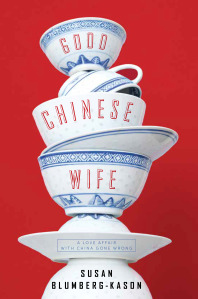
Book Review: Good Chinese Wife

A fellow Shenzhen expat has reviewed Susan Blumberg-Kason’s memoir, Good Chinese Wife. I am also a 中国媳妇 and find myself distressed by the suffering and self doubt that characterized her relationship with her ex-husband. In fact, Blumberg-Kason’s anxieties and willingness to give her husband the benefit of the cultural doubt resonated uncomfortably. I believe that one of the biggest challenges for women abroad is to find the confidence to trust our experience and say, “No more of this shit.” Another Shenzhen expat, Rose writes about her experiences navigating the gendered cultural divide is , who blogs at China Elevator Stories.

Ray's avatarRay-Comics

 Cover

szdaily.sznews.com/html/2014-09/16/content_3005971.htm

“GOOD Chinese Wife” is a new memoir published by Sourcebooks, and is a poignant tale expats should enjoy about the overlap of China and the West. Susan Blumberg-Kason details her unfortunate marriage to a Chinese music scholar, as they meet while studying in Hong Kong and then travel to his hometown in Hubei Province before eventually settling in San Francisco, California.

The central question posed by their troubled relationship is whether their differences were due to culture or personality. Interracial marriages may have some problems, but are certain individual defects masked by the excuse of culture?

As their relationship begins, Blumberg-Kason appreciates her future husband’s background. She studies Mandarin as a postgraduate in Hong Kong in the early 1990s, and stays there through the time of the handover in 1997, and for a reader familiar with South China it can be very interesting to compare that time with…

View original post 559 more words

distracted

image

Came across this advertisement: in the future your body will be in a meeting your mind will be in the front row of a fashion show

How to think about this figuring (and I use the word deliberately) of body/mind split?

I have, of course, attended meetings where the point is to show one’s face rather than to actually participate in organized discussion aimed at coordinating action toward some shared goal. In fact, most meetings veer into the irrelevant for all too many participants. I have also watched participants answer their phones during a meeting. That said, however, this is the first time I have seen an advertisement that advocates overcoming the inevitability of meetings through better virtual connections someplace else. After all, I assume that the mind at the catwalk is fantastically dressed, rather than actually clothed in haute couture.

Today, I’m distressed by the idea that distraction is presented as an acceptable way of supplementing/ making bearable the gendered division of labor. Let me count the ways:

1) distraction okay because female admins not part of the meeting;

2) distraction inevitable because there are no alternatives to shaping meeting attendance and participation offered;

3) distraction defined through watching rather than participating in design or wearing a dress elsewhere;

4) distraction facilitated by technologies that allow one to go virtual shopping, which in turn keeps one in debt and less able to refuse alienating work.

Question du jour: how beneficial are technologies that intensify human tendencies to distraction? This advertisement seems uncannily like using a television to babysit. But worse. Sigh.

razing homelands (in meizhou), claiming history (in shenzhen)

We hear stories of forced evictions and demolitions from Meizhou. These simple and brutal stories of State violence in order to dispossess peasants of their traditional landholdings sound all too familiar. The enemy is fast, omnipresent, and faceless, found in whispered rumors and chronic anxiety. The peasants’ furious screams and disjointed protests do not clarify the situation, but instead seem to work against them, further alienating them from urbane cool and ironic discourse.

Consider, for example, the tale of a 70+ grandma who had refused to sign over her land rights and sell her home. She occupied her home to protect her home. However, one day she needed to go shopping for a few everyday necessities because there was no one at home to help her. Less than an hour later when she returned home, “they” had already demolished her house. She had nowhere to go and nothing to bring with her. One can only imagine what she feels watching bulldozers raze the material conditions of her life. Suddenly, she is stripped to existential despair and helplessness in the face of relentless progress.

Yesterday I attended a screening of ongoing documentation of the situation in Meizhou. The salon was hosted by Shi Jie (in photo), a young documentary filmmaker currently based in Shenzhen. He has been documenting naratives of ongoing dispossession, bearing witness to the injustice of rural urbanization and concomitant suffering. First story online (in Hakka with Chinese subtitles). Shi Jie held the salon to discuss strategies to create solidarity between Shenzhen youth–especially young Hakka migrants–and the Meizhou peasants.

The conversation brought up three issues: (1) the need for peasants to articulate their demands in a more “urban” language, such as historic preservation or environmental conservation because the story of forced evictions and land dispossession was too common to become a media focus; (2) the need for the film makers to map the competing interests, including government dependence on land sales to meet their budget, the leading developers and the scale of investment;and (3) the need for the film makers to state their aims clearly, who was their intended audience and to what end?

Shijie’s savvy use of social media notwithstanding it is apparent that the heart of his effort is small, local and face-to-face interactions where he raises a fourth issue: how might those of us in Shenzhen is how to ameliorate an untenable situation?

墙迫症–my white wall compulsions

302 will start a new project–my white wall compulsions. The title is a pun: 强迫症 means obsessive compulsive disorder, while the characters for strong (强) and wall (墙) are homonyms.

The project itself is quite simple. 302 is a one room efficiency with four white walls. We’re looking for four individuals and or teams to transform one wall in the way they have always fantasized. And you know who you are. Staring at a white wall imagining all sorts of paint and bas-relief interventions! The project begins September 27 and ends with a party on November 21. Right now we’re accepting project proposals. We will also provide 500 rmb to pay for materials. If you’re interested in claiming your white wall compulsions and in Shenzhen contact me.

For those who’ve been wondering what’s up with community art in Shenzhen, the pictures below are from an August 29 performance in Shuiwei. The workshopped performance piece “feeling stones to cross the river” was part of the opening ceremony for the Futian International Images Festival, which celebrated documentary images and films.

This slideshow requires JavaScript.

one day

Yesterday evening I went to a screening of 有一天 (One Day), a series of vignettes about children with learning disabilities and handicaps, their parents and struggles. The film itself features some of China’s biggest stars and the vignettes tackle some of the county’s most pressing issues, including recognition of and support for missing children (who have kidnapped, maimed, and forced into begging), blind and deaf children, and children with Aspergers, Down syndrome, and attention deficit hyperactivity disorder. A heavy list indeed, and each case receives roughly 7 minutes.

The Shenzhen premiere was organized by the Shenzhen Association for Children with Learning Disabilities (深圳市学习困难关爱协会), the first organization of its kind in China. The guest of honor was Shenzhen Women’s a Association Chairwoman, Ma Hong, who had approved the establishment of Shenzhen LDA in 2013. Also present was the Vice Director of the Nanshan District Bureau of Education, over 100 Nanshan teachers, twenty-odd elementary student volunteers, and special guests. The screening was so successful that a second public screening was scheduled for this morning.

Just a few observations about the evening, Shenzhen LDA, and the burgeoning Shenzhen interest and participation in and passion for philanthropy.

1) The “one day” of each vignette occurred when a child acted “normally”. In fact, there was no “happy end” that was consistent with a child’s disability. So the stolen child was returned home, the deaf sang, and a blind girl painted. The case of the Down syndrome child who learned to bake bread came close, but even then the happy resolution was that the boy could traverse Beijing with bus changes alone, even though he could neither read signs, nor clearly articulate his destination. Moreover, in each case, outsiders selflessly intervened and saved the child, providing the parental care the parent–for whatever reason–could not. I found this ideological position most disturbing in the missing children section because the child was not handicapped at birth, but had been criminally maimed, begging the questions: why can’t rural parents protect their children from urban predators? and, in what moral world is predation on children the logical equivalent of giving birth to a child with Down syndrome or Aspergers, let alone one with a club foot or weak eyesight?

2) The film clearly sympathized with parents who don’t have the tools to help their children and the distress children feel when they cannot meet parental expectations. Indeed, in each case, the solution was ebetter ducation. Likewise, speakers acknowledged the stress disabilities cause in light of both the one child policy and the cultural expectation that “sons become dragons, and daughters become phoenixes” through education. And I agree with the idea that we help children through more humane pedagogy. And yet. Despite the inspiring motto: there’s no inability, only difference (没有不行,只有不同), the dream that permeated the movie and the talk was the discovery of previously obscured genius, a la Einstein. In other words, the “solution” to each “problem” was not a change in parental and social expectations, but rather more effective means to groom children to meet and exceed those expectations. So a question of emphasis: in special needs education do we start from unquestioned social goals and figure out what needs to be done to change a child, or do we understand each child as the inspiration for other social possibilities?

3) Throughout Shenzhen people are turning to philanthropy to address social needs and issues that the government is unable or unwilling to meet. Of these issues, education is one of the most vibrant areas of participation. Other areas include architecture (as a site for reimagining urbanism) and art as a site for stimulating creativity. The characters for philanthropy are 公益, literally “public benefit or welfare” which speaks to the political importance of the philanthropy movement, broadly understood and whatever one’s position on how a particular issue has been articulated.

policy, policy, policy: real estate with chinese characteristics

For those of you who wonder, what’s great in Dongguan–and you know you’re out there because Dongguan has gotten really bad press–I’ld like to suggest Guanyin Mountain National Forest in Tangxia, Zhangmutou Township (东莞市樟木头镇塘厦观音山). The forest occupies 18 sq kilometers, of which most is beautiful forest and hiking trails. This may come as a surprise because Zhangmutou was one of the industrial centers that sprung up along the Kowloon-Guangzhou Railway in the late 80s and 90s. In fact, the area was once known as “Little Hong Kong” because many Hong Kongers vacationed and bought homes there.

From the mountain viewing stations one can see the village and township industrial parks of early reform, as well as the recreational facilities (including golf courses and upscale hotels) where Hong Kongers went for the weekend indulgence and the late 1990s housing that truck drivers and the SAR’s mobile poor bought. One can also see more recent upper middle class developments by Vanke and China Resources which aim to attract buyers from neighboring Shenzhen. In fact, Tangxia is closer to downtown Shenzhen than is Longgang District. In addition to beautiful trails and fresh if muggy semi-tropical air, the park also offers views of how industrial urbanization with South Chinese characteristics reshapes the land, reminding us that we are not talking of “location, location, location”, but more precisely, “policy, policy, policy”.

Each of these areas exists because of a change to or promulgation of Chinese policy. The village and township industrial parks came about as a result of the responsibility system, while the resorts and entertainment industry that catered to a Hong Kong clientele depended upon laws that made it illegal for mainland truckers to cross the border and deliver containers from local factories to Hong Kong logistics companies. The present shift to upscale housing developments for Shenzhen and neighboring elites is also a manifestation of policy: crackdowns on the sex industry and push toward higher value added production in the area.

Of course, the construction in Tangxia has also depended upon the establishment of a bourgeoisie in Guangzhou and Shenzhen, where first houses have been paid off and costs of education met. However, more importantly, Vanke and China Resources have taken up the call to build in Tangxia because the Shenzhen metro will soon connect the area to the SEZ. They hope that the relative low cost of housing will attract young Shenzhen families to move to Dongguan and commute to Shenzhen. In the meantime, however, the people I spoke with in Tangxia were not buying a primary home, but rather a home for their retired parents. After all, they like nearby developers are waiting for Dongguan Municipality to build schools and hospitals, integrating Tangxia into the urban grid because the geographic effects of policy are as visible in their absence as they are in their presence.

what is a nuclear family?

This past week, I joined a wedding tour to Bali, which brought the immediate families of the bride and groom, as well as several friends together on a four-day tour. The wedding was held at the Bulgari Villas, where the bride and groom stayed while the rest of us stayed at a nearby golf club. Apparently, given the high cost of wedding photos, many newly weds choose to combine their honeymoon with a proffessional shoot. What I didn’t realize was that a shoot could also include a wedding ceremony and invited guests.

Of random note: (1) we were not the only such tour, and a multiple sites encountered well-dressed and manicured brides with their respective posses; (2) there were other Chinese tours taking the same route as we did. In fact, the majority of tourists at all the sites we visited we Chinese, and many of the Balinese staff had learned some Mandarin; (3) friends I have told about the trip commented that it was expensive, but agreed that it was difficult not to spend an exorbitant amount on a wedding; (4) traveling together gave the two families an opportunity to get to know each other and take delight in the couple’s happiness; and (5) the distance between the two generations was clear.

The 30-something couple clearly enjoyed Bali, its exotic locales, and the frisson of non-Chinessness. In contrast, the parents seemed somewhat bewildered by this format. They understood a honeymoon and photos, but not quite how the intentional reworking of tradition had become so popular. I’m speculating that these more private weddings represent and deepen the ongoing nuclearization of Chinese families that is so prominent in Shenzhen.

In the US we understand the nuclear family to comprise two generations–parents and children. In China generally, and Shenzhen particularly, the nuclear family comprises three generations–grandparents, parents, and children. In other words, the the rationalization of the family unit points to the historic organization of paid and unpaid labor in the US and China, respectively. In the ideolized US, fathers worked and mothers kept house. This trend was explicit in the forced redomestication of women in the post WWII era, when a man’s income was expected to provide for his dependents. In contrast, in idealized China grandparents provide childcare and housekeeping services while both parents work. This is necessary because individuals (except in the case of the uber-rich) can’t afford to purchase a house, needing combined incomes to meet mortgage payments. In a chicken egg moment of cultural difference, US American families emphasize the bond between husbands and wives, while Chinese families emphasize the bond between parents and children.

Though du jour, Americans highlight sexuality as an important foundation of family life because sleeping together secures the primary bond of the US nuclear family. Similarly, Chinese celebrate eating as an important foundation of family life because dining together reinforces the primary bond of the Chinese nuclear family. This difference can be read as “cultural” and some, like my friend and her husband are deploying “western culture” (i.e honeymoon and romance) to re-imagine the ties that bind the “traditional” Chinese family.

PS: This past month I have been busy over at Village Hack, the latest project at Handshake 302. The last Hacker was Yin Xiaolong, an artist who does most of his work online, through social media documentation of social concerns. While at 302, he engaged in copy painting, photography, and a leave-taking performance piece that included shaking hands with neighbor/strangers. Meanwhile, the concession grows that our three young neighbors are the most interesting and interested of our interlocutors.

the kids really are all right

Last night I had dinner with Joe, a gen-90 recent college graduate. He and several friends have a start-up that helps businesses expand through the powers of we chat and Tencent’s remarkable level of cross platform integration. Very contemporary marketing firm. In his downtime, Joe organizes summer programs that teach creative thinking, collaboration, and courage of independent thought to other young Shenzheners.

Our conversation and Joe’s passion, like last week’s trip to Beijing reminded me that there are new ideas and start ups perculating throughout Shenzhen. Green Mango is a group of young mothers trying to change the education system. Bean is a Seattle-based group of volunteers who contribute to community projects. ECSSZ is a group of street artists who engage in community beautification projects. Not to mention the young hackers in residence at Baishizhou.

It is all too easy to dismiss these small and idealistic efforts as unrealistic. In fact, Chinese parents like their American counterparts complain that their children are “不现实.” But that’s not point du jour. Today I’m thinking, wow. Just. Wow.