what happens in shenzhen if you need your teeth checked?

This is a serious question. During times of mass corona-testing, dental services have been closed and dentists and their assistants redeployed to people test stations. But this information hasn’t been made public. Instead, you only discover that dental services have been suspended if you need your teeth checked, can’t get an appointment, and then someone explains the situation to you. Otherwise, there’s just a black hole where the dentist used to be.

Both in China and abroad, much ink and digital text has been dedicated to extreme cases of people being unable to get emergency medical care. However, the redeployment of dental workers illustrates how regular healthcare has been (indefinitely? until further notice?) suspended in order to mobilize workers to meet the need for personal to give tests. Annual check-ups can’t be booked, for example, if your dentist is busy swabbing throats instead of filling cavities. This situation illustrates one of the challenges to navigating Shenzhen’s current management of the omicron outbreak–there have been no comprehensive announcements of how city resources have been re-deployed to achieve zero-Covid. This means that you find out what’s been closed or redeployed through unexpected encounters with a new normal that has not been formally acknowledged.

Continue reading

passing of a hero

The first party secretary and second president of Shenzhen University, Luo Zhengqi 罗征启 was one of the main figures of public life during the early Special Zone years. His vision for a post-CR intellectual culture and new roles for intellectuals not only shaped the city’s public culture and its urban form, but has also educated many of the city’s important figures. Graduates from the Shenzhen University School of Architecture have, quite literally, contributed to the design and construction of the city’s built environment, while more generally Shenzhen University graduates have played important roles in the city’s government, its companies and civil life, including its not-for-profits, volunteer organizations, and vibrant salon culture. Luo Zhengqi passed away yesterday, three months after his wife, Professor Liang Hongwen left us. Both were 88 years old. Both lived and worked in Shenzhen from 1983 to their passing this year.

Continue reading

refiguring the healthy population

Yesterday, Xinhuashe circulated #动态清零怎么看怎么干# (image below), which translates as #how to understand and implement dynamic zero-Covid. Inside the parentheses, the question is raised: “if so many countries are ‘lying down,’ #why are we persisting with dynamic zero-Covid#? The answer to the question hinges on how population governance works in China. According to the article to which the weibo tweet refers, there are over 50 million elderly Chinese who have not yet been vaccinated. They are all vulnerable to catching and dying from Covid. Anyone who doesn’t comply with current protocols is (implicitly) threatening the health of those 50 million elders. Indeed, the rhetorical power of these tweet hinges on an unspoken assumption: what is more anti-social than threatening the lives of elders? Thus, alternative opinions on how the outbreak should be handled are not simply debates about public health protocols, but also and more importantly pose a serious challenge to social stability because they are intrinsically anti-social behaviors.

In trying to think through the logic behind the connections between public debate about health protocols and social stability, re-reading Susan Greenhalgh‘s work on population governance has proven incredibly useful. Her basic point is that the politics of reproduction is a key feature of modern government, especially how we imagine embodied relationships between past and future. Population governance touches on all aspects of citizen rights and obligations, specifically access to birth control and abortion. However, during the late 20th century, population governance has expanded to include how societies organize access to healthcare, economics (workforce ratios), environmental issues (population densities) and the meaning of human life (gerontology as an expanding field of study, for example). Population governance also shows up how eugenics have shaped modern politics throughout the world. In other words, population governance has become central not only to how we imagine ourselves as belonging (or not) to society, but also to how governments justify which public health programs to pursue and how to implement them.

Continue reading

shenzhen covid update for inquiring minds

“What’s up in Shenzhen?” You and other inquiring minds want to know.

Well, for starters, we have a new conspiracy theory about how Shenzhen’s successfully prevented a massive omicron outbreak on the scale of Hong Kong and/or Shanghai.

Your curiosity gets the best of you and you impishly ask, “What’s the tea?”

I lean forward and whisper, “Apparently, the city’s zero-Covid strategy has served to cover-up the fact that Shenzhen was caught unprepared, just like Hong Kong and Shanghai. At the beginning of the outbreak, the city didn’t have enough quarantine centers to house all the positives, symptomatic and not. So instead of treating patients, they sent everyone home to wait it out, without ever releasing true statistics. The basis of this conjecture is the unstated question: how could Hong Kong and Shanghai have so many positives and Shenzhen not?”

And my voice is rising along with my excitement, “I mean, you can hear the rhetorical force of the conspiracy theory, which pivots on what the numbers mean. And let’s be real. Statistical abnormalities should be ringing our bells because so much of who we think we are is tied up in hypotheses about populations, which are in fact statistically imagined entities. So, to my mind, which is a curious mind, the reasoning behind this theory of what is actually happening is mischievous satirical impeccable. Especially, if your point of epistemological departure is that omicron spreads+government can’t be trusted. Which, who doesn’t believe?

Anyway, the post (which counts as rumor mongering within official social media, but that’s another story for another day) reads:

I finally understand, and here’s the story:
Continue reading

hallucinating in shanghai

The stories coming out of Shanghai are increasingly distressing. Thousands of people are being rounded up and forcibly moved to quarantine centers, which are still under construction. Once inside the centers, detainees are told that they are on their own until testing can be arranged because it takes two consecutive negatives to get out. Indeed, the situation is so fraught that it has brought the specters of Xinjiang and the Cultural Revolution into the conversation. Some have started commenting under pictures of the Big Whites (大白 nickname for those in hazmat suits), “the red guards have arrived!” Offline, the outraged assumption that Shanghai (SHANGHAI!) could be treated like Xinjiang is more vocal, and occasionally mentioned online. But I’ll get to that, below. There’s much to unpack in all of this, especially Xi Jinping’s fraught relationship with the CR, Xinjiang and, of course, Covid. After all, the 20th Party Congress will be held (presumably) some time in October, and Xi has hitched his coronation third term to zero-Covid. Today, however, I’m translating and commenting on a copy of a chat record that’s low key circulating on WeChat. I’ll be responding in the next post.

Continue reading

covid booster shot

I’m in Dali, enjoying the weather and corona-test-free days. But in preparation for re-entry into Shenzhen, yesterday afternoon several of us went to get our third covid jab. We arrived at the station around 3:15 and were told that the computer was on the blink so we couldn’t get the shot. However, the computer would be up and running the next morning, when we should come back. We asked if they were sure that the computer would be fixed the next day, and they were positive. No question, the computer would be fixed. So we left, but then one of the volunteers came running out after us, saying that the computers were fixed and we could get the shot, which we did.

The process was incredibly bureaucratic, so bureaucratic that if the computers were down, then the information couldn’t be entered into the national database–and this was the reason that was given for not allowing us to get the jab. Indeed, there were four bureaucratic steps to getting the jab: at station 1, we signed a paper with our thumbprints that said we were getting the jab; at station 2, our identifications were checked against the paper we had just signed and this information was entered into the computer system; at station 3, we handed our papers to a worker who entered this information into a computer with the registration number of the bottle of vaccine that we used (its two dosages per bottle). Also at station 3, our paper was collected and we were given a receipt that confirmed our jab, and; at station 4, we showed our receipts to a representative from the neighborhood office 居委会 where we are living, and they wrote down our information and confirmed that this was jab 3.

Hopefully, this info will appear on our telephones. However, we’ve heard reports that corona tests performed in Dali may not appear in the national register and so it is important to hold tight to the receipt.

what kind of public space is the city of shenzhen?

I think about this question, a lot. Because there are two ways of being public: providing public services and allowing for critical public spaces. Sometimes, when my mind drifts into thoughts about chimerica, I wonder if the US has critical public spaces because it refuses basic public services to many of its people, while China lacks robust critical spaces because its so busy trying to secure public services for its residents, urban and rural. Priorities, right? Anyway, thoughts below (full citation: The Emerging Public Realm of the Greater Bay Area, Miodrag Mitrašinović and Timothy Jachna, eds., Routledge, 2021, chapter 7.):

zero new cases (enjoy the moment)

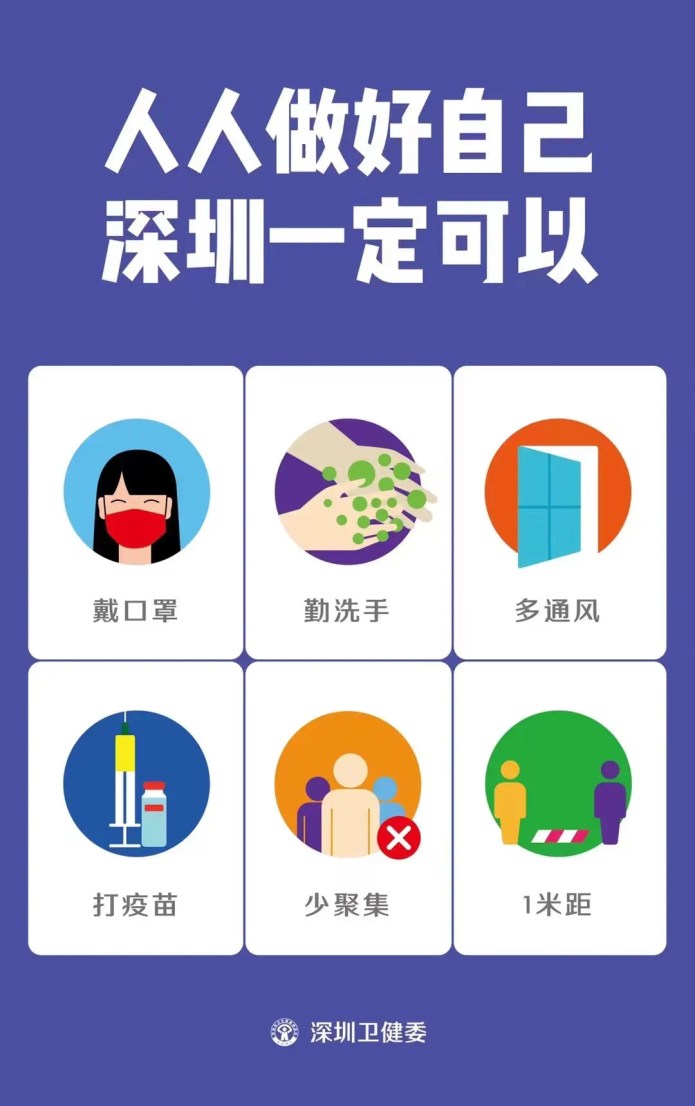
Yesterday, April 4, Shenzhen announced that there had been zero new cases of covid in the city. The poster reads: If everyone is their best self, then Shenzhen will definitely succeed! In addition to maintaining basic public sanitation, no large gatherings, which means most commerce isn’t going to pick up anytime soon, especially as its still 2 tests every three days (三天两次 every other day). Middle and high schools are scheduled to reopen on April 8, and they will announce elementary school re-openings then. Possibly next week. But, no gatherings and that’s what people do. Meanwhile, Futian held a gratitude ceremony for volunteers from other districts who came to help manage the crisis (and yes, political crises are crises). They were photographed holding a banner that said, “The people of Futian thank you!” So it looks like Futian is thanking the city, not the volunteers holding the banner. But that’s a personal quibble.

As an aside, yesterday I experienced a twinge of Shanghai envy. Apparently, the neighborhood management office of a large residential estate required residents to sing patriot songs together. Instead, they gathered in their windows and on balconies as scheduled, but collectively shouted, “fuck you neighborhood management (傻B居委会)!” So yes, I wanted to be collectively expressing frustration with zero-Covid policies. Click to view.

virtual concern: shanghai city and jilin province

First, Xi’an and then Shenzhen, now Shanghai and Jilin. Although if you’ve been following the covid situation in Shanghai, odds are that’s how you’ve heard about the covid situation in Jilin–as an addendum, a postscript, a by the way this also happened elsewhere throwaway line at the end of a news report. From what I can gather, the Shanghai government has lost control of the covid situation and the military police 武警 have been called in to restore order. I have seen pictures of infants who have been separated from their parents, sleeping five or six to a crib; I have seen video clips of people breaking through cordons, although it is unclear where they are going; I have seen snapshots of international brand shopping bags, (including Maotai), hanging from doorknobs in compliance with the delivery of corona self-test kits to families, and; I have seen seen videos of the arrival of military police troupes dressed up in hazmat suits. As for Jilin, I haven’t seen that much. Apparently, the province’s major (Changchun and Jilin) and minor cities are in the “development stage” of the outbreak, which means it’s spreading. I’ve also read that there are huge numbers of asymptomatic cases and that the cold weather (I’ve seen pictures of workers bundled up in winter coats beneath their hazmat suits, dodging snowflakes as they motorbike to their next station) make it difficult to conduct tests and deliver food.

Here’s the rub: I have limited means to evaluate what’s happening in Shenzhen, let alone cities that I haven’t visited or only infrequently visit. How can I evaluate what these unknowable events mean for me personally, Shenzhen specifically, and China more generally? So that’s what today’s post is about: my experience of the Chinese virtual public sphere.

Continue reading

yang qian early plays

By now you’ve figured out that this week, I’m organizing the blog. Kind of. Anyway, today’s post is a treat from years past, when Shenzhen was and was transitioning from being the world’s factory. During the late 1990s and early 2000s, Yang Qian wrote plays about how dreams took root and reformed in the soil of the Special Zone. Crossroads, especially, gives insight into the lived contradictions of the 1990s, when Shenzhen was considered a city without culture, even as Neolithic sites were buried in the rush to the future. The plays included in Unclassifiable Dreams were translated and published as part of the 2008-2009 Foodscape project, which was funded by Pro Helvetia. (Just an aside, during the project, Swiss artists complained to artists from China and the US that arts funding in Switzerland was limited. In the language of China du web, we call that 烦而赛 or humble bragging. Sigh.) Enjoy:

Unclassifiable Dreams: Five Plays by Yang Qian.

Also, Divine Garbage a video from 2003, when the second line was still operational, Shekou was still a manufacturing hub and Fat Bird was an unregistered group of friends, who did guerrilla performances throughout the Special Zone (we never performed in Bao’an before its 2004 restructuring):