
Many of you probably wonder: what happened to Bagualing, the other industrial park in Shangbu Management Zone? And it’s true, so much has been made of & off Huaqiangbei that we forget: the 1986 master plan called for two industrial parks in Shangbu and like Huaqiangbei, Bagualing changed the world as we knew it. And by we, I mean those of us born in the 60s and 70s . For roughly two decades (let’s say ≈ 1990-2010), Bagualing was the printing capital of the world–books, books, and more beautiful books were printed there. In the States, you probably encountered these books via the discount warehouses that sold cheap books either by mail or in large downtown spaces. Chez Shenzhen, especially in the naughties, Bagualing was a great place to shop and purchase a Korean manga or a French novel. Of course, architecture, design, and art books were everywhere, in every language, and could be had for 30 or 40 rmb. Good good days, no more.
When top down restructuring started, the larger printing presses left Bagualing. Some of the higher end printing migrated to Beijing. As in Huaqiangbei, there was a naughties commercial restructuring, where for a decade or so, the manufacturing economy bumped up against the city’s exuberant consumption. Restaurants occupied the main streets of the industrial park, while the factory buildings continued to print and sell books. Same narrative arc as HQB: from state manufacturing to entrepreneurial manufacturing to increasing levels of consumption and then the last remnants of industry being squeezed out in the mid-10s and finally our favorite entrepreneurs being squished out during Covid.
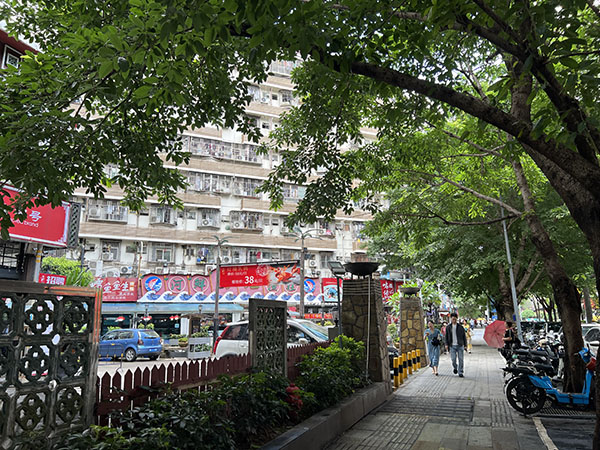
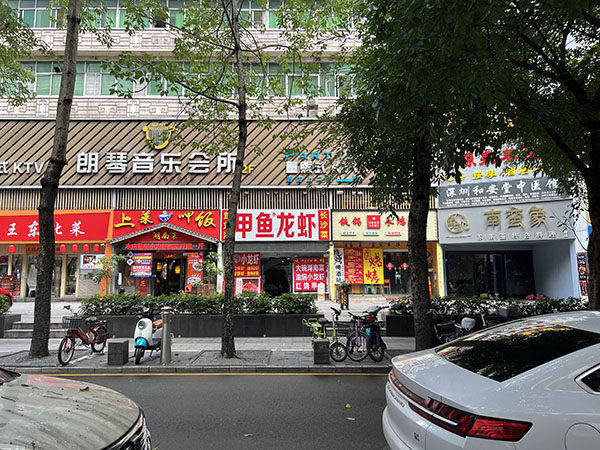
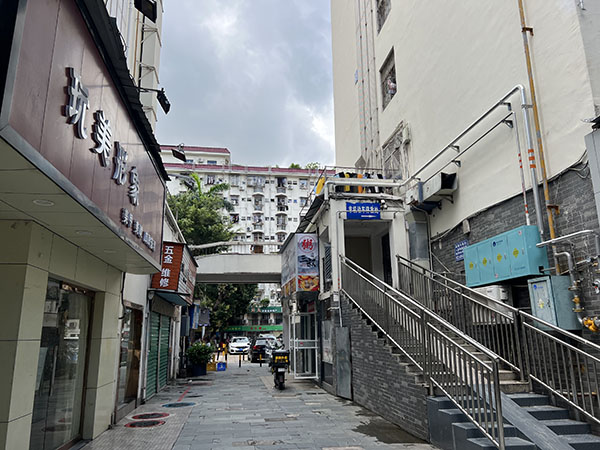
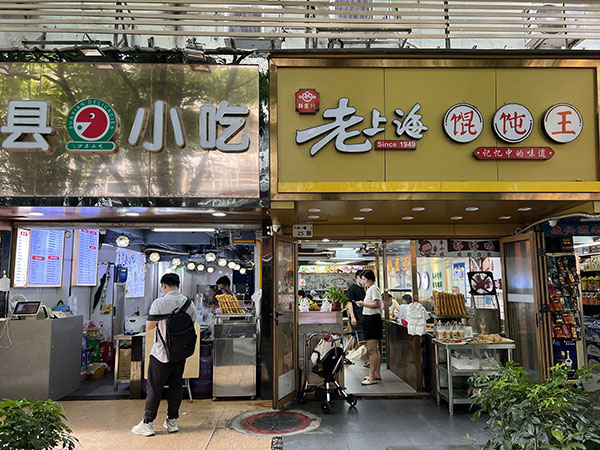
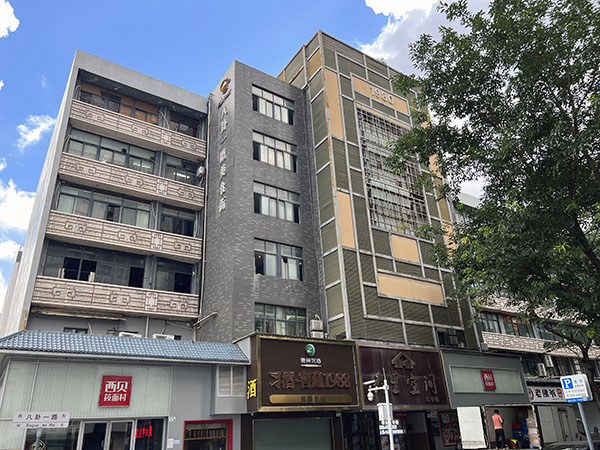
But. What a difference location makes. Bagualing is a few subway stations away from Shennan Road, and the rentals are still way below those in other parts of Futian. Redevelopment has been much slower (not slow, but slower) and mallification less pernicious. Moreover, the restaurants have weathered the storm, and Bagualing #1 Road remains a pleasure to explore, especially at night when the restaurants and bars open their doors. In the pictures below, note the two-lane roads, green-scaping, and the blunt modernity of the buildings. Of course, my pictures are daytime pictures because I’m more morning bird than late night cat. But you get the idea.





 Shenzhen Noted
The property market slump caused by the arbitary heavy-handed crackdown once again proves the pernicious effect of decisions made by ideology-obssessed rulers. But, just a thought … I’m wondering if the “relatively slower mallification” and restruction of Bagualing (and elsewhere in Shenzhen) is because of the low confidence in the property market recent years? If that’s the case, one good thing that comes out of this slump is having the old towns around for a bit longer time.
Also, stumbled upon this PR piece. Didn’t see Shenzhen mentioned in it and I am curious if this “consensus” is progressive enough to include village-turned-towns that may be ignored in the waves of top-down grand narratives of history:
https://www.prnewswire.com/news-releases/guangzhou-consensus-on-protection-of-historical-and-cultural-cities-released-lets-create-a-new-future-with-history-and-pass-on-our-history-to-the-future-301856566.html
Hi Sice! Good to hear from you again. Checked out the article and it seems to me the key phrase is “from… China’s historical and cultural cities.” Shenzhen remains excluded from history in most narratives. Upside? Perhaps that Shenzhen can promote a more inclusive and interesting version of history that is bottom-up rather than top down because what seems to count as history is what elites are up to. That said, Shenzhen is also on board with elite history, its just more recent. Sigh.