Camera download and what appeared

This past week, my path has taken me from Shekou through Hong Kong to Taichung. Some of the spaces and details that caught my attention, below. And yes, the headline in the pictured article really does read, “After the seizure of toxic salted eggs, one ton goes missing”:

This slideshow requires JavaScript.

what i realized this june 4

On June 4, 1989, I was in Japan. That year, I had been diligently learning Japanese pronunciations for Chinese characters and memorizing [subject]-time-place-object-verb sentence patterns. The Chinese democracy movement, the call for transparent and clean governance, and the military crackdown came to me filtered through Japanese television because CNN was not yet global. Only after the fact would I learn about the two month build-up to the sight of tanks grinding through the Beijing streets. It took me years to understand the significance of Shenzhen reforms to inspiring the movement as well as how the crackdown unmade many of the political reforms, culminating in the 1992 Southern Tour, when Deng Xiaoping announced that economic liberalization would continue. Political liberalization would emerge piecemeal and in unexpected places, but no longer with the hopeful momentum of the early 80s.

Nevertheless, over the past years, I have noticed that my knowledge of events has been less important than the nitty gritty of everyday life in transforming June 4 into a meaningful symbol.

On Saturday, for example, I went to a coffee shop, where a man was lying on the ground, hands clawed, some kind of froth at his mouth, trembling. Two guards stood and another man sat, watching. I asked if an ambulance had been called. They answered, yes and I went into the coffee shop. Over twenty minutes later when I came out to look for someone, the man was still on the ground and no help to be seen. This time, I dialed 120 and connected with a dispatcher, asking a former student to explain what was happening. This decision disturbed the watchers who explained that the man was a thief and that he had faked a seizure when the guards had caught him. Moreover, according to the guards he frequently came by and stole things. The guards seemed less concerned about the man then they did about being seen not taking care of him. They stopped me from taking a picture and, when help did finally arrive, they kept repeating, “There’s nothing to see,” and pushed people away.

I left the coffee shop, came home, jumped online, and saw blog posts and articles on June 4, which caused me to make sense of the incident in larger, cultural terms. “China is a place where dissatisfaction with the regime or petty thievery can cost a human life,” I thought, “therefore people tend to be cynical and to ignore the suffering of strangers.” The coffee shop incident also allowed me to hear Chinese leaders repeating to other world leaders and journalists, “There’s nothing to be seen.” Consequently, my anger at the coffee shop guards grew into a nightlong bout of “what the fuck am I doing in China?” These were not happy or useful thoughts. Instead, as the anger cooled, I realized that I had argued with the guards about what should be done and our different values (them bad, me good). In retrospect, however, what is clear is that in actual practice our values were the same — we became increasingly angry with each other rather than wiping the froth at the man’s mouth or placing a pillow under his head.

This was not the first time that my sense of outrage has led me to fight with others rather than to comfort a suffering being. Consequently, June 4 this year, I listened to Pema Chodron‘s teaching on Shantideva’s The Way of the Bodhisattva in hope that by working with and through my anger, I will achieve something of the revolutionary patience necessary to change the world:

The hostile multitudes are vast as space –
What chance is there that all should be subdued?
Let but this angry mind be overthrown
And every foe is then and there destroyed.

the social media production of mutual assured cross-cultural contempt in the US and China

By now, most have heard that Global Times, the Party’s international mouthpiece printed an editorial which called for the Chinese public to permit a moderate amount of corruption; if you haven’t jump over to Fauna’s piece at ChinaSmack for translation of the article and web responses. The self-justifying rhetoric and virulent counter-attacks illuminate the cynicism and anger that increasingly characterize public debate in the PRC micro/ blogosphere. Moreover, the virulence and smugness of English language responses to the post need to be analyzed in terms that explain the ongoing social media production of mutual assured cross-cultural contempt in both the US and China.

In many ways, the cynicism of the exchanges remind me of populist diatribes in the US; I actually can hear Mitt Romney and other anti-gay or anti-black or anti-women or anti-child advocates calling for “moderate levels of discrimination” and exhorting the country to “understand” the necessity of continued legal inequality because there are so many incompatible definitions of discrimination and we need to respect everyone’s traditions. The pseudo-rational justifications for continued discrimination understandably anger those who directly suffer the consequences of said laws and customs.

Just how closely does the tone and rhetorical form of US and Chinese popular debate mirror each other? Below, I have copied the Chinese editorial and substituted the following keywords, underlining the substitutions in text:

  • discrimination for corruption
  • prejudiced for corrupt
  • strong economy for development
  • prejudice for income
  • America for China
  • Western for Asian
  • Presidential Candidate Mitt Romney for Railway Minister and Party Secretary Liu Zhijun (and yes, in both countries we keep pandering to our lowest acceptable prejudices and greed, respectively)

I have made these substitutions to make a simple point; although the effects of economic globalization and political inequality are different in the PRC and the USA, nevertheless the turn to cultural justification and excuse-mongering is similar. Moreover, tone of the debate transcends relative levels of legal freedom of expression. The anger and absurdity of debate in the Chinese micro/ blogosphere is matched by the anger and absurdity of debate in American television and radio programs (Hello, weibo and Fox News).

The implications of this point, however, are far from simple when our respective national debates end up in our interlocutor’s public sphere. For US citizens, for example, it is difficult to understand the prevalence of and popular resignation to Chinese corruption. Likewise, most Chinese see US concerns about gay marriage and reproductive freedom to be a cases of privileged angst. In the worst case scenario, we focus on the other’s words to explain/ justify our inability to reach mutual understanding because, it seems so obvious, that our interlocutor has such fuck-up values. As a result, in both both countries, we end up focused on the cultural content of public debate, rather than on a shared political-economic structure that has created what are in both the PRC and USA, untenable situations.

So, another call for creative rethinking of what forms cross-cultural understanding and dialogue might assume when translation might do more cross-cultural harm than good.

The modified text begins below:

The American Public Should Permit a Moderate Amount of Discrimination

It was announced yesterday that Presidential Candidate Mitt Romney won the Texan nomination. This piece of news once again touched the public’s most sensitive nerve, that dealing with discrimination. From a national perspective, there is indeed continuous news of discriminatory officials being elected, which does give people the feeling that discrimination is “unending/overwhelming”. They aren’t catching/arresting less, it’s that you can never catch them all [never finish catching them all]. Just what is going on?

America obviously has a high incidence of discrimination, and the conditions for completely eliminating discrimination do not exist at present. Some people say, as long as we have “democracy”, the problem of discrimination can be easily solved. However, this kind of view is naive. The West has many “democratic countries”, such as Indonesia, the Philippines, India, etc. where discrimination are all much more severe than America. But America may very likely be the Western country with the most pronounced sense of “resentment towards discrimination”.

This is related to America’s “serve the people!” official political morals having deeply been engrained in the people’s heart throughout society. However, the reality is that the market economy has attacked its practicality/feasibility, resulting in government officials who half-heartedly observe it or have even betrayed it constantly slipping through various cracks in the system. America is a country that has been deeply penetrated by globalization and the high standards of integrity of developed countries is already known by the American public, and with information coming from different periods and different circumstances being forcible stuffed into America’s sphere of public opinion, bitterness and consternation can find no relief.

Discrimination in any country is unable to be permanently controlled/cured, so the key is to control what the degree that the people will permit/allow. However, to do this is particularly difficult for America.

Singapore and China’s Hong Kong institute a policy of high pay to discourage discrimination. Many Chinese political candidates are wealthy, and normally when someone becomes a government official there, they accumulate renown and connections. After office, they can use then various “revolving doors” to change all they have accumulated into financial return. However, these options and possibilities are not available in America.

Giving government officials power to discriminate is something American public opinion cannot accept. Allowing government officials to step down and use their influence and connections to discriminate against groups is something the system does not allow. Allowing the prejudiced to become government officials is something that people find even more unpalatable. The legal prejudice of America’s government officials is very low, and the compensation for officials of some places is often realized through “unwritten rules”.

All of American society now has some “unwritten rules”. In industries that involve the public welfare such as doctors and teachers, “unwritten rules” have also become popular. Many people’s statutory prejudice isn’t high, but they have “gray prejudice”.

What are the boundaries for “unwritten rules”? This isn’t clear. This is also one of the reason for why there are relatively many discrimination cases now, with some even being “cases of a community of discrimination”. Amongst the people, there is the popular saying that “what is commonplace amongst the people cannot be punished by the law”, and the moment government officials believe this saying while believing “others are the same as me”, then he is already in danger [of becoming prejudiced].

Those who engage in discrimination must be strictly investigated, and not to be tolerated, as this would greatly increase the risk and cost of discrimination, creating the requisite deterrent effect. The government must make the reduction of discrimination the biggest objective of their governance.

The people must resolutely increase supervision through public opinion, pushing the government to fight discrimination. However, the people must also reasonably understand the reality and objective fact that America is unable at its present stage to thoroughly suppress the discrimination, and not sink the entire country into despair.

Writing this definitely does not mean we believe fighting discrimination is not important or should be put off. Quite the opposite, we believe fighting discrimination indeed is the number one problem that must be solved for the reform of America’s political system, and it is also the common demand of the entire country.

However, we believe that fighting discrimination is not something that can be completely “fought” nor completely “reformed” because at the same time, it needs “strong economy” to help solve it. It is a problem of the individual prejudiced officials as well as the system, but that’s not all. It is also a problem of the American society’s “overall level of strong economy”.

Fighting discrimination is a difficult/entrenched battle in the strong economy of American society, but its victory at the same time hinges upon the clearing of various obstacles on other battlefields. America can never be a country where other aspects are very backward and only its government officials are egalitarian. Even if it is for a time, it won’t last long. Eliminating discrimination would be a breakthrough/turning point for America, but this country ultimately can only “advance overall” [any specific progress requires overall progress/strong economy].

WHERE ARE YOU FROM?

This afternoon, as I struggled out of a damp shirt in the yoga studio changing room, a woman turned to me and enthusiastically asked, “Where are you from?”

“Where are you from?” I countered, recognizing her as new to a studio, where I’ve been practicing for four years.

“Here,” she gestured generally behind her, “What about you?”

“Here, too,” I replied mirroring her gesture.

“I don’t believe you,” she challenged.

“That happens,” I admitted, “a lot.”

17 years into my Shenzhen sojourn, I am still trying to come to terms with my decision to live outside the United States because (a) I reside in a community that treats me as a just arrived guest and (b) my snail mail address notwithstanding, at times I’m not actually sure I left my homeland, and not always because the US and China function as each other’s neoliberal doppelganger. Instead, I abruptly realize the US is all in my head.

As a misplaced second grader in rural Wisconsin, I explored the library through weekly visits, where I maxed out my card (five books at a time) and convinced the librarian that yes, I could finish Bambi in a week and still get through another Nancy Drew or three. No, I would not be playing after school with “little friends”, I would be reading, but only if I had enough books. She laughed at my determination, but permitted me to borrow my limit and even sneak another mystery into my father’s check outs.

I fidgeted through high school classes, and when not lurking in the library, I stayed in the art room, painting and building “The Tommys,” a series of convoluted trees and meandering vines molded in clay and glazed in over-saturated complementary colors that repelled sustained appraisal. I remember arranging vivid magenta petals on a neon green trunk, and writing unreadable letters in yellow ink on purple paper — catch me if you can. When I launched from the Jersey suburbs into a Vermont college, I believed that a new place and a new people, a new life would satisfy my yearning; I studied Chinese language and literature convinced that once settled elsewhere, it would be HEA 24-7.

My early life wasn’t all teenage angst because my craving for distraction had an upside; I read deeply, broadly, and well. I cried each time Charlotte died, and then Old Yeller, was seriously confused by Fiver’s visions, and imagined myself taking on IT with Meg and, yes, I still read YA literature, most recently Hunger Games. I crushed on Oscar Wilde and his baroque fables, fell in love with Adrienne Rich and TS Eliot, H.D. and WH Auden. Emily Dickinson, Jane Austin, Willa Cather, Edith Warton, Louis de Bernieres, Salman Rushdie, Graham Greene, Dashiell Hammett, E. Annie Proulx. And although I started college bored by  Robert Frost’s plain simple, I have since realized that the moral conundrums which grip my heart also root me in his New England soil — Something there is that doesn’t love a wall…

And that’s point du jour. The literary sojourns that once enabled me to ignore shag carpeting and sod, encouraged me to have adventures, now remind me coming full circle doesn’t mean anything so pedestrian as showing up on a childhood front porch, not that I wouldn’t enjoy walking the lake to see how the neighborhood has changed. Instead, that brutal question shocked me into what I might have seen earlier if I interpreted my life with the same close attention I give to reading; perhaps my childhood dramas of displacement have compelled me into literal — rather than literary — exile, where I can confidently say, yes, yes, the stories are true.

just what is china studies anyway?

These past few days I have been reading essays on the social organization of power in the PRC. Most of these essays were written by political scientists and economists, but the odd anthropologist makes an appearance as does the occasional historian.

Here’s the rub: I can’t really tell the difference between this kind of scholarship and everyday gossip in Shenzhen.

Our gossip tends to be about people we know, but importantly also about people with power to make decisions that directly affect our well-being. We see someone do something and then speculate about how and why it happened. We try to anticipate what they will do and how we might get them on our side. But this data gathering and analysis is all tenuous and shaky, and often leaves me feeling both convinced I know what’s happening (vaguely), but also unwilling to make definitive statements because I don’t actually know. Instead, I have a residual belief that someone somewhere can explain what is happening; there is, we maintain, a position of knowing, just not with me, here.

Now it’s not as if this tendency to conflate gossipy analysis with research has gone unnoticed within scholarly circles. Consider, for example, the following 1995 quote from Frederick C Teiwes (Paradoxical Post-Mao Transition: From Obeying the Leader to Normal Politics):

Despite the unprecedented openness of the 1980s and a surfeit of purported inside information, in crucial respects we know less about politics at the top today than we do for the Maoist era. Given the secretive nature of the top leadership, it is hardly surprising that participants in the system often express the view that ‘nobody knows’ what goes on ‘up there’. … Even highly placed figures, including those with personal knowledge of the very top leaders, feel limited in what they know, and their assessments sometimes are at variance in significant ways with those of younger, more middle-level officials either in China or living in exile. Given these limitations, scholarship has unfortunately relied extensively and often indiscriminately on suspect Hong Kong sources to fill the gap. As Lyman Miller has observed, the Hong Kong press has recorded ‘a flood of reports, stories, rumors, and sometimes speculations and fantasies about political events in China’.

My speculative sense du jour is that 15 years after Teiwes cautioned us about how much could actually be known and methodologies for securing some kind of confidence in what we think we have learned about China’s highest ranking leaders, weibo may have allowed this unstable situation to perfect itself. The yearning to know, the speculation and furtive analysis. The 140 character limit, the anonymity, the instant forwarding of unconfirmed posts has blossomed in China not only because its fun, but also because it is parasitic upon and supplements the extant situation — what we know, we glean and extrapolate from conversations, incomplete news articles, and our experience of acting within and against everyday life, whether in China or abroad. Thus, I read caveats about how information and conclusions about China’s ruling elite might be and think, yup that tallies. Not just with my experience of unbridgeable distance between moi and the Center, but also with my experience trying to navigate office politics in Shenzhen unreliable and listening to my friends talk about their experiences trying to navigate even more complicated office politics.

So what?

I’m thinking that there’s a kind of cross-cultural overdetermination in the popularity of weibo and its increasing importance as a subject and source of academic knowledge about Chinese political culture. Chinese people use weibo to create public spaces and then scholars speculate on what it means about Chinese society because in large states, like China but also like the United States for that matter, none of us, even those of us in power actually know what’s happening. We live by creating networks of trust and when public trust falters, we turn elsewhere. Recently, Professor Zhao Dingxin (joint appointments at Chicago and Fudan) gave a talk on”Weibo, Political Public Space and Chinese Development” and Owen Lam has translated portions of the transcript and netizen responses to the talk. Zhao Dingxin asserted provocatively:

Weibo is an absolutely democratic but highly manipulative mode of communication. It is democratic in the sense that the user only need to write a few sentences. Once a person knows how to login, s/he can start writing regardless of the quality. It is manipulative in the sense that each voice does not register the character of an equal vote… If a person controls a lot of money or certain technology, s/he can hire an online army to magnify their voice and create fake public opinion. The space for manipulation is huge.

And my immediate response is, well, yes because within any human relationship the space for manipulation grows with levels of distrust and competing desires. But that space is within each of us and not simply the product of technology. Clearly, the kind of speculative practice that thrives on weibo pre-dated the invention of social technologies. Perhaps instead of an exclusive focus on technology, it might be helpful to ask what about human nature makes weibo so attractive? What fears and desires leave us open to manipulation by digital phrases? The Chinese government is trying to contain the effects of rampant rumors and gossip-mongering by instituting the real name registration system (实名制). I wonder if it wouldn’t be more useful to think creatively about how to rebuild public trust, knowing that this is itself the work of a lifetime.

more confucian business ethics: collect the bags!

Roughly twenty years ago, he, his wife, and their son immigrated from China to Southern California. They came to Shenzhen last year to do business with successful college classmates and brought a daughter and a younger son. The older son remained in California. The man was 40 something years of age, and he told me that his wife and son met a friend and business associate at LAX. When the three went to pick up the visitor’s luggage, his wife went to collect the bags. However, because she is a woman, the visitor stopped her and collected the bags instead. The man didn’t say, but I’m assuming the wife and friend engaged in some who-can-hold-onto-the-bags shuffle, with the result that the visitor ended up carrying his own bags. The son waited for the ritual to end and then led his mother and his father’s friend to the car. The son drove them home.

The man told me this story because he wanted to know what I thought; how had the son behaved?

“Based on what I know of American or Chinese cultural norms?” I hedged, thinking that any young man who drove his mother to the airport to pickup a guest was an accommodating son, and that if his parents and their friends wanted to engage in who’s-the-most-polite shuffles, then that really was their business and why not wait for the storm to end. In fact, personally, I sympathized with the son’s position because I am frequently nonplussed when confronted by demonstrations of Chinese courtesy that are also not-so-sutble assertions of dominance.

He explained that afterward his friend had approached him to talk about the matter. The friend worried that the son did “did not understand things (不懂事),” an expression with meanings that range from ‘immature’ through ‘is insensible to the feelings of others’ to ‘has no concept of proper behavior’. The friend had acted out of concern because he worried for his friend’s son future prospects. To declare a college graduate “does not understand things” means that those in positions of power “cannot use him (不能用人)” and thus will not place him in positions of responsibility, thereby foreclosing opportunities for advancement.

At the time, the father had replied that he thought skill (能力) was the most important criteria for promotions. However, when he discussed the issue with another friend, this time the CEO of a small company, he realized that from the point of view of makers and shakers in China, his son in fact “could not be used”. The CEO explained that he had two employees, A and B, who went everywhere with him. The CEO did not have a driver and so A and B took turns driving. When A drove, he made sure to open the CEO’s door for him before getting into the car. When B drove, he immediately sat in the driver’s seat and A, again, opened the CEO’s door before settling himself in the car.

“Now, who should I promote?” the CEO rhetorically asked the man. “Obviously, A is more meticulous/ attentive (更细心) than B. Consequently, he can be trusted, whereas B doesn’t see the big picture.”

The big picture included hierarchy and etiquette, or understanding one’s relationship with another and each time A opened the CEO’s door, he demonstrated his understanding. In contrast, B did his job. On the CEO’s interpretation, it didn’t matter how talented B was. The real problem was that B couldn’t be trusted to treat guests and by extension business colleagues and clients, properly. A could.

I’m told there are serious differences between etiquette in state-owned industries, where bureaucratic privilege trumps skill and the private sector, where talented people are more valued than sycophants. Also, it seems that things “are different” in the IT sector, but again, people quickly remind me, that techies are young and often westernized. Westernized, perhaps, but as in Western business culture, Chinese business culture distinguishes between those who give good face and those who do their jobs well; rare is the individual who can both manage people and complete tasks.

Interestingly, although the characters for the Chinese words for CEO (董事长) and “understand things” are different, nevertheless they are homophones, which alerts us to the moral of today’s story. At an airport, there are several rules that apply when greeting Chinese guests:

1. If the guest is older than you — collect the luggage to show your respect;

2. If the guest has a higher rank than you — collect the luggage to show your respect;

3. If the guest is a friend — collect the luggage in order to demonstrate your good will.

There are three possible exceptions to the “collect the luggage” rule for greeting Chinese guests, gender, age, and White ethnicity. A friend would neither expect a friend’s wife to collect luggage, nor would that friend expect an elementary school child to collect luggage. Although if the child grabbed a bag, be sure to laugh happily, muss her hair, and exclaim, “Wow, she really understands things!” And yes, white Americans are forgiven for all sorts of social faux pas that Chinese-Americans are not so that when we go for the bags, we suddenly appear “Chinese”.

But to return to the father’s story. What do we say to a Chinese man, who clearly wants his American son to succeed, knowing that amongst globe-trotting Chinese he will be judged by ancestral values and not those of his hometown, Los Angeles?

the 5.12 beichuan incident, nuclear war games, and why the party fears religious organizations

The Party’s refusal to either share power or make political decision making transparent and open to public debate creates mistrust: just what have they got to hide anyway, inquiring minds want to know. In addition, through its control of cultural resources, including the arts and the right to convene, the Party has demonstrated a refusal to acknowledge any viewpoints other than those that shore up the influence of high-ranking officials.

Neitizens and western journalists have responded to Party control over and access to information with reports that (more often than not) conflate conspiracy theories with the “truth”. Not unexpectedly, citizens spend an inordinate of time trying to piece together a big picture out of rumors, veiled allusions and gut feelings. Sadly, the more the Party doesn’t say about Beichuan or Bo Xilai or Chen Guangchen, for example, the more accusatory rumors circulate via the net, weibo, and text messages and with them the festering anxiety that no one can be trusted to speak truthfully. Thus, in today’s China, common sense has it that Party members don’t tell the truth because the truth would harm them politically, while the rest of us are incapable of telling the truth because we don’t know it.

Keywords of the day – trust (信任), good faith (诚意), and loyalty (忠诚) – pivot on the relationship between a healthy society and how good our word might be. The characters for person (人) and word (言), for example constitute 信, the first character in the compound for trust. The character word (言) also appears in sincerity (诚, literally “word” “is realized”), which is an element of the expression good faith (literally “sincere meaning”) and loyalty (faithful sincerity). Moreover, the question of belief (信仰, literally a person who trusted and admired) resonates throughout all levels of society and the most trusted forms of organized alternative to Party disinformation and rumor mongering tend to be religious – Tibetan Buddhism, Xinjiang Islam, and popular Buddhism, Falungong, Christianity in Han communities.

“A Report on and Lessons from the 5.12 Underground Nuclear Explosion at Longmen Mountain, Beichuan,” a recent Epoch Times (大纪元) article illustrates the co-dependent relationship between belief, opposition, and efforts to figure out the truth. The Epoch Times, of course, is the official Falungong news outlet and the article author Lu Deng is the spokesperson for the Chinese Christian Democratic Party. The gist of the article is that the Party used the 5.12 Wenchuan earthquake to cover-up the fact that on the same day, it detonated a nuclear devise at Beichuan, destroying an entire region. Based on a few facts, knowledge of how the Party operates, and deductive reasoning, the argument is compelling and compellingly legal:

The article reconstructs the events of May 12, 2008 by giving a quote from Feng Xiang’s decidedly poetic and vague blog and then re-interpreting it in terms of a nuclear blast. For example, in February 6, 2009 post, Feng Xiang wrote, “In 80 seconds, the mountain collapsed, the ground split open, the mountains shook and the earth moved, the river changed its course. The green mountain lost its color, and all I see is disaster. This was Beichuan’s most devastating moment. A level 8 earthquake, with level 11 destruction”. According to Lu Dong, the phrase “the green mountain lost its color” refers to the fact that all the mountain foliage was burned. Lu Deng also analyzes sections where he asserts that Feng Xiang’s original text, including references to a Chief Pan of the Anti-Chemical Corps of the Second Artillery (二炮防防化部隊隊長番号) have been changed.

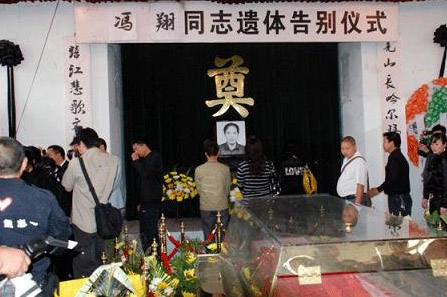
As an opening witness, Feng Xiang  (冯翔) is a compelling figure because his position within the Party hierarchy placed in a position to learn the truth, while his loss as a father and a teacher gave him moral authority. Feng Xiang was a teacher and then a vice minister in the Qiang Minority Autonomous County, Beichuan Ministry of Information (北川羌族自治县宣传部). His eight-year old daughter died in the Wenchuan earthquake. Subsequently, his efforts to uncover the truth about her death led to charges that an underground nuclear explosion rather than the Wenchuan earthquake caused the Beichuan disaster. The truth of his position was confirmed through allegations that Feng Xiang was harassed into committing suicide when he attempted to bring this story to the public.

Lu Dong then moves on to analyze corroborating evidence from other sources; it is an “open secret (公开秘密)” that the damage at Wenchuan was minimal and the strength of the quake insufficient to have destroyed Beichuan. In his book “The Epicenter was in Human Hearts (震中在人心)” Mainland author, Li Ming claimed that the Wenchuan quake gave Party officials an excuse to cover-up the real disaster at Beichuan. Web reports suggest the same pattern of information: Wenchuan was serious, but not a disaster and certainly not enough to have decimated Beichuan. Moreover, web posts included reports that indeed anti-chemical corps had gone into the Longmen Mountain Nuclear facility. In addition, local eyewitnesses said that the heat from the blast burned off the skin of water buffalo. Blogger Xiong Furong said, “The geologists may have different explanations for what happened here, but for us ordinary people, we know it was a detonation (熊芙蓉說,“地質專家對此可能有各種不同說法,但對我們普遍人來講,這就是爆炸。)”

Examples from media reports are brought in: a video on youtube; reports from 21st Century Economic Report (21世紀經濟報導) that the mountain continued to reverberate through the night; Southern Weekend (南方週末) reported that the tremors were so strong that villagers clung to each other to keep themselves from falling into the sinkholes; Western China News (華西都市報) reported that in the Green tablets river basin, there were nearly 10 kilometers of cracks in the mountain, some of which were 42 centimeters deep; and even Party media acknowledged the extent and scale of Beichuan exceeded that of Wenchuan. Beichuan TV broadcast, “The entire 2869 km2 County Area was destroyed, 10s of thousands of buildings were destroyed in mudslides. Over one million square meters collapsed and over 100 areas effected by mud. (北川電 「全縣境內2869平方公里受災,出現了數萬處塌方,泥不流和大滑坡。垮塌百萬立方的特大滑坡達100多處.)” A quote from an elderly gentlemen summarizes and ends this section, “The earthquake had the force of the nuclear explosion at Hiroshima (能量相當干400顆廣島原子彈.)”

Lu Dong is relentless in his case. He notes differences between the pattern of damage at Wenchuan, which fell away from an epicenter and Beichuan, which fell in a different pattern, away from Longmen Mountain. Evidence from the Tangshan earthquake is brought in. Even at Tangshan, after the quake subsided there were some buildings and trees standing. In contrast, at Beichuan everything collapsed: 498 kilometers of highway, 6066 kilometers of ordinary roads, 1503 bridges, 131 power stations, 8,944 kilometers of electrical transmission lines, 26,000 kilometers of fiber optic cables, 597 water reservoirs, 9,416 kilometers of channels, 282 broadcast stations, and 2,432 different sites of geological disaster.

Even more disturbingly, after the 5.12 Beichuan disaster, doctors from Sichuan Medical University, the University of Illinois, and Imperial College released studies documenting that many people and animals in the disaster area suffered from radiation poisoning. In addition, specialists suggested that iodine 131 is a radioactive isotope that could have caused spontaneous abortions similar to those seen at Beichuan. However, the Sichuan Party Secretary ordered a blackout on all reports on over 100 fetuses that had died in utero.

If all this wasn’t enough, the Japan Aerospace Exploration Agency reported that an earthquake did not adequately explain the yellow color and condition of vegetation in Beichuan. Lu Dong ominously concludes, however, that these conditions were consistent with the effects of a nuclear blast. And yes, ongoing Party inspection tours and scientific reports from Beichuan seem consistent with the after effects of a nuclear blast and not an area healing from a natural earthquake.

Clearly, Lu Dong believes that there were underground nuclear experiments at the Longmen Mountain Facility and that an accident occurred. He is a compelling rhetorician, concluding his argument with the reminder that Hawkish General Zhu Chenghu (朱成虎) has threatened to use nuclear weapons to destroy the United States if the country should ever help Taiwan and calling for the Party to meet face these accusations in court.

And there it is. The reason that the Party fears religious organizations.  The unstable situation of chronic Party secrecy and corrosive public suspicions has created an environment in which many people “don’t feel safe (没有安全感)”. However, religious groups continue to investigate and make public charges (if even from abroad), rather than hiding behind anonymous weibos and innuendo. The Chinese Christian Democratic Party has thrown down a political gauntlet in a Falungong newspaper, which also publishes pieces that support the Dalai Lama, forcing those of us living in murky half-truths and deliberate cover-ups: when all is said and done, who do you believe?

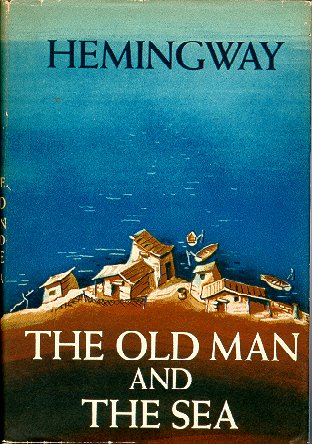
reading the old man and the sea (in shenzhen)

I am currently reading The Old Man and the Sea with two 16 year old Chinese high school sophomores. They are cousins. One is a “good” student, strong and sly in the self-protective way of students who know how to work the system, but do not reach the upper echelon of test results. The other is delicate and shy, a “top” student, who is being groomed to test into Beijing University, producing results (出成绩) for her school and family. The good student knows that unless she goes abroad, she will no doubt end up at Shenzhen University, no matter how much harder she works at school; fortunately, her parents can afford to send her anywhere and so she is not too sly, and her eagerness to model good student answers quickly gives way to assertive self-confidence. The top student already struggles with contradictory desires and ambitions. She yearns to study abroad, but her homeroom teacher has already begun pressuring her to stop studying for the TOEFL and to use her extra time more productively — taking practice gaokao tests or studying the junior year high school curriculum. What’s more, the child of divorce she knows that her mother can’t afford Chinese tuitions, let alone foreign and thus she must secure a scholarship  wherever she attends university.

We sit around a square table, tracking the relationship between the old man and the marlin. Santiago believes that his fish is out there, and his quest begins when he sights the purposeful circling of a man-of-war bird. His faith is rewarded and the contest engaged. As the fish pulls the man further out to sea, away from from the lights of Havana and known landmarks, the old man endures, charts his progress against the stars and his suffering, and the fish becomes more than a fish — first a friend, then a brother, more noble, but less intelligent, a brother who must be convinced that he is less than he who came to kill. It is a grand battle that does not end in glory, but the realization of hubris, “I shouldn’t have gone out so far, fish,” the old man says to the marlin’s corpse, which has been strapped to the skiff and is being inexorably eaten by sharks. When the old man finally drifts ashore, all that remains is an 18 foot skeleton and the certainty of death.

I chose The Old Man and the Sea because, well misgivings about Hemingway notwithstanding, he knew his craft. His language is deceptively simple. Any sentence taken out of context seems ordinary, common even, but together his words sculpt moral landscapes that make exquisitely salient the brute masculinity and ultimately tragic consequences of lives lived against nature.

“Americans aren’t very peace-loving,” the good student concludes.

“Did the old man have faith in luck or faith in the sea?” the top student asks.

Thus, yesterday’s lesson transformed from a discussion about human limits into a conversation about how being human is culturally defined and experienced. The old man is not their old man, his fish is not their fish, and the sea that relentlessly pulls us out of our depth, that tests our forbearance and ultimately claims our soul, that sea does not figure their dreams. It may be a generational difference. But perhaps not. Certainly the new US passport is replete with pictures of men taking on nature — cowboys and seamen ruggedly occupying the western plains and Pacific waves, respectively. And that’s the point: the girls read with me because the good student’s mother is a friend and she has entrusted her daughter to me (and yes those words were used “交给你”) for old-fashioned Chinese purpose: edification rather than simple instruction. The goal of our bi-weekly meetings is not to improve English test scores or practice oral English, but rather close reading of novels, essays and poetry, to help the teenagers learn to navigate literary nuance elsewhere, which it turns out is also learning to simultaneously recognize oneself and one’s Other despite and across epic difference, which isn’t quite what Hemingway had in mind when he figured Man through his engagement with the Fish, but nevertheless where yesterday’s lesson ended.

as yet shenzhen has no capital h history…

The experience of walking Shenzhen is significantly different from visiting, Beijing or Shanghai, Xi’an or Guangzhou, where the meaning of the past has already been codified, renovated, and can be consumed on a nostalgic tour. In school we learn that Beijing’s history is Ming-Qing imperial, Shanghai’s history is East-West colonial hybrid, Xi’an’s history is ancient, while Guangzhou’s history is South China sea commerce and migration. We then go to the respective tourist destination to have our knowledge confirmed and perhaps enriched by and through an appropriate activity. We walk Beijing’s hutong and the Forbidden City, drink coffee or cocktails in a stylish restaurant in Shanghai’s shikumen and the Bund, admire Xi’an’s beilin and terracotta soldiers, and wander the small shops of Guangzhou’s West Gate. Indeed, each of these tourist destinations succeeds as such precisely because the site metonymically represents the respective city’s place in China’s “5,000 years” of civilization. We leave thinking we have a deeper understanding of where we have been. Maybe we do. Most likely we don’t. But there is something reassuring in having our stereotypes confirmed, and those stereotypes are what I mean by capital h history.

Now, there are historically significant sites in Shenzhen — Old NantouDapeng Fortress, the Chiwan Tianhou TempleDongmen, and Yumin Village. However, municipal efforts to promote Old Nantou and Dongmen, notwithstanding, none of these historical sites has captured the imagination of either residents or visitors. I suspect this is in part because each of these places represents a portion of Chinese history that is already preserved elsewhere. Old Nantou and the Chiwan Tianhou Temple, for example, represent ancient efforts to develop the Chinese salt trade and settle the Pearl River Delta, but there are finer examples of that era to be imagined and seen in Guangzhou, while ancient Chinese history is more elegantly preserved in Xi’an and Jiangnan. Even the Tianhou sea cult is more closely identified with Tianjin and Xiamen than it is with South China temples and shrines. Likewise, Dapeng Fortress is an outpost of Ming-Qing military imperialism, but of a failed variety, rather than successful garrisons to be explored throughout the north.

Dongmen and Yumin Village are perhaps more representative of Shenzhen’s importance as the epicenter of early reform. However, both are historically compromised. Although Dongmin is identified with so-called Shen Kong commerce, for example, there really are more upscale malls throughout both Shenzhen and Hong Kong where one might purchase global products. And what about Yumin Village? Deng Xiaoping visited Yumin Village in 1984, inspecting one of the three-story private homes that local villagers had just built. He declared that Shenzhen speed was a good thing and that the rest of the country should follow. The 1995 exhibition to commemorate the 15th anniversary of the establishment of the Shenzhen SEZ included an installation that reproduced the interior of one of those homes, which at the time, was more luxurious than the homes of urban cadres in Beijing and Shanghai. Here’s the rub: although Yumin Village has been integrated into the Shenzhen municipal apparatus as a Luohu neighborhood, nevertheless the actual buildings that Deng saw and even the home he inspected were razed over ten years ago. There is a history board there, but nothing from 1984 remains and Yumin Village continues to function as a border urban village, with low rents for migrants who work nearby, spas and massage parlors for visiting Hong Kong people, and places where villagers play mah jong and gather to drink tea and gossip.

The absence of an agreed upon master narrative means that walking Shenzhen allows individuals to judge what does and does not represent capital h history in the SEZ. Now Shenzhen does boast upscale skyscrapers that represent achievements within this process — Guomao, Diwang, and the Civic Center all come to mind and are worth a visit. Those wanting to see the “real” capital h historic Shenzhen, I suggest visiting either an industrial park or an urban village. Early 80s work unit housing in Luohu and Shekou are also great examples of how industrial urbanization transformed the area. Personally, however, I believe that if Shenzhen has a place in China’s 5,000 years narrative it is as an epicenter of rural urbanization, including transformation of the local environment, proletarianization of rural migrants to SEZ factories, and the forms of urbanization that returned workers have promoted or their remittances enabled. However, even after over 30 years of reforming and opening Baoan villages, the city is only just starting to come to terms with this legacy and most villages, even the most famous such as Baishizhou are scheduled to be razed. All this to say that as yet, the meaning of Shenzhen’s cultural and historical inheritance is still up for grabs because we are only just starting to come to terms with the urban legacy of Reform and Opening. This means that as yet the city has no capital h history and no corresponding historical sites that one can visit and say, “Yes, I’ve been to Shenzhen and I know where I’ve been.”

Walk anyway. The Shenzhen you experience will be only loosely tethered to stereotypes about China and you might make something else of it. Below, impressions of a recent walk in Fuyong.

This slideshow requires JavaScript.

怀疑: A Cross Cultural Parable

This and next weekend, the teachers of the Shenzhen University Department of Acting are performing a Chinese adaptation of Doubt: A Parable by John Patrick Shanley, or 怀疑 as it is translated. After the show, several friends approached me and asked me what I thought of the acting. I said that I had enjoyed the performance. They looked at me strangely and pressed, “No, really, what did you think?” Evidently, they didn’t like it so I asked what they thought. Answers included, “I keep hoping that they’ll make me get nervous with the anticipation of waiting to see the show.”

“And you don’t feel that way?”

Flat out, “No.”

Another mentioned that he thought the actors were doing the best they could. But. But?

“They just don’t get the story. I mean, I don’t feel it with them.”

“What about the story?” I started asking, “Is the question of Doubt/ 怀疑 important to you?”

A considering look and then, “The actors are supposed to make me care about the topic. That’s their job.”

As the title suggests, Doubt is a teaching story, figuring the incessant problematic of faith in rigidly dogmatic Sister Aloysius’s certainty that the personable Father Flynn sexually abused Donald Muller, the school’s first black student. The story is set in the Bronx, during the fall of 1964 and the historical background matters because the characters also function allegorically for larger social shifts and ruptures. In 1962, Vatican II opened, but would not close until 1965, when the Council famously challenged the relationship between the Catholic Church and the modern world, acknowledging that truth could exist outside the community and declaring that the mass could be given in vernacular languages instead of Latin. Sister Aloysius embodies these past certainties and the Church’s previously unquestioned authority in all things moral, which tended to be, well everything; she suspected children of harming themselves to play hooky and saw sexual abuse in slight gestures. In contrast, Father Flynn represents the newer, hipper face of the Church; he plays basketball, wants to sing secular Christmas carols, and likes his tea sweet, perhaps even, too sweet, hmm?

Similarly, even though Donald Muller never appears onstage, his shadowy presence signals that like the Catholic Church, New York society was also changing and nowhere more than the Bronx. In 1963, Robert Moses’ Cross Bronx Expressway was completed. The bridge displaced families and businesses, was a constant source of noise and air pollution, and catalyzed the decline of the South Bronx from a district of family neighborhoods and businesses to the poorest district in the United States, despite its proximity to Manhattan. In fact, the South Bronx erupted into American national consciousness in 1977, when during a baseball broadcast, Howard Cosell exclaimed, “Ladies and Gentlemen, the Bronx is burning!” Sister James and Mrs. Muller are left to deal with the spiritual and practical aftermath, respectively. Sister James agonizes over the meaning of faith when innocence has been shatter and Mrs. Muller begs to protect her child despite his “differences”. Donald is black and may or may not be “that way” — his father and former classmates regularly beat him because they suspect he is — although Stonewall was only five years in the future, 1969.

Contemporary history also shapes reception. In 2002, the Boston Globe broke the story of sexual abuse in the Boston Archdiocese. Shanley first staged Doubt and won the Pulitzer in 2005. Soon, productions had been mounted in Australia, Singapore, the Philippines, and New Zealand. Roman Polanski directed the play in Paris; it was also staged in Venezuela and London. In 2008, Meryl Streep and Philip Seymour Hoffmann performed the antagonists, Sister Aloysius and Father Flynn. Clearly, Shanley’s nuanced exploration of moral ambiguity resonated with English-speaking audiences precisely because it resonated at so many levels — historically, spiritually, and personally. Or as an older Catholic friend summed up his response to the play, “Of course he did it and yes, she’s a bitch. But still, none of that changes the truth…” And implicit in this statement, reverberating through our souls is the desire to believe, to have faith. And yet, we doubt. As Shanley elegantly described our situation, “For those so afflicted, only God knows their pain. Their secret. The secret of their alienating sorrow. And when such a person, as they must, howls to the sky, to God: ‘Help me!’ What if no answer comes?”

And therein lies our cross-cultural rub. For my Chinese friends there was no story except as conveyed by the actors. 怀疑 means doubt and suspect, and is often used to describe situations when someone may or may not be lying, as in, “I suspect she’s actually dating him,” or “I suspect he’s hiding something.” In the final scene, when Sister Aloysius cried, “我怀疑!” the audience seemed confused, unmoved by the Sister’s predicament. Maybe had cried, “无地自容” the audience may have understood that the foundation of her life had shifted, and she would never again act from life-affirming conviction. Perhaps not. Nevertheless, for those of us raised Irish-American Catholic, a profound chasm separates religious doubt from secular suspicions. We are taught, after all, to render unto Caesar, but in the last instance, when forced to choose, to vote our conscious, so to speak, we move within and against the heart’s fragile certainties; we yearn to be one with God and he is silent, but we must act as if he had answered our call. Thus, in the final scene, when doubt brings Sister Aloysius to despair, I understand. I am with her regardless of the quality of the acting. The acting was sufficient to move me because, as Stanley reminds us, “Doubt can be as powerful a bond and sustaining as certainty,” which I amend with the cross cultural caveat, “especially amongst former Catholics…”