if we are what we eat, what are we becoming?

养生 (yǎng shēng) or taking care of one’s health is a Shenzhen obsession. However, the difficulty of living a healthy life has given rise to cynical takes on the preventative measures of traditional Chinese medicine. A text message currently making the rounds, begs the question, “if we are what we eat, what are we becoming?:

百毒不侵的中国人是怎么炼成的?早起,穿冒牌运动服出门,买地沟油炸油条,切个苏丹红咸蛋,冲杯三聚氰氨奶,上班。中午,在食堂要一注水肉炒农药韭菜,有毒猪血,来碗翻新陈米饭,泡壶香精茶叶。下班,买条避孕药鱼,尿素豆芽,膨大西红柿,开瓶甲醇酒,伴根瘦肉精的双汇火腿肠吃个硫磺馒头。饭后在地摊上买本盗版小说盗版光盘,晚上钻进黑心棉被,睡了…

How is Chinese resistance to one hundred toxins cultivated? Get up early, put on a fake namebrand sweatsuit, buy an oil stick fried in gutter oil, cut a tonyred salted egg, pour a glass of melamine milk, go to work. At lunch, have a serving of water-injected meat fried with over-fertilized chives, toxic pig’s blood, have a bowl of repackaged old rice, brew a pot perfumed tea leaves. Get off work, buy a prophylactic fish, carbamide bean sprouts, enhanced tomatoes, a bottle of methanol liquor, clenobuterol hydrochloride ham, and a sulfur steamed bun. After dinner, go to the kiosk, buy a counterfeit novel and DVD. At night, snuggle into a black hearted blanket, sleep…

sigh.
Face Engineering Projects – 面子工程

I’ve learned a new expression, face engineering projects (面子工程), which I understand to mean large scale social mobilization that is just for show and will vanish with the project’s intended audience. Continue reading

cleaning up Shenzhen: were there more than 80,000 dangerous people in the city?

The published facts demand interpretation:

According to reports, as of April 6 in the “One Hundred Days Movement”, municipal police have gone out 284,000 times; they have made over 330,000 inspections of rental housing, 32,000 inspections of internet bars, 60,000 inspections of tourist agencies, 20,000 inspections of clubs, and 40,000 inspections of other spaces. As a result, over 2,300 landlords have been penalized [for infractions] and over 1,180 illegal internet bars, travel agencies, and other spaces have been closed, effectively cleansing areas that have had difficulty insuring public safety.

据悉,截至4月6日,在“百日行动”中,我市警方共出动警力28.4万人次;检查出租屋33万余间(次)、网吧3.2万余家(次)、旅业6万余家(次)、休闲娱乐场所约2万家(次)、其他场所4万余家(次);处罚出租屋主2300余人,停业整顿、取缔黑网吧、旅业及其他场所1180余家,有效净化了社会治安难点地区。 Continue reading

吃一堑长一智 – lessons from being robbed

Yesterday, while waiting for my rice to be weighed at the Coastal City Jusco, my purse was robbed. The thief made off with cash, a camera, my keys, bankcard, and Shenzhen metro pass. Unexpected and disquieting. What did I learn?

First of all, I learned the proverb, 吃一堑长一智 (chī yī qiàn zhǎng yī zhì), which literally means in taking a moat, you gain knowledge. A bit of wisdom a la trench warfare, where for the military to take a city, they lost a lot crossing the moat. It seems to be used, however, in the way I might say “live and learn” or Oscar Wilde once said, “Experience is the name we give to our mistakes”. Continue reading

特 – a manifesto against special privileges

More from 乌有之乡, this time an essay on “Why is creating SEZs a logical fraud? (为什么说搞“经济特区”是一个“逻辑骗局”?)” And yes, these thoughts have been expressed before, but they really do bear repeating. And then, it’s worth applying the analysis to other, non-Chinese spheres where legal exceptionalism remains the primary form of creating competitive advantage. As the anonymous author argues, governments have made it their business to help multinationals squeeze even more out of workers.

Why is Creating SEZs a Logical Fraud?

Key point: The original purpose and core intention of creating “Special Economic Zones (SEZs)” was to explore possible paths for reforming and opening China. However, the problem appeared with the character “special (特)”. If what is being created is a “special” zone, logically speaking it isn’t relevant to ordinary life. In other words, the paths that are suitable for a “special” zone are “special paths”, and not the ordinary path of reforming and opening China.

[translation note: 法律特权 literally translates as legal privilege, however, it functions analogously to the American English concept of legal exceptions — the rules don’t apply to me — and where appropriate that is how I have translated it. In most places, however, I’ve tried to stick to “privilege”.] Continue reading

Good food — Love!

I have 口福 (kǒu fú), which might literally be translated as “mouth happiness” and means something like “the destiny to eat delicious food” – and what good fate this is.

I didn’t realize the blessed state of my culinary fate until I moved to Shenzhen, where I have truly enjoyed eating. Apparently, my joy at the table and mad chopstick skills have convinced many Chinese people that I am good friend material. Early on, when friends invited me to eat larvae or dog hotpot, I said, “Sure!” When Yang Qian and I started dating, we made a point of trying a different restaurant several times a week. Moreover, when I had a cold or minor physical discomfort, I went to the local market, bought herbs from a former barefoot doctor, and on her instructions, concocted delicious and healthy Cantonese soups in an ordinary clay pot. The unadulterated pleasure I felt when eating and the joy of sharing good food were critical to how I settled into an ex-patriot life in Shenzhen. Continue reading

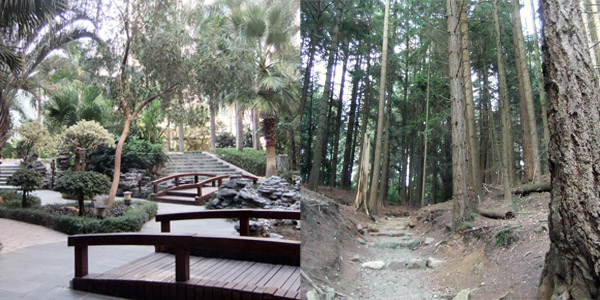
what is the social function of wilderness?

The Chinese word, 荒地 (huāng dì) translates into English both as “wasteland” and as “wilderness”. More specifically, huāng dì usually refers to “land that has not (yet) been converted into arable fields”. At first blush, this dictionary translation alarms me because, as an American, wilderness refers to (yes) untamed places where the infinite creativity of the universe might be experienced – primordial forests, huge swathes of desert, the looming vastness of an ocean voyage, no matter the size of my ship. Wilderness, for me, is not simply good, but sacred -beyond the human in some foundational way; it is where we go for enlightenment. In contrast, wasteland oozes, disgusts, evokes images of wasted land, industrialization gone array – dystopian visions of Gotham. So how is it that the dictionary definition of huāng dì is both wilderness and wasteland?

Continue reading

Homes within homes

As Shenzhen moves forward in it’s five-year plan to clean up illegal housing, city newspapers are focusing on 房中房 – literally houses within houses. More specifically, subdivided rooms within an urban village home have become a media flashpoint of the real conflict between affordable and safe housing because even white collar workers (let alone rural migrants) are unable to find affordable and convenient housing – once the lure of urban village rentals to young professionals.

how do talk across our experience?

On the ride home from RDU airport to Southern Pines, my brother pointed to the road leading to friend’s new house, “She lives out here in the country.”

I asked incredulously, “And you live in the city?”

“That’s right. Downtown.” And we all laughed.

Now I knew that town and country were relative concepts, but it is difficult here in Southern Pines to describe the scale and velocity of urbanization in Shenzhen.

What can I say in response to the question, “How urban is it where you live?”

I usually answer, “Very. There are few places in the US (outside NYC and LA) that are as expansively urban as Shenzhen, but even NYC and LA have significantly fewer people than Shenzhen.”

And there’s the rub. It’s difficult to imagine the intricacies of Chinese urbanization here in Southern Pines, where the wind rustles through long pine needles as the tree tips bend toward each other in early summer warmth. I keep asking myself, what would allow the diverse experiences of urbanization in Shenzhen and Southern Pines to become reciprocally meaningful? After all, over the past few years Southern Pines has experienced an estimated 20% growth rate. Life here, too, isn’t what it used to be. Nor is it the straightforward alternative to China that many people – both here and there – believe. But there are commonalities – shared desires for better education, government accountability, and public safety, to name the tip of grassroots unrest – that could grow into dialogue.

So point du jour: If we are to figure out a language of global sustainability, we need to develop empathy for each other’s reality in the absence of compatible experience.

Topics you’d like to see comparatively discussed? And why?

What does it mean to call someone a 农民?

One of the most derogatory expressions among urbane Shenzheners is to call someone a “peasant (农民 nongmin)”.  As a slur, it’s meanings range from stupid through uneducated to uncultured, but back home in the South, I’m thinking that the culturally appropriate translation might be “red neck”. However, I’m also wondering if “nigger” would work, especially given the connection to fields, agricultural labor, unfair renumeration, and constant disrespect from the country’s elite.

Why am I thinking about peasants, red necks, and niggers? Continue reading