the houhai river, dusk

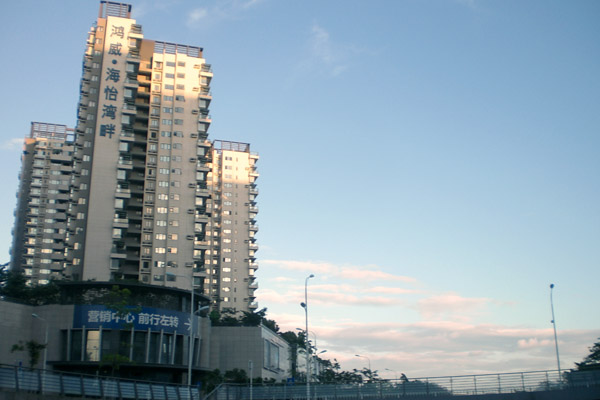
I have learned that the runoff stream that threads the Houhai land reclamation area along the southern coast of the Nantou peninsula is called, the Houhai River. It has been mapped and landscaped to accompany the futuristic luxury homes that boast both estuary and river views, and it leads to the Shenzhen Bay Park. Nevertheless, remnants of an older landscape linger, fishing families and the sand processing docks of the no longer extant Dongjiaotou pier.

This slideshow requires JavaScript.

more confucian business ethics: collect the bags!

Roughly twenty years ago, he, his wife, and their son immigrated from China to Southern California. They came to Shenzhen last year to do business with successful college classmates and brought a daughter and a younger son. The older son remained in California. The man was 40 something years of age, and he told me that his wife and son met a friend and business associate at LAX. When the three went to pick up the visitor’s luggage, his wife went to collect the bags. However, because she is a woman, the visitor stopped her and collected the bags instead. The man didn’t say, but I’m assuming the wife and friend engaged in some who-can-hold-onto-the-bags shuffle, with the result that the visitor ended up carrying his own bags. The son waited for the ritual to end and then led his mother and his father’s friend to the car. The son drove them home.

The man told me this story because he wanted to know what I thought; how had the son behaved?

“Based on what I know of American or Chinese cultural norms?” I hedged, thinking that any young man who drove his mother to the airport to pickup a guest was an accommodating son, and that if his parents and their friends wanted to engage in who’s-the-most-polite shuffles, then that really was their business and why not wait for the storm to end. In fact, personally, I sympathized with the son’s position because I am frequently nonplussed when confronted by demonstrations of Chinese courtesy that are also not-so-sutble assertions of dominance.

He explained that afterward his friend had approached him to talk about the matter. The friend worried that the son did “did not understand things (不懂事),” an expression with meanings that range from ‘immature’ through ‘is insensible to the feelings of others’ to ‘has no concept of proper behavior’. The friend had acted out of concern because he worried for his friend’s son future prospects. To declare a college graduate “does not understand things” means that those in positions of power “cannot use him (不能用人)” and thus will not place him in positions of responsibility, thereby foreclosing opportunities for advancement.

At the time, the father had replied that he thought skill (能力) was the most important criteria for promotions. However, when he discussed the issue with another friend, this time the CEO of a small company, he realized that from the point of view of makers and shakers in China, his son in fact “could not be used”. The CEO explained that he had two employees, A and B, who went everywhere with him. The CEO did not have a driver and so A and B took turns driving. When A drove, he made sure to open the CEO’s door for him before getting into the car. When B drove, he immediately sat in the driver’s seat and A, again, opened the CEO’s door before settling himself in the car.

“Now, who should I promote?” the CEO rhetorically asked the man. “Obviously, A is more meticulous/ attentive (更细心) than B. Consequently, he can be trusted, whereas B doesn’t see the big picture.”

The big picture included hierarchy and etiquette, or understanding one’s relationship with another and each time A opened the CEO’s door, he demonstrated his understanding. In contrast, B did his job. On the CEO’s interpretation, it didn’t matter how talented B was. The real problem was that B couldn’t be trusted to treat guests and by extension business colleagues and clients, properly. A could.

I’m told there are serious differences between etiquette in state-owned industries, where bureaucratic privilege trumps skill and the private sector, where talented people are more valued than sycophants. Also, it seems that things “are different” in the IT sector, but again, people quickly remind me, that techies are young and often westernized. Westernized, perhaps, but as in Western business culture, Chinese business culture distinguishes between those who give good face and those who do their jobs well; rare is the individual who can both manage people and complete tasks.

Interestingly, although the characters for the Chinese words for CEO (董事长) and “understand things” are different, nevertheless they are homophones, which alerts us to the moral of today’s story. At an airport, there are several rules that apply when greeting Chinese guests:

1. If the guest is older than you — collect the luggage to show your respect;

2. If the guest has a higher rank than you — collect the luggage to show your respect;

3. If the guest is a friend — collect the luggage in order to demonstrate your good will.

There are three possible exceptions to the “collect the luggage” rule for greeting Chinese guests, gender, age, and White ethnicity. A friend would neither expect a friend’s wife to collect luggage, nor would that friend expect an elementary school child to collect luggage. Although if the child grabbed a bag, be sure to laugh happily, muss her hair, and exclaim, “Wow, she really understands things!” And yes, white Americans are forgiven for all sorts of social faux pas that Chinese-Americans are not so that when we go for the bags, we suddenly appear “Chinese”.

But to return to the father’s story. What do we say to a Chinese man, who clearly wants his American son to succeed, knowing that amongst globe-trotting Chinese he will be judged by ancestral values and not those of his hometown, Los Angeles?

the 5.12 beichuan incident, nuclear war games, and why the party fears religious organizations

The Party’s refusal to either share power or make political decision making transparent and open to public debate creates mistrust: just what have they got to hide anyway, inquiring minds want to know. In addition, through its control of cultural resources, including the arts and the right to convene, the Party has demonstrated a refusal to acknowledge any viewpoints other than those that shore up the influence of high-ranking officials.

Neitizens and western journalists have responded to Party control over and access to information with reports that (more often than not) conflate conspiracy theories with the “truth”. Not unexpectedly, citizens spend an inordinate of time trying to piece together a big picture out of rumors, veiled allusions and gut feelings. Sadly, the more the Party doesn’t say about Beichuan or Bo Xilai or Chen Guangchen, for example, the more accusatory rumors circulate via the net, weibo, and text messages and with them the festering anxiety that no one can be trusted to speak truthfully. Thus, in today’s China, common sense has it that Party members don’t tell the truth because the truth would harm them politically, while the rest of us are incapable of telling the truth because we don’t know it.

Keywords of the day – trust (信任), good faith (诚意), and loyalty (忠诚) – pivot on the relationship between a healthy society and how good our word might be. The characters for person (人) and word (言), for example constitute 信, the first character in the compound for trust. The character word (言) also appears in sincerity (诚, literally “word” “is realized”), which is an element of the expression good faith (literally “sincere meaning”) and loyalty (faithful sincerity). Moreover, the question of belief (信仰, literally a person who trusted and admired) resonates throughout all levels of society and the most trusted forms of organized alternative to Party disinformation and rumor mongering tend to be religious – Tibetan Buddhism, Xinjiang Islam, and popular Buddhism, Falungong, Christianity in Han communities.

“A Report on and Lessons from the 5.12 Underground Nuclear Explosion at Longmen Mountain, Beichuan,” a recent Epoch Times (大纪元) article illustrates the co-dependent relationship between belief, opposition, and efforts to figure out the truth. The Epoch Times, of course, is the official Falungong news outlet and the article author Lu Deng is the spokesperson for the Chinese Christian Democratic Party. The gist of the article is that the Party used the 5.12 Wenchuan earthquake to cover-up the fact that on the same day, it detonated a nuclear devise at Beichuan, destroying an entire region. Based on a few facts, knowledge of how the Party operates, and deductive reasoning, the argument is compelling and compellingly legal:

The article reconstructs the events of May 12, 2008 by giving a quote from Feng Xiang’s decidedly poetic and vague blog and then re-interpreting it in terms of a nuclear blast. For example, in February 6, 2009 post, Feng Xiang wrote, “In 80 seconds, the mountain collapsed, the ground split open, the mountains shook and the earth moved, the river changed its course. The green mountain lost its color, and all I see is disaster. This was Beichuan’s most devastating moment. A level 8 earthquake, with level 11 destruction”. According to Lu Dong, the phrase “the green mountain lost its color” refers to the fact that all the mountain foliage was burned. Lu Deng also analyzes sections where he asserts that Feng Xiang’s original text, including references to a Chief Pan of the Anti-Chemical Corps of the Second Artillery (二炮防防化部隊隊長番号) have been changed.

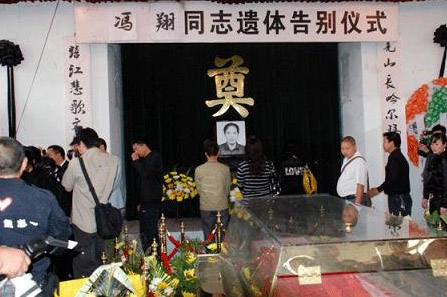
As an opening witness, Feng Xiang  (冯翔) is a compelling figure because his position within the Party hierarchy placed in a position to learn the truth, while his loss as a father and a teacher gave him moral authority. Feng Xiang was a teacher and then a vice minister in the Qiang Minority Autonomous County, Beichuan Ministry of Information (北川羌族自治县宣传部). His eight-year old daughter died in the Wenchuan earthquake. Subsequently, his efforts to uncover the truth about her death led to charges that an underground nuclear explosion rather than the Wenchuan earthquake caused the Beichuan disaster. The truth of his position was confirmed through allegations that Feng Xiang was harassed into committing suicide when he attempted to bring this story to the public.

Lu Dong then moves on to analyze corroborating evidence from other sources; it is an “open secret (公开秘密)” that the damage at Wenchuan was minimal and the strength of the quake insufficient to have destroyed Beichuan. In his book “The Epicenter was in Human Hearts (震中在人心)” Mainland author, Li Ming claimed that the Wenchuan quake gave Party officials an excuse to cover-up the real disaster at Beichuan. Web reports suggest the same pattern of information: Wenchuan was serious, but not a disaster and certainly not enough to have decimated Beichuan. Moreover, web posts included reports that indeed anti-chemical corps had gone into the Longmen Mountain Nuclear facility. In addition, local eyewitnesses said that the heat from the blast burned off the skin of water buffalo. Blogger Xiong Furong said, “The geologists may have different explanations for what happened here, but for us ordinary people, we know it was a detonation (熊芙蓉說,“地質專家對此可能有各種不同說法,但對我們普遍人來講,這就是爆炸。)”

Examples from media reports are brought in: a video on youtube; reports from 21st Century Economic Report (21世紀經濟報導) that the mountain continued to reverberate through the night; Southern Weekend (南方週末) reported that the tremors were so strong that villagers clung to each other to keep themselves from falling into the sinkholes; Western China News (華西都市報) reported that in the Green tablets river basin, there were nearly 10 kilometers of cracks in the mountain, some of which were 42 centimeters deep; and even Party media acknowledged the extent and scale of Beichuan exceeded that of Wenchuan. Beichuan TV broadcast, “The entire 2869 km2 County Area was destroyed, 10s of thousands of buildings were destroyed in mudslides. Over one million square meters collapsed and over 100 areas effected by mud. (北川電 「全縣境內2869平方公里受災,出現了數萬處塌方,泥不流和大滑坡。垮塌百萬立方的特大滑坡達100多處.)” A quote from an elderly gentlemen summarizes and ends this section, “The earthquake had the force of the nuclear explosion at Hiroshima (能量相當干400顆廣島原子彈.)”

Lu Dong is relentless in his case. He notes differences between the pattern of damage at Wenchuan, which fell away from an epicenter and Beichuan, which fell in a different pattern, away from Longmen Mountain. Evidence from the Tangshan earthquake is brought in. Even at Tangshan, after the quake subsided there were some buildings and trees standing. In contrast, at Beichuan everything collapsed: 498 kilometers of highway, 6066 kilometers of ordinary roads, 1503 bridges, 131 power stations, 8,944 kilometers of electrical transmission lines, 26,000 kilometers of fiber optic cables, 597 water reservoirs, 9,416 kilometers of channels, 282 broadcast stations, and 2,432 different sites of geological disaster.

Even more disturbingly, after the 5.12 Beichuan disaster, doctors from Sichuan Medical University, the University of Illinois, and Imperial College released studies documenting that many people and animals in the disaster area suffered from radiation poisoning. In addition, specialists suggested that iodine 131 is a radioactive isotope that could have caused spontaneous abortions similar to those seen at Beichuan. However, the Sichuan Party Secretary ordered a blackout on all reports on over 100 fetuses that had died in utero.

If all this wasn’t enough, the Japan Aerospace Exploration Agency reported that an earthquake did not adequately explain the yellow color and condition of vegetation in Beichuan. Lu Dong ominously concludes, however, that these conditions were consistent with the effects of a nuclear blast. And yes, ongoing Party inspection tours and scientific reports from Beichuan seem consistent with the after effects of a nuclear blast and not an area healing from a natural earthquake.

Clearly, Lu Dong believes that there were underground nuclear experiments at the Longmen Mountain Facility and that an accident occurred. He is a compelling rhetorician, concluding his argument with the reminder that Hawkish General Zhu Chenghu (朱成虎) has threatened to use nuclear weapons to destroy the United States if the country should ever help Taiwan and calling for the Party to meet face these accusations in court.

And there it is. The reason that the Party fears religious organizations.  The unstable situation of chronic Party secrecy and corrosive public suspicions has created an environment in which many people “don’t feel safe (没有安全感)”. However, religious groups continue to investigate and make public charges (if even from abroad), rather than hiding behind anonymous weibos and innuendo. The Chinese Christian Democratic Party has thrown down a political gauntlet in a Falungong newspaper, which also publishes pieces that support the Dalai Lama, forcing those of us living in murky half-truths and deliberate cover-ups: when all is said and done, who do you believe?
The Violence of Childhood

In talking with people about sociocratic principles, I find myself reminicing about my time as a vice-principal or college councelor and am once again reminded of the violence of childhood and how that violence shapes our understanding of governance because governance is, ultimately, about figuring out how to live together.

I have a clear memory of a first-grader who didn’t like math. Not hard to understand from my US American perspective perhaps, but unacceptable from the perspective of his parents, teachers, and other Chinese adults in his life. The reasoning was both psychological and pragmatic: to excel in math, self-confidence was important and the best way to develop self-confidence was through high test scores. Moreover, the logic continued, elementary math tests were simple and so there wasn’t any reason, except perhaps laziness or stubbornness for a child not to do well in math.

The boy’s first grade math scores were low by local standards; he was averaging between 88 and 93ish on tests, but his classmates were all forging ahead with perfect scores plus extra credit and, a friend helpfully reminded me, in elementary school most students received over 95 on math tests. Clearly the boy had a problem. Nevertheless, his parents were progressive in that they believed that if a student liked a class, he would do better in it and so it became imperative to talk their son into liking math. They thought that if he liked math then he would (1) stop being lazy and work harder and (2) stop resisting their efforts to make him do extra math problems and cooperate with his tutor.

So the parents talked to him. His grandparents talked to him. His teachers talked to him. Several months into this process, they scheduled a meeting with me so that I too could talk him. Nobody actually listened to him.

At the time, I spoke directly to the parents suggesting that the boy had a responsibility as a student to work hard in class and finish assignments, but had no corresponding obligation to like math or spend time each week with a private tutor preparing for Olympic maths, I was told that (1) I was too idealistic and (2) I was American and didn’t understand Chinese children. What didn’t I understand? The importance of elementary school math test scores? They aren’t actually important. And thus, our conversation came to ignoble cross purposes and the boy continued to dislike math and do relatively poorly at it. Over the next few years, parental and teacher conversations escalated into scolding and punishments, although to my knowledge the boy was never beaten for his math scores.

In retrospect, I think the boy’s parents were trying to tell me that I hadn’t assuaged their fears for their son’s future. I’m not sure I could have because for them math tests symbolized future potential to navigate the “real world”. What would happen, the analogy goes when a child went out in the real world, where life tests weren’t simple and failure meant… although this is actually where the logic stumbles because no one knows how low math scores might ultimately destroy a human life. The immediate source of parental fear seemed to be that if the boy didn’t excel in elementary math, he would do poorly on the Shenzhen high school entrance exam, subsequently do poorly on the gaokao, and then end up in a vocational school or worse, laboring as a construction or sanitation worker. Although here again, the logic blurs, because in Shenzhen rural boys who fail to get scholarships to high school end up working on construction sites and although these same rural boys also collect garbage, cleaning jobs go to rural girls who fail to get high school scholarships. In contrast, the boy’s parents were actually worried that the boy couldn’t do better than getting into a foreign university equivalent of Shenzhen University.

I regret that I didn’t actively listen to either the boy or his parents. Its possible that with more practiced skills I might have helped the boy come to terms with the inevitability of classes we don’t like and how to deal with contradictions between our feelings and our responsibilities. I might also have helped his parents have more reasonable expectations for their son’s test scores and a more respectful attitude toward his likes and dislikes; not their job to tell him how he feels.

When we don’t actively listen to children, we teach them that their desires and fears and joys and accomplishments aren’t important. What matters is that they fit into our graded boxes. Clearly the boy’s parents didn’t care if he actually liked math, they simply wanted to find a way of achieving better test scores. They disagreed with traditions of forcing a child to something he didn’t want to do, and so the solution seemed to be forcing him to like it, so that he would then become a pro-active math student. Equally clearly, I didn’t care about the parents’ fears, I just wanted them to stop wasting my time lamenting a first grader’s math scores. I disagreed with their valuation of exams and didn’t see any way of convincing them that disliking math is okay and thus the solution seemed to be getting them out of my office as quickly as possible.

And there’s the rub: I’m starting to understand the violence of childhood as the lack of respect we have for children’s abilities and desires. And this lack of respect blossoms into grown-up inabilities to actually resolve problems in ways that nourish each other’s lives. His parents left my office more deeply convinced that a huge cultural gap separates Chinese and US American people. I remained in my office anxious that another set of parents would schedule a meeting to talk their daughter into liking a difficult subject, like English. But what seems to have actually occurred was another instance of childhood violence in which none of us adults had the wherewithal to help a six year old learn simple concepts of addition and subtraction.

nanling to danzhutou, impressions

Nanling and Danzhutou Village-Communities are located just next to Dafen in Buji Precinct. Walked the area today with Sarah, Carina, and Lorena. Impressions, below:

This slideshow requires JavaScript.

CZC Special Forces

Am collaborating with a multi-national group of architects, urban planners, and concerned citizens to jumpstart an effort to renovate the Tangtou section of Baishizhou. Yesterday, at one of the Design Center’s Cool Tea (酷茶) events, I gave a short presentation on our four meetings to date and an introduction to sociocracy, the form of governance we are attempting to set up. The talk was well received, especially the discussion of how to run a meeting.

I have recently realized that there is not only desire to transform Chinese society, but also many such salons and talks springing up all over Shenzhen. Significantly, the terms of the discussion are the built environment. Last night, for example, the first talk by the Shenzhen Green Building Association charted the expansion of government sponsored discussions about environmental standards — their group has several hundred members and they are quite active. SGBA seems to be moving in the direction charted by Wang Yang in his recent address to the Guangdong Party and one of their core ideas is happiness index (幸福指标). As mentioned in an earlier post, Wang Yang has defined happiness in neo-liberal terms: a feeling of personal well-being brought on by doing what one likes to do. Upside, this definition leaves space for heterogeneity. Downside, it justifies all sorts of social neglect and individual appropriations of common resources. Nevertheless, the point remains: Shenzheners are talking about what it means to inhabit the city as members of a society AND the discussion is being coded in architectural and urban planning terms.

A copy of my talk (in Chinese), here; the accompanying bi-lingual powerpoint, here.

because not all villagers were created equal…

The stereotype of the second generation of Shenzhen villagers being “rich, lazy, mah johng playing, playboys (who might also do drugs)” is not only predicated on the idea that all of Shenzhen’s original inhabitants are rich, but also that their children have grown up aimless. However, Bao’an County’s original 300,000 residents and their children were not all created equal. What’s more, they increasingly find themselves belonging to antagonistic economic classes, while their children come of age grappling with problems that none of their parents imagined facing. Some second generation SZ farmers must look for wage labor in factories that (rumor has it) do not hire locals, preferring instead to hire migrant workers, even as other second generation SZ farmers are the first in their family to gone to college, and still others are, yes, struggling with too much wealth.

The inequality among locals has been created through reform era legislation and urban development projects, which have built upon and elaborated historical inequalities and traditional norms. In an earlier post, I charted the borders and corridors that have shaped economic possibility and subsequent patterns of urbanization in the SEZ, arguing that three borders have enabled urbanization in Shenzhen: the border with Hong Kong, the second line, and the city limits, which abut Dongguan in the northwest and Huizhou in the northeast. Two economic corridors have facilitated Shenzhen’s growth: the Guangshen highway corridor and the Kowloon-Canton Railway. The Guangshen highway corridor parallels the area’s riparian trade routes, which were the means of Han expansion from Guangzhou southwardly on the Pearl River and its tributaries. The KCR, of course, was the British attempt to preempt and redirect the PRD’s extensive trade network.

Not unexpectedly, proximity to a border or corridor has been a condition of reform era riches. Villages near the nexus of these borders and corridors have had disproportional opportunities to build and manage industrial parks and real estate developments. The earliest villages to get rich, for example, were all located along the Shenzhen-Hong Kong border at corridor checkpoints — Shekou (Fishing 1 and Wanxia) and Luohu (Hubei), first, but then Huanggang (Huanggang, Shuiwei, Xiasha, and Shangsha). However, guanwai villages retained land rights a full 12 years longer than did guannei villagers, with the result that largest and wealthiest village joint stock companies are now primarily located along the Pearl River Delta (Shajing and Huaide) and KCR corridors (Nanling near Buji). Consequently, many villages have remained “stuck” in between these two different modes of production, neither farming nor investing in manufacturing, let alone transitioning to the new creative economy. Areas of relative poverty include many Longgang District Villages as well as villages in Gongming and Guangming.

However, proximity to the borders and corridors has not in itself created the conditions for villages to transition from lives based on rural production to lives based on urban industrial manufacturing. In addition to the construction of infrastructure, differences in Mao-era administrative designation have also shaped current inequalities among villagers. First, successful villages have operated as collectives, rather than relying on individual efforts. These villages not only inherited Maoist organization, including management experience, but also inherited common ancestry. Thus, single surname (一姓) villages, which have renovated ancestral halls and promoted traditional rituals have generally been more organized than random surname (杂姓) villages, which were created during the Maoist era for production purposes. Second, successful villages have had traditional land rights, which were extensive. Indeed, most traditional villages have made their fortune through land deals. In contrast, fishing villages (渔村) and overseas Chinese villages (桥村) had foundation rights (宅地), but not land development rights. This meant individual villagers could build private homes, but that villages could not collectively invest in industrial parks or real estate developments. Moreover, villages did not benefit from compensation deals between developers and nearby traditional villages. Third, as recent events in Wanfeng demonstrate, some village heads have been less corrupt than others, while the success of Huaide, Nanling, Huanggang, and Xiasha Villages has been directly attributed to the foresight of the incumbent leader.

It is an open secret that legislation has been the source of Shenzhen’s competitive advantage, both for outside investors and for indigenous Bao’an villagers. What’s more, this legislation did provide the framework for many local villages and individual villagers to become rich. Indeed, when Deng Xiaoping died in February 1997, Shenzhen villagers openly wept and brought funeral wreathes to the statue at Lianhua Park and his Shennan Road billboard. Nevertheless, the emergence of class differences within and between villages directs our attention to the ways in which Shenzhen has displaced Bao’an as “the local”. Within this new locale, hometown status no longer provides a viable identity because locals have been segregated into urban classes that have disrupted traditional rural relations, even as they learn to navigate a hometown that is no longer theirs, assimilate the mores and customs of urbanites, and speak standard Mandarin, rather than local Cantonese or Hakka dialect. And in this new world ordering, poor Baoan locals embody a poignant form of global tragedy.

渔一村:of old men and the landfilled sea

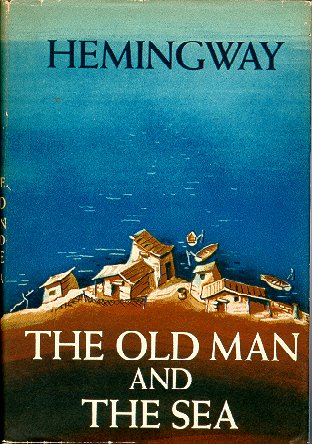
Yesterday’s bloggy romance with the sea continues and although I have shifted my gaze from Cuba to Shekou, it is worth mentioning that the writers’ emphasis on masculine conquest continues; today, in episode 8 of The Transformation of Shenzhen Villages (沧海桑田:深圳村庄三十年), Chen Hong tells the story of Fishing Village 1 (渔一村), Shekou. Again, the story begins in a village, but this is also where similarities between the two narratives end. Hemingway figured human life through the isolated figure of an old man navigating the Caribbean on a rickety skiff and superstition. In contrast, Chen Hong figures humanity through the construction of ports, trading ventures and the world-making connections that they enable, suggesting that the opportunity to launch one’s skiff is itself a political decision which once made determines the fate of villagers. For those who remember the 1988 television documentary, River Elegy (河殇) which linked China’s decline and ultimate humiliation to the Ming decision to ban maritime activity, a not-so-subtle critique of Maoist isolation, Chen Hong’s passion for the sea and the [free trade] world it symbolizes is self-evident.

Episode 8 opens by juxtaposing images of Ming and Qing trade centered on Guangzhou with pictures of the construction of Shekou, reminding viewers that Zheng He (郑和) set forth from or loaded supplies at Chiwan Port at least five times. Lest the viewer forget the consequences of isolation, the opening sequence ends with bleak, black and white footage of a backwater port, overgrown and clogged with weeds, small wooden boats berthed in stagnant waters. Boom! The first explosion opens the door to new world order, which is also, new village order.

Traditionally, the villagers of Fishing 1 weren’t actually villagers but individual fishing families who lived on boats, coming onshore to sell the day’s catch. Families came from all over the Pearl River Delta forming a community through their livelihood, rather than through ancestry or even a common version of Cantonese. However, in 1959, the political decision was made to organize them as a brigade (生产大队). They were 90 households with a total population of 450 people and settled as four small production teams (小队) in Nantou, Gushu, Neilingding Island, and Shekou. The Fishing Brigade worked to modernize the fleet and in 1978 during a meeting on scientific production, Hua Guofeng actually gave the brigade a first place award. Indeed, at the beginning of Reform, the Brigade had 69 ocean fishing vessels, 72 transport ships, and 18 oxygen boats that fished the South China Sea and Pearl River Delta bringing in fresh seafood for Cantonese dishes and by 1992, had accumulated enough capital to invest in modern industrial deep sea fishing vessels.

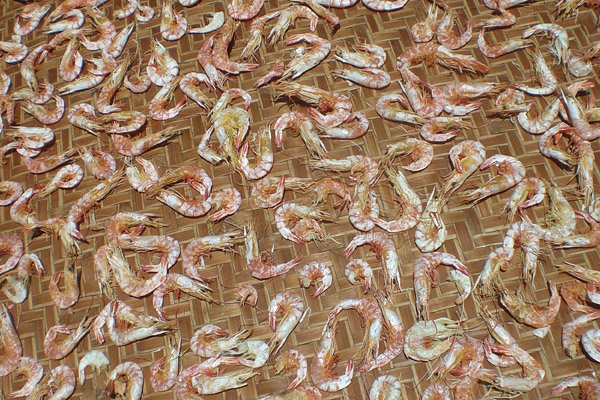
From 1978 through 1986, the Fishing Brigade lived the socialist dream, which was a traditional Chinese dream; the men fished, going as far away as Guangxi, the women kept house, children went to school and had medicine, and all ate in a common canteen, where the work team provided delicious food, including squid and shrimp. The system was called the 8 provisions (八包). However, by the late 80s early 90s, the scale of urbanization and land reclamation meant that traditional fishing areas had been contaminated and fish breeding grounds buried, and it was impossible to continue living from the sea. Suddenly, the advantages of the sea declined as property values soared and Fishing 1 faced a contradiction that many other villages would eventually face — what to do when urbanization decimated the conditions of traditional livelihood?

Once the sea was gone, Fishing 1 had no way of making a living because it did not have any land, except for that which the government had given it for housing in 1959, including a section on Neidingling Island, which Fishing 1 decided to develop as a resort and in 1992 as part of the guannei rural urbanization movement, the Fishing Brigade became the Fishing 1 stock holding corporation. However, after Fishing 1 had already invested their accumulated capital and borrowed against the development, Shenzhen and Zhuhai began a court case over who actually owned the island. Traditionally, the Island belonged to Zhuhai. However, in 1955, the Center had assigned Neidingling to Baoan, but no one could actually prove whether or not the transfer had gone through until 2002, when a copy of 1955 decision was found. In 2009, the Guangdong Provincial government finally ruled in favor of Shenzhen’s claim to Neidingling Island. However, the case raged long enough to impoverish Fishing 1 as the joint stock corporation/ fishing brigade/ village could no longer fish and except for Neidingling had no other traditional land rights. Indeed, by 2009 when the case was settled, Fishing 1’s deep sea fishing rights had already been bought out by China Merchants, which in turn sold them to Wanxia, one of Shekou’s original land-based villages.

And so here’s the neoliberal twist in Chen Hong’s story of old men and their vanishing sea: Fishing 1 re-entered Shenzhen urban planning as part of the Together Rich Project (同富裕项目), and over the past decade restructured and invested elsewhere: an industrial park in guanwai Gongming and fish breeding farms in Zhanjiang, for example. In addition, the Municipality organized training for fishermen to learn new skills. Nevertheless, the members of Fishing 1 have not only been proletarianized over the past 30 years, but are still paying off one of the debts that fueled Shekou’s growth. After all, Fishing 1 had no rights to any of the coastal property developments that enriched both China Merchants and neighboring Wanxia Village. Instead, Episode 8 ends with exhortations — from the Municipality and from the filmmaker — for individual development and initiative, ironically and inexorably returning us to Hemingway’s sea, where old men struggle feed themselves because they have been isolated by .

For more on my obsession with Houhai Land reclamation, more entries, here. A wander through the earliest Shekou landmarks, including the Shekou and Neilingding fishing families settlements, below:

This slideshow requires JavaScript.

reading the old man and the sea (in shenzhen)

I am currently reading The Old Man and the Sea with two 16 year old Chinese high school sophomores. They are cousins. One is a “good” student, strong and sly in the self-protective way of students who know how to work the system, but do not reach the upper echelon of test results. The other is delicate and shy, a “top” student, who is being groomed to test into Beijing University, producing results (出成绩) for her school and family. The good student knows that unless she goes abroad, she will no doubt end up at Shenzhen University, no matter how much harder she works at school; fortunately, her parents can afford to send her anywhere and so she is not too sly, and her eagerness to model good student answers quickly gives way to assertive self-confidence. The top student already struggles with contradictory desires and ambitions. She yearns to study abroad, but her homeroom teacher has already begun pressuring her to stop studying for the TOEFL and to use her extra time more productively — taking practice gaokao tests or studying the junior year high school curriculum. What’s more, the child of divorce she knows that her mother can’t afford Chinese tuitions, let alone foreign and thus she must secure a scholarship  wherever she attends university.

We sit around a square table, tracking the relationship between the old man and the marlin. Santiago believes that his fish is out there, and his quest begins when he sights the purposeful circling of a man-of-war bird. His faith is rewarded and the contest engaged. As the fish pulls the man further out to sea, away from from the lights of Havana and known landmarks, the old man endures, charts his progress against the stars and his suffering, and the fish becomes more than a fish — first a friend, then a brother, more noble, but less intelligent, a brother who must be convinced that he is less than he who came to kill. It is a grand battle that does not end in glory, but the realization of hubris, “I shouldn’t have gone out so far, fish,” the old man says to the marlin’s corpse, which has been strapped to the skiff and is being inexorably eaten by sharks. When the old man finally drifts ashore, all that remains is an 18 foot skeleton and the certainty of death.

I chose The Old Man and the Sea because, well misgivings about Hemingway notwithstanding, he knew his craft. His language is deceptively simple. Any sentence taken out of context seems ordinary, common even, but together his words sculpt moral landscapes that make exquisitely salient the brute masculinity and ultimately tragic consequences of lives lived against nature.

“Americans aren’t very peace-loving,” the good student concludes.

“Did the old man have faith in luck or faith in the sea?” the top student asks.

Thus, yesterday’s lesson transformed from a discussion about human limits into a conversation about how being human is culturally defined and experienced. The old man is not their old man, his fish is not their fish, and the sea that relentlessly pulls us out of our depth, that tests our forbearance and ultimately claims our soul, that sea does not figure their dreams. It may be a generational difference. But perhaps not. Certainly the new US passport is replete with pictures of men taking on nature — cowboys and seamen ruggedly occupying the western plains and Pacific waves, respectively. And that’s the point: the girls read with me because the good student’s mother is a friend and she has entrusted her daughter to me (and yes those words were used “交给你”) for old-fashioned Chinese purpose: edification rather than simple instruction. The goal of our bi-weekly meetings is not to improve English test scores or practice oral English, but rather close reading of novels, essays and poetry, to help the teenagers learn to navigate literary nuance elsewhere, which it turns out is also learning to simultaneously recognize oneself and one’s Other despite and across epic difference, which isn’t quite what Hemingway had in mind when he figured Man through his engagement with the Fish, but nevertheless where yesterday’s lesson ended.

early edition vs weibo: who are you reading on the way to work?

Successful monopolies not only dominate an industry sector, but also provide enough diversity within their fiefdom to create the illusion of choice and competing views. Take, for example, the Shenzhen News Publishing Group, Ltd. (深圳报业集团发行有限公司), which was formed in 2002 through the merger of Shenzhen Special Zone News Group and the Shenzhen Commercial News Society. Today, the Group publishes ten newspapers and five journals, owns a book publishing house, and operates the city’s largest news website (深圳新闻网).

The Group has identified four primary news audiences. Shenzhen Daily (深圳日报) offers a Party-centric take on news of the city, country, and world and its audience is self-identified through their (actual or aspired) level of integration into the Municipal apparatus. Shenzhen Commercial News (深圳商报) provides daily reportage on the economy and investors, businessmen, and white collar workers constitute its intended audience. Shenzhen Nightly News (深圳晚报) is a comprehensive newspaper aimed at blue collar workers and ordinary people, who are interested in gossip, local happenings, and a concise reiteration of who’s in charge. Jing Bao (晶报) seems aimed at Generation 80, who are interested in hip takes on the news, more arts reportage, and have slightly “new social movement” impulses, including interests in environmentalism, social justice, and healthy yoga lifestyles.

What happens when new social media challenge that monopoly? Insight comes from how the Shenzhen News Publishing Group has targeted morning commuters on the Shenzhen subway.

During the Shenzhen morning commute, subway riders read Subway 8 a.m., read weibo, or space out; few actually talk to each other or watch the incessant advertising broadcasts on the LED screens (four to a car so that everyone can watch). Shenzhen News Publishing prints Subway 8 a.m. (地铁早8点) under its Shenzhen Metropolitan (深圳都市报) brand and distributes it to commuters on their way to work. The free newspaper unabashedly rehashes news in the most provocative ways, foregoing either analysis or background, reproducing in paper form the weibo experience. In yesterday’s edition, for example, the drought in Lijiang is covered in 91 characters, with a picture three times the size of the text area. Likewise, a 131 character report on Shenzhen’s heatwave was sensationalized with an over-saturated image of a human silhouette against an azure sky and white cloud. In a more explicit weibo reference, a story about a drunken subway rider who used a fire extinguisher to smash a window and then attacked the subway worker who tried to stop him included four surveillance coverage photos, a brief description of what had happened, and a report of weibo cries for human flesh. What’s more, Subway 8 a.m. does not include political news; this isn’t a newspaper, but a collection of sensationalist stories, sports coverage, and gossip.

The differences between Subway 8 a.m. and weibo are also instructive because they remind us that although the weibo and Subway 8 a.m. provide the same content, nevertheless the form of reporting is critical both to a reader’s experience and  (as yet) to capitalist experience, indicating why the Shenzhen Publishing Group has decided to publish a free gossip rag. On the one hand, from a reader’s perspective, Subway 8 a.m. comes in paper form with all the advantages thereof: bigger characters for easy reading, space for somewhat longer stories so that readers can choose between weibo-shorts and more detailed reports on why your child is always coughing or services for wishing neidi mothers, “Happy Mother’s Day!” Consequently, Subway 8 a.m. appeals to those of us who are tired of backlit spaces or enjoy the feel of newsprint or may even want to read an article that will occupy our imaginations for longer than it takes to ride from the Window of the World to the OCT station. On the other hand, from a business perspective, Subway 8 a.m. includes space for advertising. The early edition’s front page includes the masthead, one headline, and two half-page advertisements. Consequently, in between the front-page and the back-page gossip (“We no longer believe in love” was the title of the article on Zhang Yimou’s decision to sign with CCA and split with Zhang Weiping’s Beijing New Pictures (北京新画面影业公司) and yes it was a report on a weibo report!) are 22 pages filled with advertisements that look suspiciously like weibo stories — compelling pictures and seductive blurbs, such as: luxurious homes on the subway line.

Point du jour: the Shenzhen News Publishing Group has met the weibo challenge to its monopoly over local news (and sports and entertainment and society) coverage by becoming a print edition of weibo plus. Like weibo, Subway 8 a.m. is free-of-charge and content-lite, plus easy to read characters, plus slightly longer stories, and plus plus: advertising and info-stories.