So, rumors before pictures. They say Lvgem 绿景 is bleeding. I’ve been told that the company can’t pay back the interest on its loans, let alone make a dent into the principal. Moreover, its become a problem because they are also unable to pay for the housing for the villagers who will move back 回迁 to Baishizhou, once the first buildings are complete. Nevertheless, on the ground its difficult to see any problems. The buildings are going up, and two developments–Century City and World Garden Milanju–are open for residents.
Meanwhile, the pop culture take on Baishizhou continues unironically. The latest video by Lvgem “I am Baishizhou 我是白石洲 (in Mandarin)” tells the Shenzhen migrant story from the perspective of a couple who moves to Baishizhou. They live with friends and enjoy the company of musicians and artists who live there. It is full of middle class creativity and beauty (they even stop to appreciate the bougainvillea that hugs a handshake building). Sharing that , Wang Maizi 王麦子 joins in singing about her time in Baishizhou. It’s this strange feeling of nostalgia for what was before the new has already been established.
It’s almost as if we (and by we I mean those of us who accept accelerated development as necessary) have to learn that a hometown is just another word for won’t be there tomorrow. 14 year old, Lin Shuduo 林书朵 wrote an essay “Growing up with Baishizhou 和白石洲一起长大.” The essay came in second place in a district wide essay competition. Like many student essays, it is easy to hear the experience of her teacher in the published version, but what strikes me is the opening paragraph: “14 years ago, I was born in Baishizhou, Nanshan District, Shenzhen. My parents were in Shenzhen for work, migrating from elsewhere. For them, Baishizhou was an unknown place, but for someone like me who grew up there, Baishizhou is my hometown 老家.”
But perhaps that’s the point? The past isn’t even past for a generation.
A final irony. I walked to the eastern edge of Baishizhou, where it abuts the western side of OCT. And it seemed obvious that the walls which had been built to keep Baishizhou residents out of the relatively upscale estates in OCT are now serving to keep low-end OCT residents inside. I’m not sure how much of my interpretation is a response to the way Covid was managed, but the shifting use of walls continues to distress me because I think its getting easier to manage people.
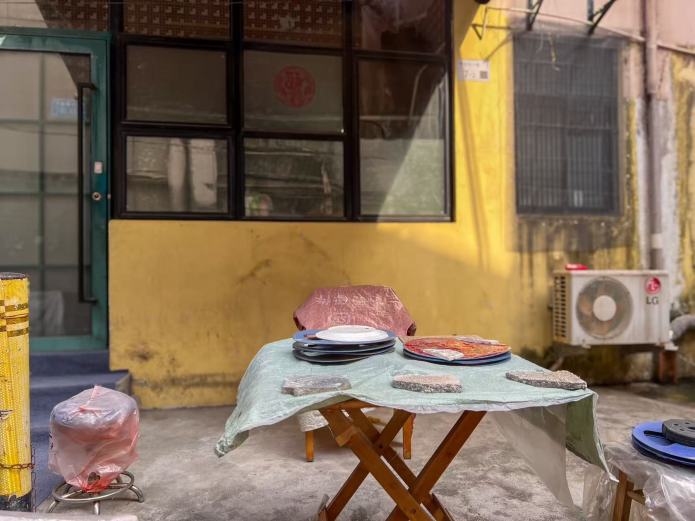
I’m naming my impressions from my walk, “Unlimited” my translation of the Baishizhou tagline “无线城市” which is being translated as “Borderless World.” The images are organized as a walk north along Shahe Road from Shennan Boulevard, starting at the Baishizhou Station and ending at the 璟庭 construction site. Along the way, we also pass Shum Yip’s Century City 深业世纪山谷, which began construction in 2016 and is now finished.




 Shenzhen Noted