dongmen / laojie

If you’ve been studying Shenzhen, you know that some of the most widely circulated images of the city circa 1980 were taken by Leroy W. Demery, Jr just before the SEZ was approved. Demery uploaded the images to flickr, where they were picked up by historians in Shenzhen, including government exhibitions. In 2013, he recalled that trip in an Insider interview. He returned three years later, and although Demery didn’t leave the general area of the railway station, nevertheless he noted that it wasn’t the same city. Boom!

Continue reading

bagualing, food street

Many of you probably wonder: what happened to Bagualing, the other industrial park in Shangbu Management Zone? And it’s true, so much has been made of & off Huaqiangbei that we forget: the 1986 master plan called for two industrial parks in Shangbu and like Huaqiangbei, Bagualing changed the world as we knew it. And by we, I mean those of us born in the 60s and 70s . For roughly two decades (let’s say ≈ 1990-2010), Bagualing was the printing capital of the world–books, books, and more beautiful books were printed there. In the States, you probably encountered these books via the discount warehouses that sold cheap books either by mail or in large downtown spaces. Chez Shenzhen, especially in the naughties, Bagualing was a great place to shop and purchase a Korean manga or a French novel. Of course, architecture, design, and art books were everywhere, in every language, and could be had for 30 or 40 rmb. Good good days, no more.

Continue reading

village·culture

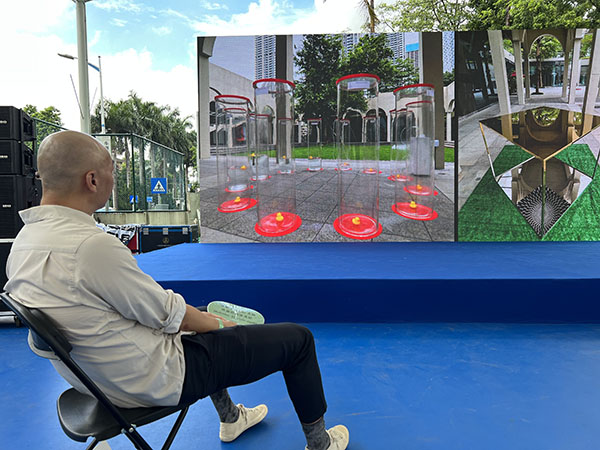
Like many events in Shenzhen (and yes I’m looking at you, UABB), the china international cultural industries fair was first held in central areas in the inner districts and has subsequently expanded into the villages. Indeed, many of these events are now explicitly used as venues to reimagine development or even urban planning. This past weekend, I participated in two such events. One was held in the New Who Art Village (鳌湖/牛湖) and the other in Jingkou Experimental Center (迳口).

Continue reading

同组: unified rentals

A few weeks ago, there were protests in Baimang (白芒) Village about the new “unified rental” plan. (Perhaps “consolidated” would be a better translation?) In a nutshell: the government will become the only second landlord in a village, upgrading rentals and then renting them out, preferably to college graduates. The protests came about (as in Baishizhou four years ago) because the forced eviction notices came out in late May early June, which is test month. Students and their families were being evicted after intake for the 2023-24 school year had finished, meaning that many would not only loose their homes, but also their place in school. Also as in Baishizhou, the new plan threatens family life because there are few places where families can live together and send children to school. At the moment, the village is going through a “cooling down” period, but it seems that once school is out, the process will proceed.

Sigh.

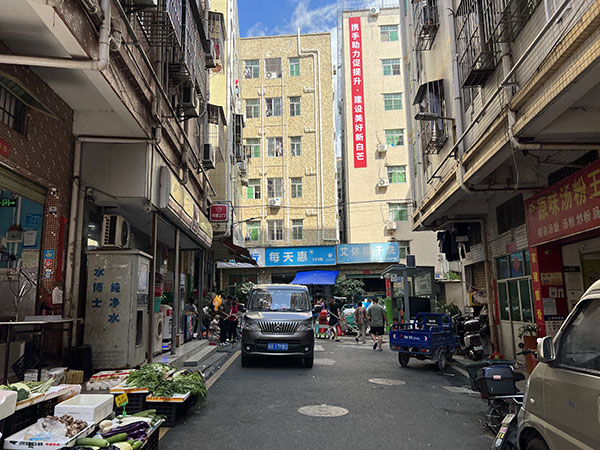
Located in what used to be a huge swathe of lychee orchards, Baimang is primarily a residential village, where commerce is geared to the everyday needs of renters–small markets and shops selling plastic household goods. At the center of the village are old village buildings, including an ancestral hall and two towers (碉楼). These row houses are surrounded by several generations of new village housing–concrete villas and tiled handshake buildings. Once one of the second line border villages, Baimang is now within Nanshan District’s “Innovation Corridor” and offers relatively easy commutes to University Town and High Tech Industrial Park.